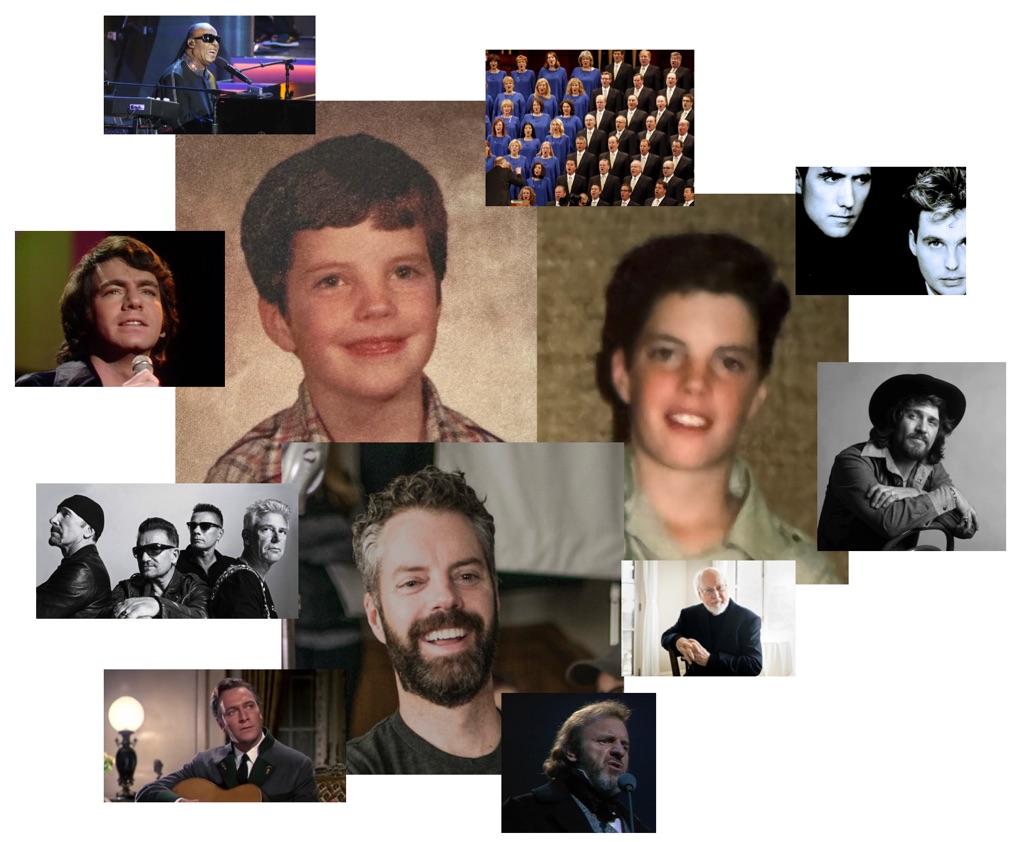
A few years ago my brother-in-law Lance shared with me his 10 favorite songs of all time. As he played them it was obvious how well sorted they were—reflective not just of the era of his upbringing, but of his own personality and experiences. More than a list of cool or beautiful songs, these felt decidedly like Lance, and he shared them with an infectious reverence.
So, I took the challenge, ridiculous as it is—narrowing down a short list of one’s all-time favorite songs. And as I gathered my own, I realized these aren’t merely my “favorites”, per se. They’re better described as the “most influential” songs of my life. They have shaped me both then and now.
But I couldn’t be held to just 10 songs.
I’ve allowed myself 22. But what I’ve lacked in quantitative discipline I’ve made up for in qualitative rigor. My list has taken over two years to hone. Every month or so I’d give the list it a fresh run-through and begrudgingly kick one out or bring another into the fold, listening with an increasingly picky ear for songs that really, truly mean something to me. Then I sorted them from one to 22, prompting another round of difficult decisions.
Each of these songs does one of three things for me: It joyfully reminds me of the kind of person I once was and the place I came from; it enthusiastically reminds me of the kind of person I want to be; or it otherwise moves me with a sort of energy that, for me, comes from no other art form—not film, not paintings or sculpture, not the written word. Some of these songs do all three.
Aside from the work in compiling this list, I rarely—by design—listen to these songs. Hoping to preserve their potency I listen to them only once a year or so, allowing them to still surprise me.
Yes, there’s some U2 in here, though not as much as you might expect. There’s country and pop and film scores and the Tabernacle choir. What there really is, is me.
If you wanted to build a Tyler, you might start with big eyes and curly hair, then sprinkle in some wayward humor and a love of college football. And then, the final step: You’d load these 22 songs into my database and power me up. My eyes would flutter open, and there I’d be. Alive.
Play YouTube videoI was standing in Anthropologie, probably looking at $85 dish cloths, when I hear it playing. Turns out they’re selling the entire album on CD at checkout. Yes please. This is 27 years ago—the same year Steph and I were married.
The album is Sympathique by Pink Martini, an American band that excels in classical, Latin, pop, and jazz—genres I don’t really seek out. This song—Amado Mio, Spanish for My Beloved—uses a variety of musical styles, plus two languages. It was originally conceived for the 1946 film Gilda, starring Rita Hayworth—hello!—who sings the tale of a woman proclaiming her unquestioning love for her man—and asking that he do the same.
Lyrics and theme aside, Pink Martini’s rendition is, for me, a song of transportation: Entrancing solos by piano and trumpet, go-for-broke vocals by lead singer China Forbes, and the mood-altering harp opening—all transport me to a place of mystery and possibility.
Since the fateful exposure to the album, many were the times I cued this song up and just started typing. Stories, outlines, scripts, bits of dialogue. Anything. This is a song that is as sure as any other to shake me out of a creative rut and refill the lust for life that is too often bled dry from staring day after day at a laptop. Thank you, My Beloved, for rescuing me, time and again.
Play YouTube videoBeing the first son after four daughters, I was spared a life of hand-me-down clothes, and extra lucky to get plenty of hand-me-down music. I heard, in bits and pieces, what my older sisters were listening to. I was too young to understand how music worked, how it was made or distributed. It was all a mystery. And when a great song came along it felt like a magic show.
I’m guessing this next song was handed down by Laurie or Christy. Maybe Tiffany? I’ll let them sort it out. This is OMD—Orchestral Maneuvers in the Dark—how’s that for cool? And for me this song was—is—the epitome of cool. From a foreign band playing this foreign-sounding thing called a synthesizer. Yeah, there were plenty of cool songs from that era—a few albums-full from OMD themselves. But this song in particular has stuck with me.
It reminds me of a happy childhood. Of listening to cassette tapes in a hot car parked in the driveway in the rare summer heat. Of discovering music that felt vaguely…I dunno…dangerous? I grew up eight miles outside of a tiny town in a tiny valley on the far edge of a sparsely populated state. I was a nobody. But with this song, I was king. Then. And now.
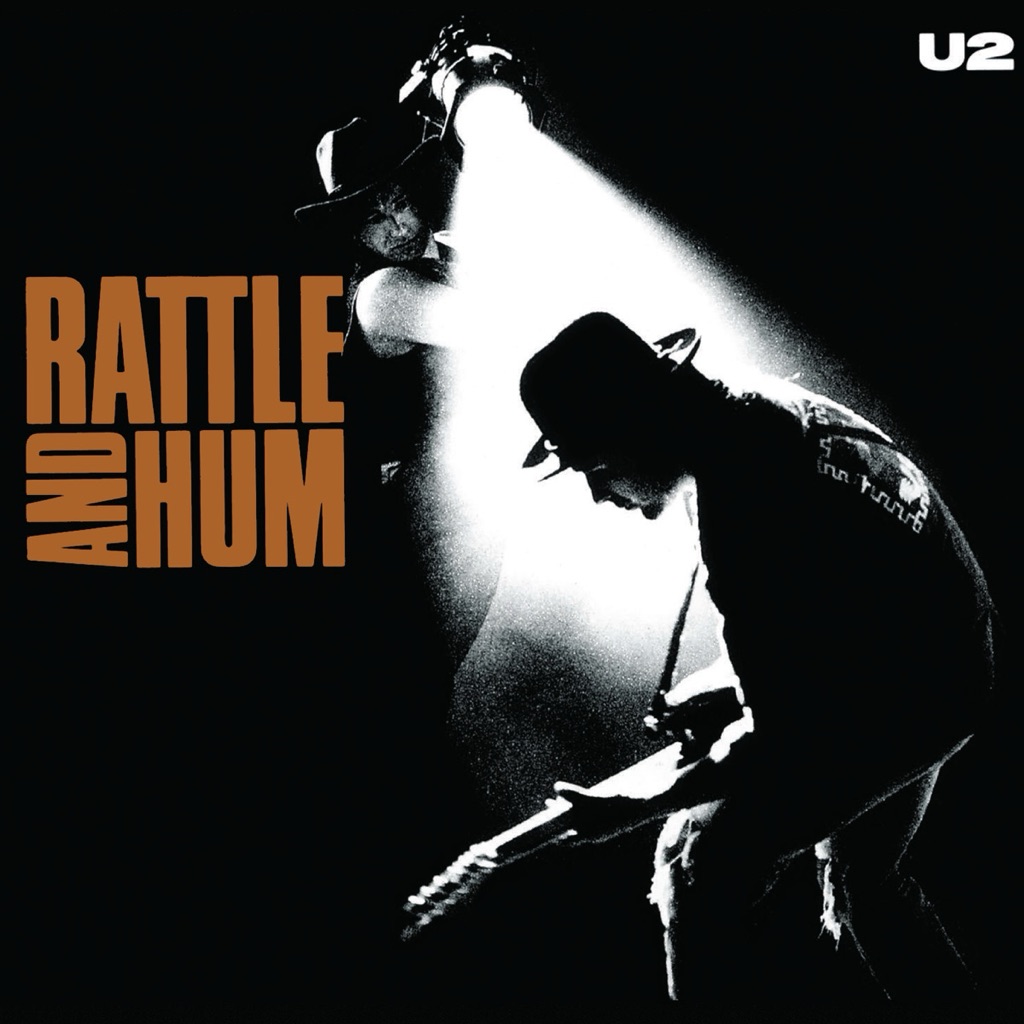
Play YouTube videoWell, sooner or later we were gonna get to U2, and here we are. Story time: I’m 14 years old and my sisters Laurie and Christy are at BYU dating brothers named Joe and Dan. One weekend, the four of them make the pilgrimage from Provo to Driggs, and Dan carries with him a cassette tape of U2’s sixth studio album, 1988’s Rattle and Hum. At some point during their stay, he introduced me to the album.
The artwork on the cover features an in-concert image of lead singer Bono holding aloft a bright stage light, aiming it at lead guitarist The Edge, crouched in focus on his guitar, mid-solo. The artwork…the album title: Rattle & Hum. Heady stuff for a young boy more accustomed to leafing through Boy’s Life Magazine. And I hadn’t yet hit play. When I did, well, forget about it. I was sold. Like a young duckling opening its eyes and adopting the nearest thing that moved as its mother, these early sounds were all I needed to say “Tell me where we’re going.”
Over the next three decades U2 took me—and Stephanie—all over the world, singing of every conceivable topic. And yet, as Bono once said, every song is either about running to or away from God. It’s no surprise that these four Irish boys grew up Catholic. What is surprising is the fact that they’ve remained dedicated to their faith, through fame, fortune, and ridicule. And it’s not a generalized spirituality that U2 embraces, but a religious devotion focused on Christ, Jehovah, the Messiah. Melodies and lyrics that ring of praise, confusion, faith, doubt, confession, and redemption. In this, Bono wears his heart on his star-studded sleeve, detractors be damned.
There’s more to come from this, my favorite band. For now, let me introduce the song “Stay” from 1993’s album Zooropa. A gentle song to begin with, it was further softened in concert settings into a quasi-acoustic production. It’s just Bono and The Edge. No flashy solos, no garish stage lights. Just two guys playing a song about, well, you decide. This live version is from a May 2001 concert in Boston. It remains for me a representative song of U2’s catalog: Earnest, hopeful, and vulnerable. Like a 14-year-old boy.
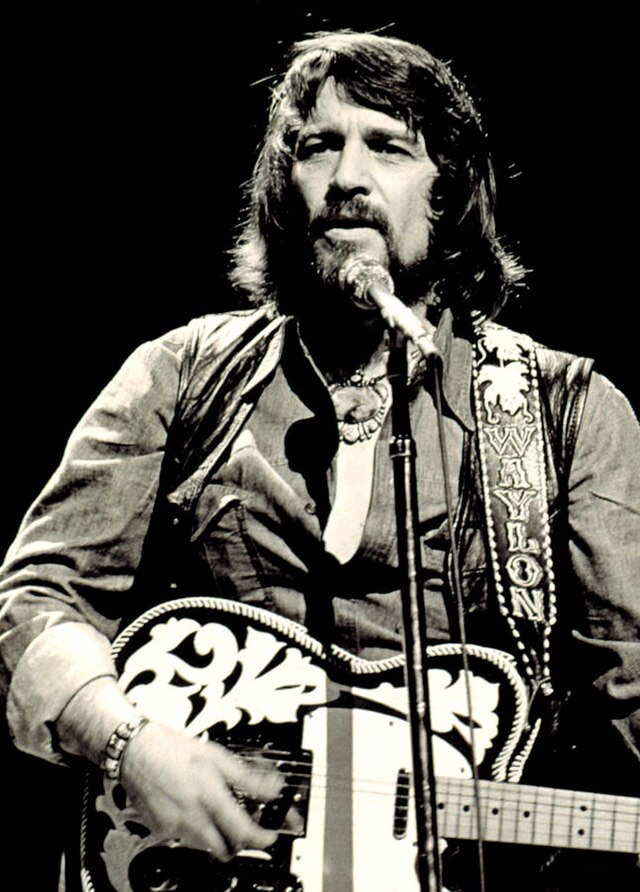
Play YouTube videoIf I could steal any singer’s voice from the past 50 years, it’d come down to a coin toss between two remarkable entertainers of the 1970s and 80s. The second, I’ll leave for a song further up the list. As for the first: The gravelly baritone belonging to the ringleader of the Outlaw Country movement of the 1970s: Waylon Jennings.
The man could sing the phone book and I’d listen till the needle on the record player turned to fuzz. What’s more, he combined that voice with beautiful melodies and lyrics with meaning—real meaning—for that rare trifecta—melody, lyrics, and vocals—that can raise music to the highest of arts.
Waylon had his share of success and misery, riding high and falling hard on the foibles of life as a successful musician battling his demons. Some of his own making. Some borrowed. Occasionally, one of his songs reflected that life—and the yearning felt by someone who had it all and wanted less.
Such is the tale in “Luckenbach Texas”, from 1977. Luckenbach was a hardscrabble town—barely a town—in central Texas. You had to want to be there. And as Waylon sings it, he wanted to be there. For many years this song has served as a reminder to me that all that glitters is not gold. And what is gold is often not as satisfying as it appeared from a distance. The simple, meaningful life is where it’s at. I need to be reminded of that often. And this song does. Thank you, Waylon. If I can’t have your voice, at least I’ve got your wisdom.
Play YouTube videoI doubt I’d have believed it, if you told me, during my teenage years, that one of my favorite songs would end up being a new age-y kind of thing, devoid of lyrics and full of whispery chants and repeating piano flourishes. But that’s what time and maturity will do to you. The years of teenage bravado give way to the humbling forces of life.
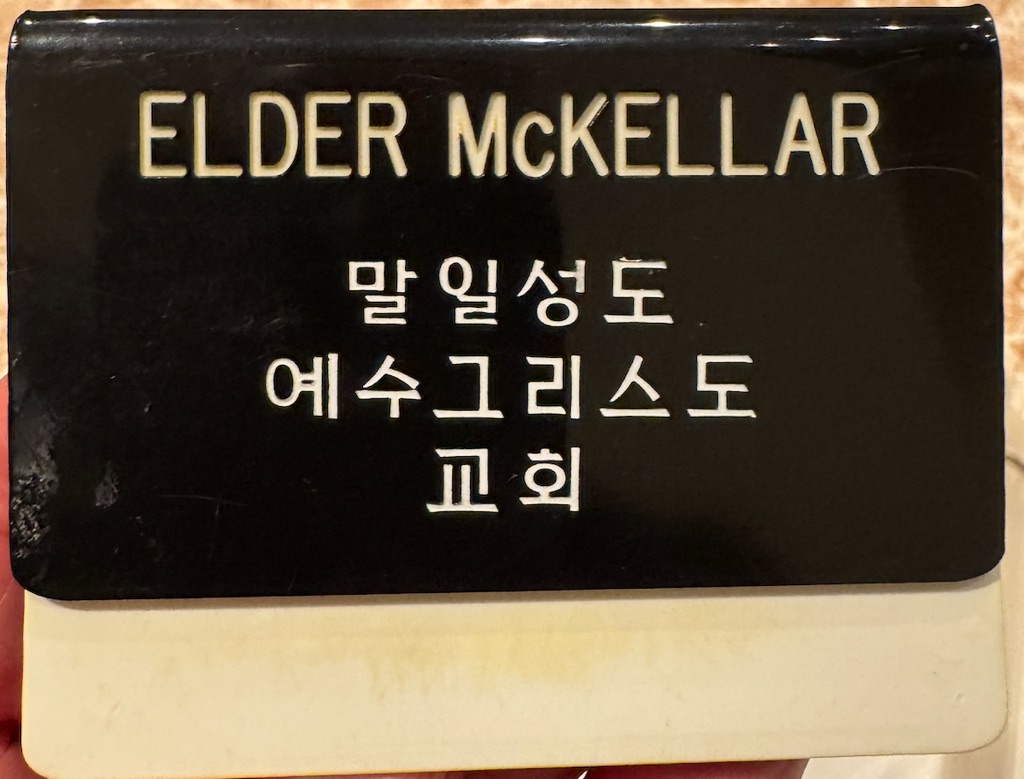
That humbling force dropped on me like an anvil in South Korea—only months removed from my senior year of High School as I served—tried to serve—as a missionary for the church from 1993 to 1995. I say “try” because success felt so elusive, with the foreign language, the foreign culture, the relentless demands of missionary life with its to do lists that were never done. Nearly two years into service I was a different, better person, but also a bit rattled, and still—still!—trying to find my footing.
With a few months left I was invited to serve as a secretary to the newly called Mission President. He was a surprising force of optimism and encouragement during the final months of my service. He changed how I felt about missionary work.
During long drives between meetings, through the lush countryside of Korea he insisted we listen to music. And for once it wasn’t the Tabernacle Choir. His recommendations: Harry Belafonte, Simon and Garfunkle, John Denver, and Enya, the newly arrived Irish singer of Celtic and new age music. Her album “Shepherd Moons” had made its way into our mission car, and it was a godsend.
The first track, also called “Shepherd Moons” was and is soothing and peaceful. For me, it’s a hymn. It lifts me, reminds me, encourages me, points me skyward. Be calm. All will be well. Here’s to you, President Hong. Thank you for those long drives.
Play YouTube videoOkay, it’s time for some Rock ‘n Roll. And, you guessed it, U2. In truth, I could make a top 22 list of my favorite U2 songs alone and still struggle with which ones to include.
This song encapsulates the louder side of U2, with Bono belting out the lead vocals,The Edge surgically working his lead guitar, Adam Clayton banging the bass, and Larry Mullen Jr. mashing the drums. Four guys who were supposed to grow up and get regular jobs, but instead started a band when they were all in their teens.
This is rock ‘n roll. Loud and filling. The song is called “Ultraviolet”—a favorite for both me and Stephanie. It’s a love song. A rock song. A prayer through an amplifier.
Picture Bono, 1991, donning his bulbous black sunglasses, black leather jacket, and, yes, black leather pants. Leaning into the microphone. Ready with a stadium-size sermon. The whole thing is ridiculous. And heck if it doesn’t work.
#16 — “I Feel My Savior’s Love” Performed by the Tabernacle Choir at Temple Square#
Play YouTube video
As much as music can shift my mood from one emotion to another, it’s rare that it can lift me out of agitation or depression. When I’m down, I normally don’t reach for music. In those times even many of my favorite songs can often sound bland—with the exception of one genre: Hymns.
It’s a testament to their divine connection that for me the potency of a hymn actually increases during difficult times. When life strips me down to the basics, hymns can build me back up with the basics: I am a child of God, Jesus Christ loves me, divine help is here, and more is on the way.
There are two hymns on this list. Both are from the Children’s Songbook—fitting in light of the Savior’s words: “Behold again I say unto you, ye must repent, and become as a little child…” The first hymn on this list is “I Feel My Savior’s Love”. When I hear it I am comforted by the Savior’s parental care for me.
#15 — Theme song from “The Dukes of Hazzard” by Waylon Jennings#
Play YouTube videoWhen I was a young’n there were only three TV channels. There was no DVR or streaming. And if you missed a show, you missed it. Wanna know what’s gonna be on TV? Go to the grocery store and buy a little mini-magazine called TV Guide. Wanna watch something else while your sisters are watching their show? Tough. There’s only one TV in the house.
Yes, there were headwinds when it came to catching your favorite show. But with careful planning the gettin’ was good: The Brady Bunch, Little House on the Prairie, 3-2-1 Contact, and the coolest of them all: A show about a couple of bandit brothers in the deep South who drove an orange Dodge and had a cousin named Daisy Duke who drove us all wild.
I speak of The Dukes of Hazzard. A lot of this show wouldn’t fly today, but my memories of it are fond. And no, not just of Daisy Duke in her Daisy Dukes. To a young boy the idea of jumping a car over a massive pile of dirt and leaving the cops in the dust felt like the moon landing.
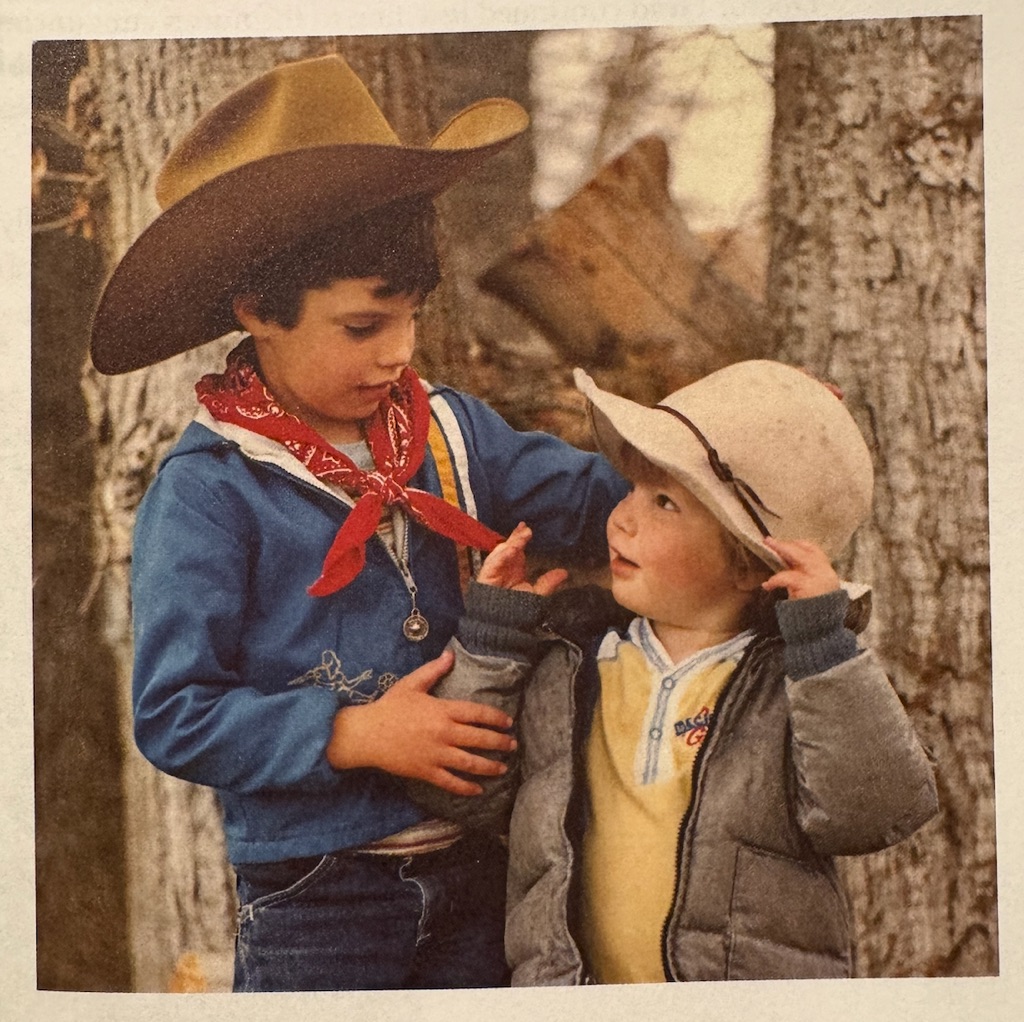
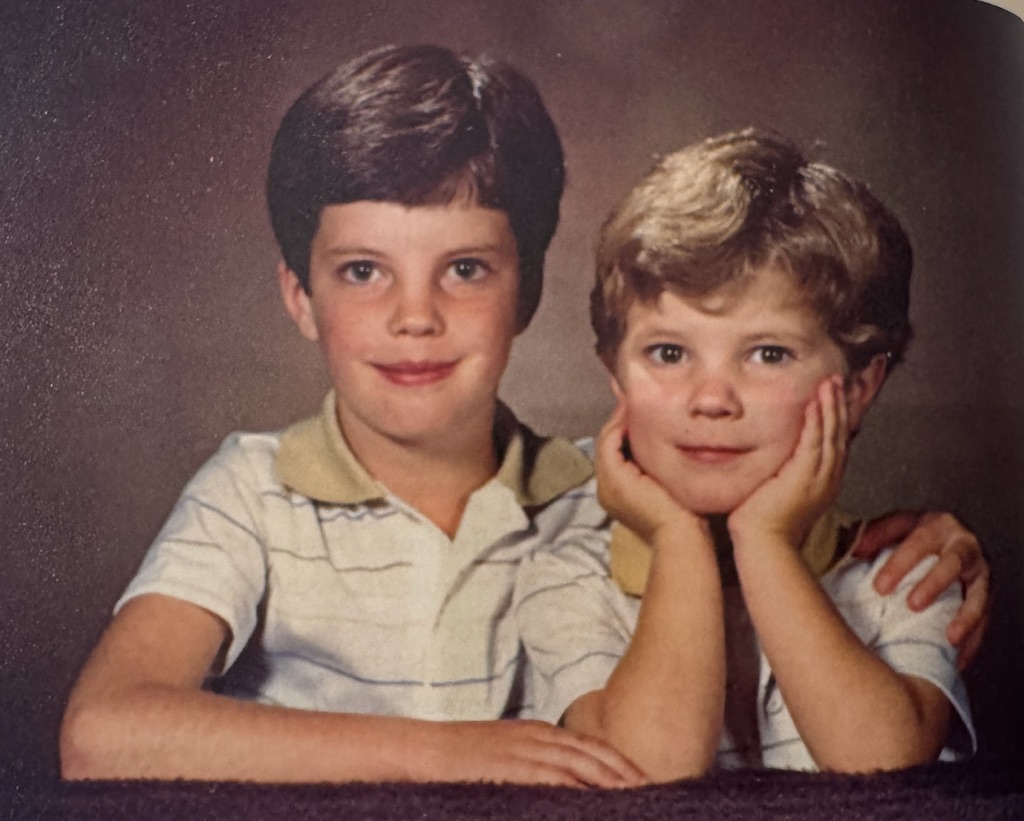
In Hazzard County, winning came easy and every day was great—not unlike my childhood. Particularly of times with my brother Peter. Floating tubes down the creek (or “crick”, we called it back then), riding bikes down dirt roads, ripping leaves off the lilac tree and using them as currency at our fake stores, sleepovers in the chicken coop, sleepovers in the wagon, sleepovers on the front porch. Our feet were often bare and our hands were dirty. Life felt free enough to pursue a boy’s greatest desire: Adventure.
I don’t want to forget that feeling. Sitting behind a desk for a few decades can start to wipe that away. But hit play and the memories come back. Listen close to the final verse for a beautiful turn of phrase, describing a mother’s confusion. Cue the music. Waylon, let her rip.
Play YouTube videoThis is the second song on this list that for me just drips with cool – and the first of three songs from movie soundtracks. Many songs on this list remind me—a guy who’s often loud and worldly—to be more grounded, gentle, and introspective. But every so often I’m probably too introspective, too stuck in my own head, too wound up. That’s when I need someone to tap me on the shoulder and say “Hey pal, quit taking yourself so seriously. Get out there and have some fun.”
This song is that someone. The movie: Oceans 11. The song: “Ruben’s In”—Ruben being the large, past-his-prime casino magnate who’s slyly approached by two schemers—played by George Clooney and Brad Pitt—who are trying to get Rubin to join their heist-to-end-all-heists. The soundtrack wisely includes bits of dialogue from scenes, including this one. And what dialogue it is.
Pardon a wee bit of profanity. And picture the scene: Rubin, with sunglasses, silk robe, cigar, and star-of-David necklace dangling on his bare chest. Opposite him: George and Brad’s characters in dress shirts, fitted jackets, and thousand-dollar sunglasses. It’s a meeting of the minds, a collision of fashion, and the moment we know these three guys are about to get out there and have some fun.
#13 — “Edelweiss” by Rogers and Hammerstein, performed by Bill Lee and Charmian Carr #
Play YouTube videoOnly around mid-life did I come to appreciate the genius of The Sound of Music. Many popular musicals have skated by on just one or two great songs (See “Joseph and the Amazing Technical Dreamcoat” and, ahem, “Cats”). Not so with Rogers and Hammerstein’s 1959 masterpiece about a woman raising someone else’s seven children during the German invasion of Austria. “The Lonely Goatherd”, “Do-Re-Mi”, and “My Favorite Things” each contain complex wordplay hiding in plain sight. I smile thinking of how much fun those songs must have been to write. But I deceive myself. I suspect it was very hard work.
But the song that has given me the most to think about is “Edelweiss”—written by Rogers and Hammerstein as Captain Von Trapp’s tribute to the national flower of Austria. The captain (played by Christopher Plummer with vocals dubbed by Bill Lee) is joined by his daughter Liesl, as he sings a farewell to his homeland, knowing he is soon to flee as the Nazi takeover is imminent.
To me, the power of this song is less about national pride the captain feels, and more about the sincerity of singing about something so small and fragile as a flower. Of all the things this man is about to leave behind, he thinks of a flower. It brings to mind Christ’s admonition: “Consider the lilies of the field, how they grow; they toil not, neither do they spin. And yet I say unto you, that even Solomon in all his glory was not arrayed like one of these.”
The entirety of the song is a single verse sung twice. Such was its timeless craftsmanship that many Austrians in the 1960s claim to have fondly remembered the song from their youth, as if it were passed down through generations. Yes, the song is created from whole cloth, but its power is real. I want to always live in a time and place when men are willing to humble themselves in reflection upon of one of God’s own favorite creations: A flower.
Play YouTube videoThis is the Unforgettable fire by U2, from the selfsame album of 1984. Seeking a new sound, the band sequestered itself in an old Irish castle to live, write, and record an album of songs that were less about rock n’ roll and more about mood and ambient sound.
The resulting songs are hard to pin down. They wander about like ghosts—hard to glimpse and harder to interpret. And that’s part of the charm. I like this notion from David Byrne of The Talking Heads. He said that in music, some songs are best absorbed by their sonic impression—rather than an understanding of what words are being sung.
This song fits the bill. I’ve never looked at the lyrics—don’t ever intend to—or tried to understand the words I’m hearing. I just go with it, and I’m taken back to a place in my teenage years when I was discovering music and thinking “Can this be a song? Because I like it.” Daydreamy and loopy, it calms me and reminds me of youth and possibilities. Even today I have to remind myself: I don’t have to understand everything. Sometimes it’s just better to go with it and try to absorb the goodness around me.
Play YouTube videoSunshine on my shoulders makes me happy. John Denver wrote it. And I know it. By the time June rolls around and that boiling orb of hydrogen and helium is high in the sky, I’m tempted to fall down in pagan worship of this life-giving light. But I know where that light really comes from, and I’m all the more grateful.
I guess this could be a sister song to Edelweiss—about something right in front of us, but often overlooked. And how fascinating that something so gigantically powerful doesn’t inspire us to powerful, ego-based actions, but renders us calm, giddy, joyful.
This song reminds me of youthful days at String Lake and present-day mountain bike rides. Of hikes and walks and daylight that doesn’t burn out til it’s past my bedtime. I don’t know much about hydrogen and helium, but 8 minutes and 19 seconds after their magic leaves the surface of the sun, I know what it feels like. And I’ll take all I can get.
#10 — “A Child’s Prayer”Performed by the Tabernacle Choir at Temple Square#
Play YouTube videoNow for the second of two hymns on this list—a song that I recently learned is also a favorite hymn of my sister Wendy.
Over the years my appreciation of prayer has increased, as has my understanding of its many different purposes. I still have questions about how prayer works, but I know it does. And I’m coming to understand that it works in more ways than by merely being the conduit for communicating our gratitude and desires to God. There’s so much more going on here.
C.S. Lewis put it this way: “Prayer is…a personal contact between embryonic, incomplete persons (ourselves) and the utterly concrete Person (a perfect God). Prayer in the sense of petition, asking for things, is a small part of it; confession and penitence are its threshold, adoration its sanctuary, the presence and vision and enjoyment of God its bread and wine. In it God shows Himself to us. That He answers prayers is a corollary, and not necessarily the most important one.”
Play YouTube videoIt’s time for a love song—a genre which, oddly enough, has been fertile ground for duos of dudes. Consider: The Everly Brothers (“All I have to do is Dream”), Hall & Oates (You’ve Lost that Lovin’ Feeling), The Righteous Brothers (Unchained Melody), Extreme (More than Words). The list goes on.
And in my mind, that list is topped by this duo of not merely two men, but actual brothers, and not just brothers, but twin brothers, and not just twins, but Scottish twins.
Say hello to The Proclaimers, AKA, Craig and Charlie Reid, born in 1962 in the port area of Leith, within the city of Edinburgh, Scotland. Normally, the native accent of an artist’s voice is neutralized through the act of singing. (Would anyone know that Bono is Irish if they’d only hear him sing? I doubt it.) Not so with the Proclaimers. They lean so heavily into their Scottish accents as to render certain words wonderfully unintelligible and leave no doubt as to their heritage. But that’s only part of the fun. It’s also the harmony. The lyrics. The unabashed big-heartedness of it all.
And there’s no finer example than “Sunshine on Leith”—the Proclaimers’ 1988 hit. It’s a prayer-like refrain. After confessing of a broken heart, they sing to their beloved—a woman? Scotland? Who knows?—of all the ways she has mended that broken heart and how grateful they are, to her and to God.
I dedicate this song to Stephanie, who I have loved for longer than I have loved this song. She has, again and again, mended my heart. When I hear this song, I think of her and my gratitude is renewed.
Play YouTube videoDaniel Lanois (Lan-WAH) is a Canadian musician and music producer who’s most famous for overseeing the production of six U2 albums, including The Unforgettable Fire, The Joshua Tree, and Achtung Baby.
In 1989, sandwiched between production of the latter two albums, Lanois wrote and recorded “The Maker”. In it his spiritual yearnings are at the forefront, with a hymn-like cadence and lyrics drenched in Biblical references. It’s all here: A flaming sword, The garden of Eden, Abraham, Christ, and a sinful man confronting his dark reality. This is redemption, being worked out melodically.
Early lyrics feature an arresting visual: Jesus Christ and John the Baptist joyfully approaching our fallen man. All things have worked together for his good. Christ is the maker, healer, and redeemer.
I hope to one day see that scene for myself. For years now this song has helped keep my gaze fixed on the Maker.
Play YouTube videoNext up: America, by Neil Diamond. Second only to Waylon Jennings, Neil Diamond’s is the other voice I wish I could magically have. You know that saying that you can be anything you want? When you have a voice like Neil Diamond, you can be only one thing: A singer. But Neil’s voice aside, I have two connections to this song that have made it resonate with me.
In November 1995 I was returning from a two-year mission in South Korea. My thoughts were of home in the narrowest sense: The home I grew up in. My family and friends in Teton Valley.
I flew from Seoul to Los Angeles and hadn’t been thinking much about America at large. I had been, after all, been safe and sound in a democratic nation that had strong ties with, and a great appreciation for, the United States. But while dragging my luggage through the wide, long customs hall of LAX, it hit me when I looked up. Hanging from the high ceiling was a row of massive American flags. You walked right under them. And up ahead there was another, and another.
That’s when it hit me—how much I loved the United States and the opportunities it had given me. I was coming home not just to a house, but to the idea and ongoing experiment that is America.
There’s a line in this song—my second connection to it—that makes me think in a similar way of my ancestors who weren’t coming home, but leaving home on their pilgrimage to America, to receive its blessings and add to its strength. The line: “Home, to a new and a shiny place, we make our bed and we'll say our grace.” I think of my ancestors who said those prayers and put in the work to help make my life what it is.
Now, beyond that, this song is just cool. 1980s cool. So there you have it. One of my favorite voices. Singing about one of my favorite places. Making me think of some of my favorite people.
Play YouTube videoThere’s an NPR program called “I Wish I Made That” where successful artists are invited to talk at length about a book or a song or a piece of art they wish they had made.
If anyone ever asks me, I’ve got my answer. Of all the music I’ve ever heard and of all the paintings and statues I’ve ever seen, of all the books I ever read and films I ever watched, the single piece of art I wish I had made is the musical Les Misérables.
Since its debut in 1980 it has been championed, awarded, lauded, mocked, parodied, buried, and resurrected. Over 45 years, Les Mis has been produced in 53 countries in 22 languages, and seen—nay, witnessed!—by an estimated 130 million people. Why? “Parce que c'est sacrément bon.” Because it’s so damn good.
First, credit where it’s due: To Victor Hugo, who authored the mammoth work in 1862. And to Claude-Michel Schönberg, Alain Boublil, and Herbert Kretzmer for spinning Hugo’s plot, characters, triumphs, and tragedies into a melodic, lyrical masterpiece. There are no false steps in its 2 ½ hour runtime. Its characters are pure gold. Its songbook is an embarrassment of riches. Its message is divine.
The song I have chosen here—one of its 33 in total—is, to me, the encapsulation of the entire story—the narrow point upon which Jean Valjean teeters above damnation’s abyss while looking heavenward for answers. Valjean, newly released from prison, has stolen from the kind Bishop who generously took the starving man in for the night. Prior to that point, Valjean had not deserved the punishments—the “justice”—that had so cruelly been heaped upon him. But now, for the first time, he knows he deserves punishment. And, for the first time, he receives mercy.
The bishop forgives him, turns the lawmen away, and invites Valjean to begin his life anew. What comes next is Valjean’s soliloquy—the working out of his past, present, and future. The song has a pulsing feel to it. Fast, then slow, loud then soft. And back around again on the wheel of human emotion. Valjean’s words veer from confusion to wonder to anger and, finally, to a confession of doubt as to whether he really can change—as much as he wants to.
Near the end of the song, stripped of nearly all orchestrating, Valjean sings unaccompanied: “I am reaching, but I fall, and the night is closing in, as I stare into the void, to the whirlpool of my sin…” This is the confession of every earnest seeker of God. I hear Alma the Younger in these words. I hear myself. “Here I am, God, alone with nothing but my sins. Reach out to me across this, the darkest of chasms. Can you, will you, save me?”
Les Misérables answers that question thunderously, joyously: Christ does reach across the chasm with more mercy and forgiveness than we deserve, more than we can comprehend.
Play YouTube videoIf I could live in any time and place two possibilities come to mind. One: Southern California in the 1950s. There’ something so innocent and magical about that time and place that was brightly blooming in every direction. Just to be a kid on those suburban streets in those shiny and safe neighborhoods.
My second choice: The wide-open spaces of the American West in the 1860s. I don’t think I’d last very long without my creature comforts, but wouldn’t it be worth it? To see the untrammeled West—The West with a capital W? No roads, no fences, nary a city, and barely a farm.
That image is evoked by this next song—the second of three songs from motion picture soundtracks. This one composed by Englishman John Barry, whose most recognizable work is the theme song for James Bond. Yeah, that one.
A great song, yes, but not as great as what came after: The soundtrack for 1985’s Out of Africa. I’m not particularly enamored with the film itself, but that soundtrack. Wow. And as great as it is, it’s not as great as what came after that, Barry’s 1990 soundtrack for the film that went on to win Oscars for Best Picture, Director, Adapted Screenplay, Film Editing, Cinematography, Sound Editing, and—yes—Original Score.
This film has its detractors. Fine. I will go to my grave loving its story of friendship, sacrifice, courage, and its lush melodies that make me grateful for the West I live in and the West I long to see.
It’s 1863. Given his choice of assignment, Union Army Lieutenant John Dunbar requests a transfer to the American Frontier. What he sees changes him—right down to his name. The Sioux Indians take him for a madman and name him Dances With Wolves. That’s where the story begins. And this is that madman’s theme song.
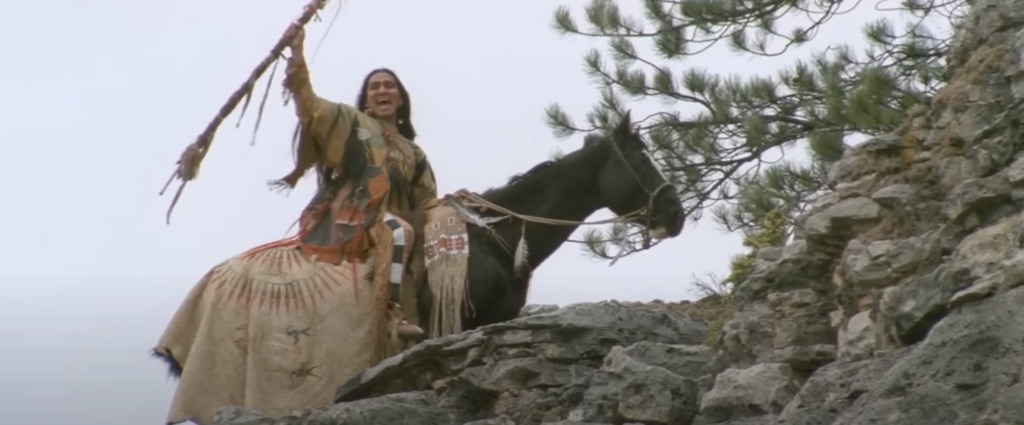
The final scene features Dunbar’s enemy-turned-friend yelling at him from atop a cliff. “Dances with Wolves, I am Wind in His Hair! Do you see that I am your friend!? Can you see that I will always be your friend!?” Dunbar feels the same, but knows his time to leave has come. He rides away while Wind in His Hair solemnly yells this over and again.
Play YouTube videoI don’t even know how this next song found its way to me, but whenever it did, I knew it was a keeper.
Nick Cave, leader of the Rock and Roll band Nick Cave and the Bad Seeds, is an Australian singer, composer, actor, songwriter, and screenwriter. More than those titles, he is a man of experience. So much music today is written and performed by artists so young and with so little life experience that it’s difficult to take it seriously. I like a good pop song every now and again, but when it comes down to it I’m hungry for the meat of great songs performed by people with the gravitas to sing about life’s toughest moments.
Cormac McCarthy, one of my favorite novelists, famously said that he only cares for writers who “deal with issues of life and death.” I think he would have liked Nick Cave’s music. Not only does he sing of life and death, he’s more than qualified to do so.
While being held in a police station on burglary charges at age 19, Nick’s mother came to bail him out – and to tell him his father had been killed in a car crash. Later in life, Cave had two sons die years apart, both in tragic accidents. Death is on his mind, but so is love and the possibility of salvation. Cave has confessed to an on-again-off-again relationship with religion, but has searched for and found something in the Bible. He’s quoted as saying that “any true love song is a song for God.”
And that’s what we have here. A love song. I instantly thought of Stephanie when I first hear this—and still do. From Nick Cave’s grief, from his pleading and pondering, comes something beautiful.
#3 — “I Just Called to Say I Love You” by Stevie Wonder#
Play YouTube videoWe’re getting down to the nitty gritty, and in the number three spot sits a song that doesn’t try to dazzle me, but simply pulls up alongside me and makes me smile with a message of enduring love.
This is “I Just Called to Say I Love You” by Stevie Wonder.
One thing I love about this song is that it doesn’t repeat any verses. Instead, Stevie Wonder breaks up the chorus by methodically working his way from January to December, joyfully recounting the small wonders found throughout the year. It’s a song that has its cake and eats it too. All those things are indeed wonderful, but that’s not the reason for the phone call. It’s something even better.
It's as simple as that. This song fits right in with Luckenbach Texas, Edelweiss, and Sunshine on my Shoulders. A reminder of the good life that’s right in front of us—and what’s more—the blessing of having someone to love. And someone who loves you.
This is for you, Steph. Thanks for always picking up the phone.
Play YouTube videoAs a testament to the importance that some dreams go unfulfilled, I offer exhibit A: It’s 1977, and George Lucas has exiled himself to Hawaii—hoping to be insulated from possible negative reactions to the release of a little film called Star Wars. He invited a friend to join him—Steven Spielberg , who had recently completed his fifth film, Close Encounters of the Third Kind.
Spielberg was enjoying success (with Jaws—widely considered the world’s first summer blockbuster—also on his resumé), but lamented to Lucas that he wasn’t well enough known to get the job he really wanted: To direct a James Bond film. As it turns out, he’d never get that opportunity. But there on the beach, George consoled Steven with the possibilities of a new idea he’d been cooking up: The Adventures of Indiana Smith.
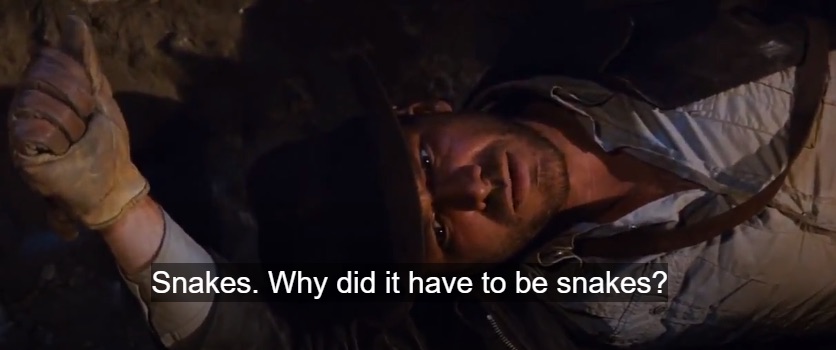
Today, no one laments the absence of a Spielberg-directed James Bond film. But where would we be without Indiana Jones and the Raiders of the Lost Ark? Without the professor with a bullwhip. Without “I dunno, I’m makin’ this up as I go”. Without “It’s not the years, it’s the mileage”. And, of course: “Snakes. Why’d it have to be snakes?”
Personally, I’d be lost. Or lesser, without it. The film was released in 1981 when I would have been 7 years old, so I doubt I saw it in the theater. But at some point early in my childhood the silhouette of a man with a fedora on his head and a bullwhip coiled at his side was forever etched in my brain. And my parents kindly purchased the soundtrack on vinyl, so experiencing the movie was as simple as turning on the music.
Joining Lucas and Spielberg was the incomparable John Williams with a soundtrack for the ages, and the oft-overlooked screenwriter: Lawrence Kasdan. Together they pulled off that rarest of feats in cinema: Story, characters, dialogue, cinematography, and music—not just occurring simultaneously, but synthesized into movie magic.
Later, in adolescence, Raiders was the film that ignited my interest in movie-making—a path I followed until I pivoted to advertising, which is just an industry full of wannabe filmmakers. More importantly, the sights and sounds of Raiders of the Lost Ark continues to renew in me the childlike wonder of hearing just a few notes of music and recognizing the call to adventure.
Play YouTube videoOf course it’s from U2. And no surprise that it comes from The Joshua Tree album. In 1987 it spawned three mega-hits: “With or Without You” and “I Still Haven’t Found What I’m Looking For”—the only two U2 singles that ever reached #1 in the U.S.—and “Where the Streets Have No Name”. Those are the first three songs on the album. Do you know of a better one-two-three punch to lead off an album? Ever? I sure don’t.
The song’s eventual power wasn’t easily harnessed. The band spent an inordinate amount of time trying to tame a wild stallion of a song that passed through different time signatures and a larger than usual batch of chord changes. It was like a riddle driving them mad. They knew they had something, but week after week, they didn’t quite have it. At one point, co-producer Brian Eno considered erasing the tapes holding what meager progress they had made—in the hopes the band would either give up and move on or start fresh and figure it out.
In the end, the band estimated they spent half of their studio time on The Joshua Tree just trying to solve what became the opening song. And solve it they did.
As for the lyrics, Bono was intrigued by the reported notion that you could identify someone’s religion and social status merely by knowing the street on which they lived in Belfast, Ireland. He pondered this idea and compared it with the tent cities that had sprung up in famine-plagued Ethiopia—cities so large they required actual streets. Streets that had no name. This latter style of streets that was home to those who had nothing and yet had everything in common, became a sort of yearning for Bono. Not for poverty or hunger, of course. But for the casting off of vanity, social status, and money in the pursuit of a higher ideal: Commonality and brotherly love.
Here again is that rare trifecta: Lyrics, melody, and vocals that transcend being merely a “song”. It’s become a personal anthem for many, myself included. Rousting me from complacency. Firing up the neurons. And pointing me toward the next worthy horizon.
In the end, my wishes are simple: Bury me at sunset with the John Dunbar Theme softly playing. Then, on that glorious morning when I’m next in line for resurrection, turn the volume up. Way up. And press play. This is my song. And I’m a comin’.
Bonus: Footage of the band performing the song at Sun Devil Stadium in Tempe, Arizona, eight months after the album’s release.
Play YouTube video
 A few years ago my brother-in-law Lance shared with me his 10 favorite songs of all time. As he played them it was obvious how well sorted they were—reflective not just of the era of his upbringing, but of his own personality and experiences. More than a list of cool or beautiful songs, these felt decidedly like Lance, and he shared them with an infectious reverence.
So, I took the challenge, ridiculous as it is—narrowing down a short list of one’s all-time favorite songs. And as I gathered my own, I realized these aren’t merely my “favorites”, per se. They’re better described as the “most influential” songs of my life. They have shaped me both then and now.
But I couldn’t be held to just 10 songs.
I’ve allowed myself 22. But what I’ve lacked in quantitative discipline I’ve made up for in qualitative rigor. My list has taken over two years to hone. Every month or so I’d give the list it a fresh run-through and begrudgingly kick one out or bring another into the fold, listening with an increasingly picky ear for songs that really, truly mean something to me. Then I sorted them from one to 22, prompting another round of difficult decisions.
Each of these songs does one of three things for me: It joyfully reminds me of the kind of person I once was and the place I came from; it enthusiastically reminds me of the kind of person I want to be; or it otherwise moves me with a sort of energy that, for me, comes from no other art form—not film, not paintings or sculpture, not the written word. Some of these songs do all three.
Aside from the work in compiling this list, I rarely—by design—listen to these songs. Hoping to preserve their potency I listen to them only once a year or so, allowing them to still surprise me.
Yes, there’s some U2 in here, though not as much as you might expect. There’s country and pop and film scores and the Tabernacle choir. What there really is, is me.
If you wanted to build a Tyler, you might start with big eyes and curly hair, then sprinkle in some wayward humor and a love of college football. And then, the final step: You’d load these 22 songs into my database and power me up. My eyes would flutter open, and there I’d be. Alive.
 I was standing in Anthropologie, probably looking at $85 dish cloths, when I hear it playing. Turns out they’re selling the entire album on CD at checkout. Yes please. This is 27 years ago—the same year Steph and I were married.
The album is Sympathique by Pink Martini, an American band that excels in classical, Latin, pop, and jazz—genres I don’t really seek out. This song—Amado Mio, Spanish for My Beloved—uses a variety of musical styles, plus two languages. It was originally conceived for the 1946 film Gilda, starring Rita Hayworth—hello!—who sings the tale of a woman proclaiming her unquestioning love for her man—and asking that he do the same.
Lyrics and theme aside, Pink Martini’s rendition is, for me, a song of transportation: Entrancing solos by piano and trumpet, go-for-broke vocals by lead singer China Forbes, and the mood-altering harp opening—all transport me to a place of mystery and possibility.
Since the fateful exposure to the album, many were the times I cued this song up and just started typing. Stories, outlines, scripts, bits of dialogue. Anything. This is a song that is as sure as any other to shake me out of a creative rut and refill the lust for life that is too often bled dry from staring day after day at a laptop. Thank you, My Beloved, for rescuing me, time and again.
 Being the first son after four daughters, I was spared a life of hand-me-down clothes, and extra lucky to get plenty of hand-me-down music. I heard, in bits and pieces, what my older sisters were listening to. I was too young to understand how music worked, how it was made or distributed. It was all a mystery. And when a great song came along it felt like a magic show.
I’m guessing this next song was handed down by Laurie or Christy. Maybe Tiffany? I’ll let them sort it out. This is OMD—Orchestral Maneuvers in the Dark—how’s that for cool? And for me this song was—is—the epitome of cool. From a foreign band playing this foreign-sounding thing called a synthesizer. Yeah, there were plenty of cool songs from that era—a few albums-full from OMD themselves. But this song in particular has stuck with me.
It reminds me of a happy childhood. Of listening to cassette tapes in a hot car parked in the driveway in the rare summer heat. Of discovering music that felt vaguely…I dunno…dangerous? I grew up eight miles outside of a tiny town in a tiny valley on the far edge of a sparsely populated state. I was a nobody. But with this song, I was king. Then. And now.
 Well, sooner or later we were gonna get to U2, and here we are. Story time: I’m 14 years old and my sisters Laurie and Christy are at BYU dating brothers named Joe and Dan. One weekend, the four of them make the pilgrimage from Provo to Driggs, and Dan carries with him a cassette tape of U2’s sixth studio album, 1988’s Rattle and Hum. At some point during their stay, he introduced me to the album.
The artwork on the cover features an in-concert image of lead singer Bono holding aloft a bright stage light, aiming it at lead guitarist The Edge, crouched in focus on his guitar, mid-solo. The artwork…the album title: Rattle & Hum. Heady stuff for a young boy more accustomed to leafing through Boy’s Life Magazine. And I hadn’t yet hit play. When I did, well, forget about it. I was sold. Like a young duckling opening its eyes and adopting the nearest thing that moved as its mother, these early sounds were all I needed to say “Tell me where we’re going.”
 Over the next three decades U2 took me—and Stephanie—all over the world, singing of every conceivable topic. And yet, as Bono once said, every song is either about running to or away from God. It’s no surprise that these four Irish boys grew up Catholic. What is surprising is the fact that they’ve remained dedicated to their faith, through fame, fortune, and ridicule. And it’s not a generalized spirituality that U2 embraces, but a religious devotion focused on Christ, Jehovah, the Messiah. Melodies and lyrics that ring of praise, confusion, faith, doubt, confession, and redemption. In this, Bono wears his heart on his star-studded sleeve, detractors be damned.
There’s more to come from this, my favorite band. For now, let me introduce the song “Stay” from 1993’s album Zooropa. A gentle song to begin with, it was further softened in concert settings into a quasi-acoustic production. It’s just Bono and The Edge. No flashy solos, no garish stage lights. Just two guys playing a song about, well, you decide. This live version is from a May 2001 concert in Boston. It remains for me a representative song of U2’s catalog: Earnest, hopeful, and vulnerable. Like a 14-year-old boy.
 If I could steal any singer’s voice from the past 50 years, it’d come down to a coin toss between two remarkable entertainers of the 1970s and 80s. The second, I’ll leave for a song further up the list. As for the first: The gravelly baritone belonging to the ringleader of the Outlaw Country movement of the 1970s: Waylon Jennings.
 The man could sing the phone book and I’d listen till the needle on the record player turned to fuzz. What’s more, he combined that voice with beautiful melodies and lyrics with meaning—real meaning—for that rare trifecta—melody, lyrics, and vocals—that can raise music to the highest of arts.
Waylon had his share of success and misery, riding high and falling hard on the foibles of life as a successful musician battling his demons. Some of his own making. Some borrowed. Occasionally, one of his songs reflected that life—and the yearning felt by someone who had it all and wanted less.
Such is the tale in “Luckenbach Texas”, from 1977. Luckenbach was a hardscrabble town—barely a town—in central Texas. You had to want to be there. And as Waylon sings it, he wanted to be there. For many years this song has served as a reminder to me that all that glitters is not gold. And what is gold is often not as satisfying as it appeared from a distance. The simple, meaningful life is where it’s at. I need to be reminded of that often. And this song does. Thank you, Waylon. If I can’t have your voice, at least I’ve got your wisdom.
 I doubt I’d have believed it, if you told me, during my teenage years, that one of my favorite songs would end up being a new age-y kind of thing, devoid of lyrics and full of whispery chants and repeating piano flourishes. But that’s what time and maturity will do to you. The years of teenage bravado give way to the humbling forces of life.
That humbling force dropped on me like an anvil in South Korea—only months removed from my senior year of High School as I served—tried to serve—as a missionary for the church from 1993 to 1995. I say “try” because success felt so elusive, with the foreign language, the foreign culture, the relentless demands of missionary life with its to do lists that were never done. Nearly two years into service I was a different, better person, but also a bit rattled, and still—still!—trying to find my footing.
With a few months left I was invited to serve as a secretary to the newly called Mission President. He was a surprising force of optimism and encouragement during the final months of my service. He changed how I felt about missionary work.
During long drives between meetings, through the lush countryside of Korea he insisted we listen to music. And for once it wasn’t the Tabernacle Choir. His recommendations: Harry Belafonte, Simon and Garfunkle, John Denver, and Enya, the newly arrived Irish singer of Celtic and new age music. Her album “Shepherd Moons” had made its way into our mission car, and it was a godsend.

 The first track, also called “Shepherd Moons” was and is soothing and peaceful. For me, it’s a hymn. It lifts me, reminds me, encourages me, points me skyward. Be calm. All will be well. Here’s to you, President Hong. Thank you for those long drives.
 Okay, it’s time for some Rock ‘n Roll. And, you guessed it, U2. In truth, I could make a top 22 list of my favorite U2 songs alone and still struggle with which ones to include.
This song encapsulates the louder side of U2, with Bono belting out the lead vocals,The Edge surgically working his lead guitar, Adam Clayton banging the bass, and Larry Mullen Jr. mashing the drums. Four guys who were supposed to grow up and get regular jobs, but instead started a band when they were all in their teens.
This is rock ‘n roll. Loud and filling. The song is called “Ultraviolet”—a favorite for both me and Stephanie. It’s a love song. A rock song. A prayer through an amplifier.
 Picture Bono, 1991, donning his bulbous black sunglasses, black leather jacket, and, yes, black leather pants. Leaning into the microphone. Ready with a stadium-size sermon. The whole thing is ridiculous. And heck if it doesn’t work.
 As much as music can shift my mood from one emotion to another, it’s rare that it can lift me out of agitation or depression. When I’m down, I normally don’t reach for music. In those times even many of my favorite songs can often sound bland—with the exception of one genre: Hymns.
It’s a testament to their divine connection that for me the potency of a hymn actually increases during difficult times. When life strips me down to the basics, hymns can build me back up with the basics: I am a child of God, Jesus Christ loves me, divine help is here, and more is on the way.
 There are two hymns on this list. Both are from the Children’s Songbook—fitting in light of the Savior’s words: “Behold again I say unto you, ye must repent, and become as a little child…” The first hymn on this list is “I Feel My Savior’s Love”. When I hear it I am comforted by the Savior’s parental care for me.
 When I was a young’n there were only three TV channels. There was no DVR or streaming. And if you missed a show, you missed it. Wanna know what’s gonna be on TV? Go to the grocery store and buy a little mini-magazine called TV Guide. Wanna watch something else while your sisters are watching their show? Tough. There’s only one TV in the house.
Yes, there were headwinds when it came to catching your favorite show. But with careful planning the gettin’ was good: The Brady Bunch, Little House on the Prairie, 3-2-1 Contact, and the coolest of them all: A show about a couple of bandit brothers in the deep South who drove an orange Dodge and had a cousin named Daisy Duke who drove us all wild.
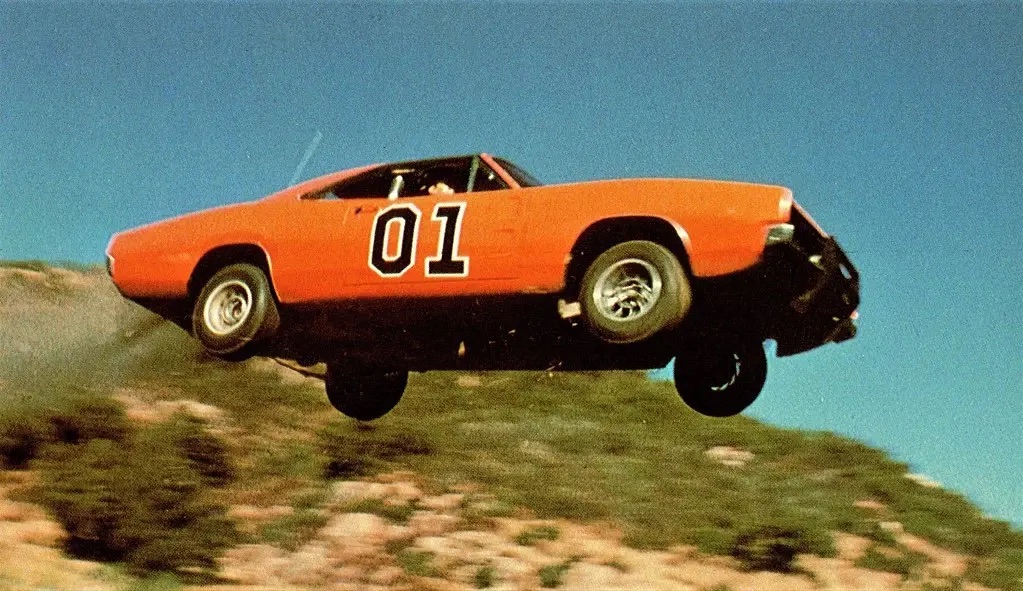
 I speak of The Dukes of Hazzard. A lot of this show wouldn’t fly today, but my memories of it are fond. And no, not just of Daisy Duke in her Daisy Dukes. To a young boy the idea of jumping a car over a massive pile of dirt and leaving the cops in the dust felt like the moon landing.
In Hazzard County, winning came easy and every day was great—not unlike my childhood. Particularly of times with my brother Peter. Floating tubes down the creek (or “crick”, we called it back then), riding bikes down dirt roads, ripping leaves off the lilac tree and using them as currency at our fake stores, sleepovers in the chicken coop, sleepovers in the wagon, sleepovers on the front porch. Our feet were often bare and our hands were dirty. Life felt free enough to pursue a boy’s greatest desire: Adventure.
I don’t want to forget that feeling. Sitting behind a desk for a few decades can start to wipe that away. But hit play and the memories come back. Listen close to the final verse for a beautiful turn of phrase, describing a mother’s confusion. Cue the music. Waylon, let her rip.
 This is the second song on this list that for me just drips with cool – and the first of three songs from movie soundtracks. Many songs on this list remind me—a guy who’s often loud and worldly—to be more grounded, gentle, and introspective. But every so often I’m probably too introspective, too stuck in my own head, too wound up. That’s when I need someone to tap me on the shoulder and say “Hey pal, quit taking yourself so seriously. Get out there and have some fun.”
This song is that someone. The movie: Oceans 11. The song: “Ruben’s In”—Ruben being the large, past-his-prime casino magnate who’s slyly approached by two schemers—played by George Clooney and Brad Pitt—who are trying to get Rubin to join their heist-to-end-all-heists. The soundtrack wisely includes bits of dialogue from scenes, including this one. And what dialogue it is.
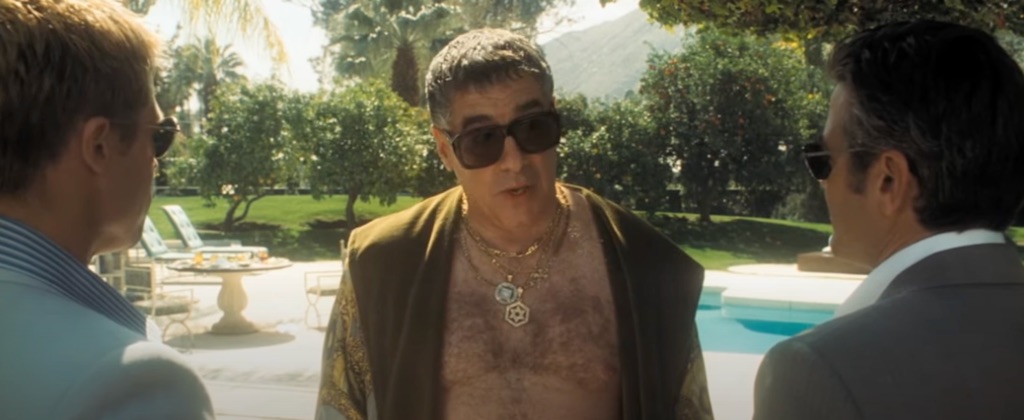 Pardon a wee bit of profanity. And picture the scene: Rubin, with sunglasses, silk robe, cigar, and star-of-David necklace dangling on his bare chest. Opposite him: George and Brad’s characters in dress shirts, fitted jackets, and thousand-dollar sunglasses. It’s a meeting of the minds, a collision of fashion, and the moment we know these three guys are about to get out there and have some fun.
 Only around mid-life did I come to appreciate the genius of The Sound of Music. Many popular musicals have skated by on just one or two great songs (See “Joseph and the Amazing Technical Dreamcoat” and, ahem, “Cats”). Not so with Rogers and Hammerstein’s 1959 masterpiece about a woman raising someone else’s seven children during the German invasion of Austria. “The Lonely Goatherd”, “Do-Re-Mi”, and “My Favorite Things” each contain complex wordplay hiding in plain sight. I smile thinking of how much fun those songs must have been to write. But I deceive myself. I suspect it was very hard work.
But the song that has given me the most to think about is “Edelweiss”—written by Rogers and Hammerstein as Captain Von Trapp’s tribute to the national flower of Austria. The captain (played by Christopher Plummer with vocals dubbed by Bill Lee) is joined by his daughter Liesl, as he sings a farewell to his homeland, knowing he is soon to flee as the Nazi takeover is imminent.
To me, the power of this song is less about national pride the captain feels, and more about the sincerity of singing about something so small and fragile as a flower. Of all the things this man is about to leave behind, he thinks of a flower. It brings to mind Christ’s admonition: “Consider the lilies of the field, how they grow; they toil not, neither do they spin. And yet I say unto you, that even Solomon in all his glory was not arrayed like one of these.”
 The entirety of the song is a single verse sung twice. Such was its timeless craftsmanship that many Austrians in the 1960s claim to have fondly remembered the song from their youth, as if it were passed down through generations. Yes, the song is created from whole cloth, but its power is real. I want to always live in a time and place when men are willing to humble themselves in reflection upon of one of God’s own favorite creations: A flower.
 This is the Unforgettable fire by U2, from the selfsame album of 1984. Seeking a new sound, the band sequestered itself in an old Irish castle to live, write, and record an album of songs that were less about rock n’ roll and more about mood and ambient sound.
The resulting songs are hard to pin down. They wander about like ghosts—hard to glimpse and harder to interpret. And that’s part of the charm. I like this notion from David Byrne of The Talking Heads. He said that in music, some songs are best absorbed by their sonic impression—rather than an understanding of what words are being sung.
This song fits the bill. I’ve never looked at the lyrics—don’t ever intend to—or tried to understand the words I’m hearing. I just go with it, and I’m taken back to a place in my teenage years when I was discovering music and thinking “Can this be a song? Because I like it.” Daydreamy and loopy, it calms me and reminds me of youth and possibilities. Even today I have to remind myself: I don’t have to understand everything. Sometimes it’s just better to go with it and try to absorb the goodness around me.
 Sunshine on my shoulders makes me happy. John Denver wrote it. And I know it. By the time June rolls around and that boiling orb of hydrogen and helium is high in the sky, I’m tempted to fall down in pagan worship of this life-giving light. But I know where that light really comes from, and I’m all the more grateful.
 I guess this could be a sister song to Edelweiss—about something right in front of us, but often overlooked. And how fascinating that something so gigantically powerful doesn’t inspire us to powerful, ego-based actions, but renders us calm, giddy, joyful.
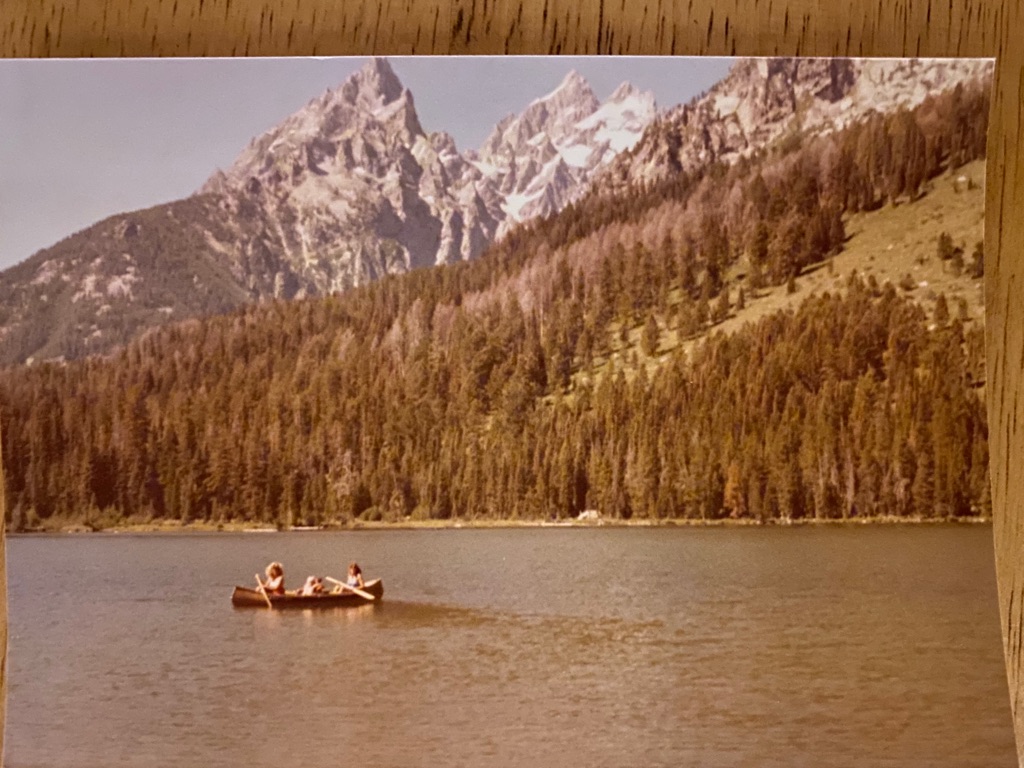
This song reminds me of youthful days at String Lake and present-day mountain bike rides. Of hikes and walks and daylight that doesn’t burn out til it’s past my bedtime. I don’t know much about hydrogen and helium, but 8 minutes and 19 seconds after their magic leaves the surface of the sun, I know what it feels like. And I’ll take all I can get.
 Now for the second of two hymns on this list—a song that I recently learned is also a favorite hymn of my sister Wendy.
Over the years my appreciation of prayer has increased, as has my understanding of its many different purposes. I still have questions about how prayer works, but I know it does. And I’m coming to understand that it works in more ways than by merely being the conduit for communicating our gratitude and desires to God. There’s so much more going on here.
C.S. Lewis put it this way: “Prayer is…a personal contact between embryonic, incomplete persons (ourselves) and the utterly concrete Person (a perfect God). Prayer in the sense of petition, asking for things, is a small part of it; confession and penitence are its threshold, adoration its sanctuary, the presence and vision and enjoyment of God its bread and wine. In it God shows Himself to us. That He answers prayers is a corollary, and not necessarily the most important one.”
 It’s time for a love song—a genre which, oddly enough, has been fertile ground for duos of dudes. Consider: The Everly Brothers (“All I have to do is Dream”), Hall & Oates (You’ve Lost that Lovin’ Feeling), The Righteous Brothers (Unchained Melody), Extreme (More than Words). The list goes on.
And in my mind, that list is topped by this duo of not merely two men, but actual brothers, and not just brothers, but twin brothers, and not just twins, but Scottish twins.
Say hello to The Proclaimers, AKA, Craig and Charlie Reid, born in 1962 in the port area of Leith, within the city of Edinburgh, Scotland. Normally, the native accent of an artist’s voice is neutralized through the act of singing. (Would anyone know that Bono is Irish if they’d only hear him sing? I doubt it.) Not so with the Proclaimers. They lean so heavily into their Scottish accents as to render certain words wonderfully unintelligible and leave no doubt as to their heritage. But that’s only part of the fun. It’s also the harmony. The lyrics. The unabashed big-heartedness of it all.
And there’s no finer example than “Sunshine on Leith”—the Proclaimers’ 1988 hit. It’s a prayer-like refrain. After confessing of a broken heart, they sing to their beloved—a woman? Scotland? Who knows?—of all the ways she has mended that broken heart and how grateful they are, to her and to God.
I dedicate this song to Stephanie, who I have loved for longer than I have loved this song. She has, again and again, mended my heart. When I hear this song, I think of her and my gratitude is renewed.
 Daniel Lanois (Lan-WAH) is a Canadian musician and music producer who’s most famous for overseeing the production of six U2 albums, including The Unforgettable Fire, The Joshua Tree, and Achtung Baby.
In 1989, sandwiched between production of the latter two albums, Lanois wrote and recorded “The Maker”. In it his spiritual yearnings are at the forefront, with a hymn-like cadence and lyrics drenched in Biblical references. It’s all here: A flaming sword, The garden of Eden, Abraham, Christ, and a sinful man confronting his dark reality. This is redemption, being worked out melodically.
Early lyrics feature an arresting visual: Jesus Christ and John the Baptist joyfully approaching our fallen man. All things have worked together for his good. Christ is the maker, healer, and redeemer.
I hope to one day see that scene for myself. For years now this song has helped keep my gaze fixed on the Maker.
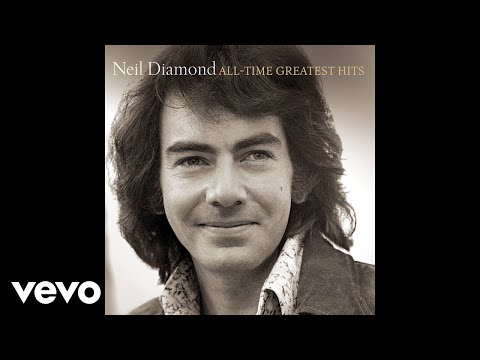 Next up: America, by Neil Diamond. Second only to Waylon Jennings, Neil Diamond’s is the other voice I wish I could magically have. You know that saying that you can be anything you want? When you have a voice like Neil Diamond, you can be only one thing: A singer. But Neil’s voice aside, I have two connections to this song that have made it resonate with me.
In November 1995 I was returning from a two-year mission in South Korea. My thoughts were of home in the narrowest sense: The home I grew up in. My family and friends in Teton Valley.
I flew from Seoul to Los Angeles and hadn’t been thinking much about America at large. I had been, after all, been safe and sound in a democratic nation that had strong ties with, and a great appreciation for, the United States. But while dragging my luggage through the wide, long customs hall of LAX, it hit me when I looked up. Hanging from the high ceiling was a row of massive American flags. You walked right under them. And up ahead there was another, and another.
That’s when it hit me—how much I loved the United States and the opportunities it had given me. I was coming home not just to a house, but to the idea and ongoing experiment that is America.

 There’s a line in this song—my second connection to it—that makes me think in a similar way of my ancestors who weren’t coming home, but leaving home on their pilgrimage to America, to receive its blessings and add to its strength. The line: “Home, to a new and a shiny place, we make our bed and we'll say our grace.” I think of my ancestors who said those prayers and put in the work to help make my life what it is.
Now, beyond that, this song is just cool. 1980s cool. So there you have it. One of my favorite voices. Singing about one of my favorite places. Making me think of some of my favorite people.
 There’s an NPR program called “I Wish I Made That” where successful artists are invited to talk at length about a book or a song or a piece of art they wish they had made.
If anyone ever asks me, I’ve got my answer. Of all the music I’ve ever heard and of all the paintings and statues I’ve ever seen, of all the books I ever read and films I ever watched, the single piece of art I wish I had made is the musical Les Misérables.
Since its debut in 1980 it has been championed, awarded, lauded, mocked, parodied, buried, and resurrected. Over 45 years, Les Mis has been produced in 53 countries in 22 languages, and seen—nay, witnessed!—by an estimated 130 million people. Why? “Parce que c'est sacrément bon.” Because it’s so damn good.
First, credit where it’s due: To Victor Hugo, who authored the mammoth work in 1862. And to Claude-Michel Schönberg, Alain Boublil, and Herbert Kretzmer for spinning Hugo’s plot, characters, triumphs, and tragedies into a melodic, lyrical masterpiece. There are no false steps in its 2 ½ hour runtime. Its characters are pure gold. Its songbook is an embarrassment of riches. Its message is divine.
The song I have chosen here—one of its 33 in total—is, to me, the encapsulation of the entire story—the narrow point upon which Jean Valjean teeters above damnation’s abyss while looking heavenward for answers. Valjean, newly released from prison, has stolen from the kind Bishop who generously took the starving man in for the night. Prior to that point, Valjean had not deserved the punishments—the “justice”—that had so cruelly been heaped upon him. But now, for the first time, he knows he deserves punishment. And, for the first time, he receives mercy.
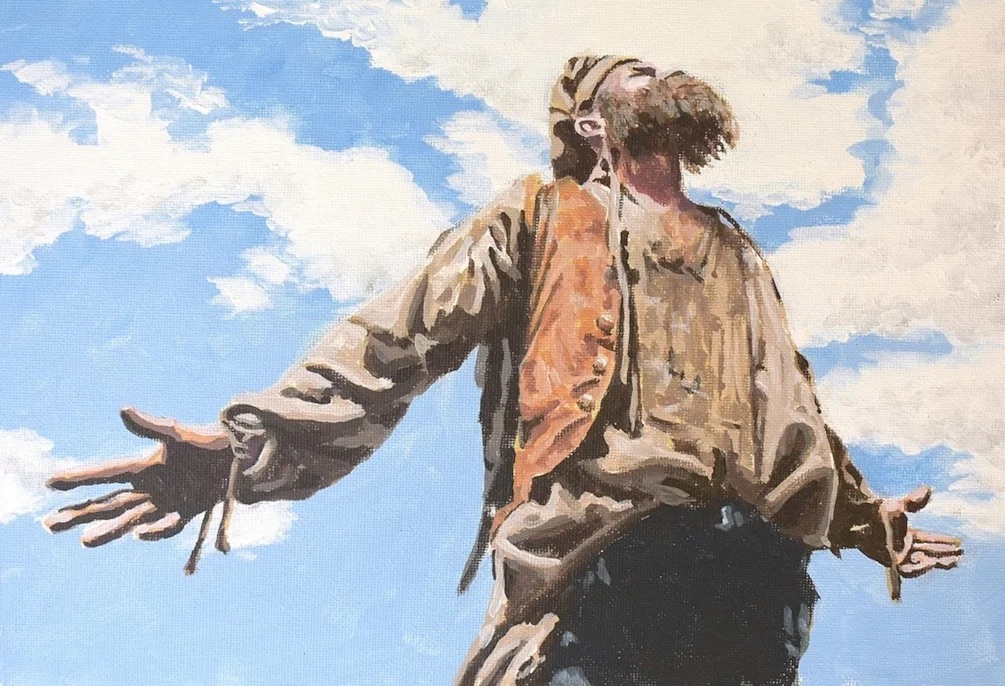 The bishop forgives him, turns the lawmen away, and invites Valjean to begin his life anew. What comes next is Valjean’s soliloquy—the working out of his past, present, and future. The song has a pulsing feel to it. Fast, then slow, loud then soft. And back around again on the wheel of human emotion. Valjean’s words veer from confusion to wonder to anger and, finally, to a confession of doubt as to whether he really can change—as much as he wants to.
Near the end of the song, stripped of nearly all orchestrating, Valjean sings unaccompanied: “I am reaching, but I fall, and the night is closing in, as I stare into the void, to the whirlpool of my sin…” This is the confession of every earnest seeker of God. I hear Alma the Younger in these words. I hear myself. “Here I am, God, alone with nothing but my sins. Reach out to me across this, the darkest of chasms. Can you, will you, save me?”
Les Misérables answers that question thunderously, joyously: Christ does reach across the chasm with more mercy and forgiveness than we deserve, more than we can comprehend.
 If I could live in any time and place two possibilities come to mind. One: Southern California in the 1950s. There’ something so innocent and magical about that time and place that was brightly blooming in every direction. Just to be a kid on those suburban streets in those shiny and safe neighborhoods.
My second choice: The wide-open spaces of the American West in the 1860s. I don’t think I’d last very long without my creature comforts, but wouldn’t it be worth it? To see the untrammeled West—The West with a capital W? No roads, no fences, nary a city, and barely a farm.
That image is evoked by this next song—the second of three songs from motion picture soundtracks. This one composed by Englishman John Barry, whose most recognizable work is the theme song for James Bond. Yeah, that one.
A great song, yes, but not as great as what came after: The soundtrack for 1985’s Out of Africa. I’m not particularly enamored with the film itself, but that soundtrack. Wow. And as great as it is, it’s not as great as what came after that, Barry’s 1990 soundtrack for the film that went on to win Oscars for Best Picture, Director, Adapted Screenplay, Film Editing, Cinematography, Sound Editing, and—yes—Original Score.
This film has its detractors. Fine. I will go to my grave loving its story of friendship, sacrifice, courage, and its lush melodies that make me grateful for the West I live in and the West I long to see.
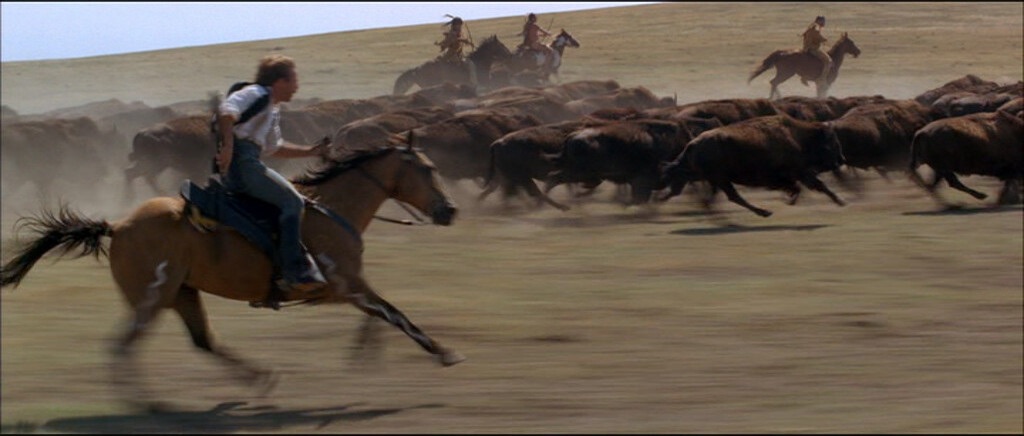
 It’s 1863. Given his choice of assignment, Union Army Lieutenant John Dunbar requests a transfer to the American Frontier. What he sees changes him—right down to his name. The Sioux Indians take him for a madman and name him Dances With Wolves. That’s where the story begins. And this is that madman’s theme song.
The final scene features Dunbar’s enemy-turned-friend yelling at him from atop a cliff. “Dances with Wolves, I am Wind in His Hair! Do you see that I am your friend!? Can you see that I will always be your friend!?” Dunbar feels the same, but knows his time to leave has come. He rides away while Wind in His Hair solemnly yells this over and again.
 I don’t even know how this next song found its way to me, but whenever it did, I knew it was a keeper.
Nick Cave, leader of the Rock and Roll band Nick Cave and the Bad Seeds, is an Australian singer, composer, actor, songwriter, and screenwriter. More than those titles, he is a man of experience. So much music today is written and performed by artists so young and with so little life experience that it’s difficult to take it seriously. I like a good pop song every now and again, but when it comes down to it I’m hungry for the meat of great songs performed by people with the gravitas to sing about life’s toughest moments.
Cormac McCarthy, one of my favorite novelists, famously said that he only cares for writers who “deal with issues of life and death.” I think he would have liked Nick Cave’s music. Not only does he sing of life and death, he’s more than qualified to do so.
While being held in a police station on burglary charges at age 19, Nick’s mother came to bail him out – and to tell him his father had been killed in a car crash. Later in life, Cave had two sons die years apart, both in tragic accidents. Death is on his mind, but so is love and the possibility of salvation. Cave has confessed to an on-again-off-again relationship with religion, but has searched for and found something in the Bible. He’s quoted as saying that “any true love song is a song for God.”
 And that’s what we have here. A love song. I instantly thought of Stephanie when I first hear this—and still do. From Nick Cave’s grief, from his pleading and pondering, comes something beautiful.
 We’re getting down to the nitty gritty, and in the number three spot sits a song that doesn’t try to dazzle me, but simply pulls up alongside me and makes me smile with a message of enduring love.
This is “I Just Called to Say I Love You” by Stevie Wonder.
One thing I love about this song is that it doesn’t repeat any verses. Instead, Stevie Wonder breaks up the chorus by methodically working his way from January to December, joyfully recounting the small wonders found throughout the year. It’s a song that has its cake and eats it too. All those things are indeed wonderful, but that’s not the reason for the phone call. It’s something even better.
 It's as simple as that. This song fits right in with Luckenbach Texas, Edelweiss, and Sunshine on my Shoulders. A reminder of the good life that’s right in front of us—and what’s more—the blessing of having someone to love. And someone who loves you.
This is for you, Steph. Thanks for always picking up the phone.
 As a testament to the importance that some dreams go unfulfilled, I offer exhibit A: It’s 1977, and George Lucas has exiled himself to Hawaii—hoping to be insulated from possible negative reactions to the release of a little film called Star Wars. He invited a friend to join him—Steven Spielberg , who had recently completed his fifth film, Close Encounters of the Third Kind.
Spielberg was enjoying success (with Jaws—widely considered the world’s first summer blockbuster—also on his resumé), but lamented to Lucas that he wasn’t well enough known to get the job he really wanted: To direct a James Bond film. As it turns out, he’d never get that opportunity. But there on the beach, George consoled Steven with the possibilities of a new idea he’d been cooking up: The Adventures of Indiana Smith.
Today, no one laments the absence of a Spielberg-directed James Bond film. But where would we be without Indiana Jones and the Raiders of the Lost Ark? Without the professor with a bullwhip. Without “I dunno, I’m makin’ this up as I go”. Without “It’s not the years, it’s the mileage”. And, of course: “Snakes. Why’d it have to be snakes?”
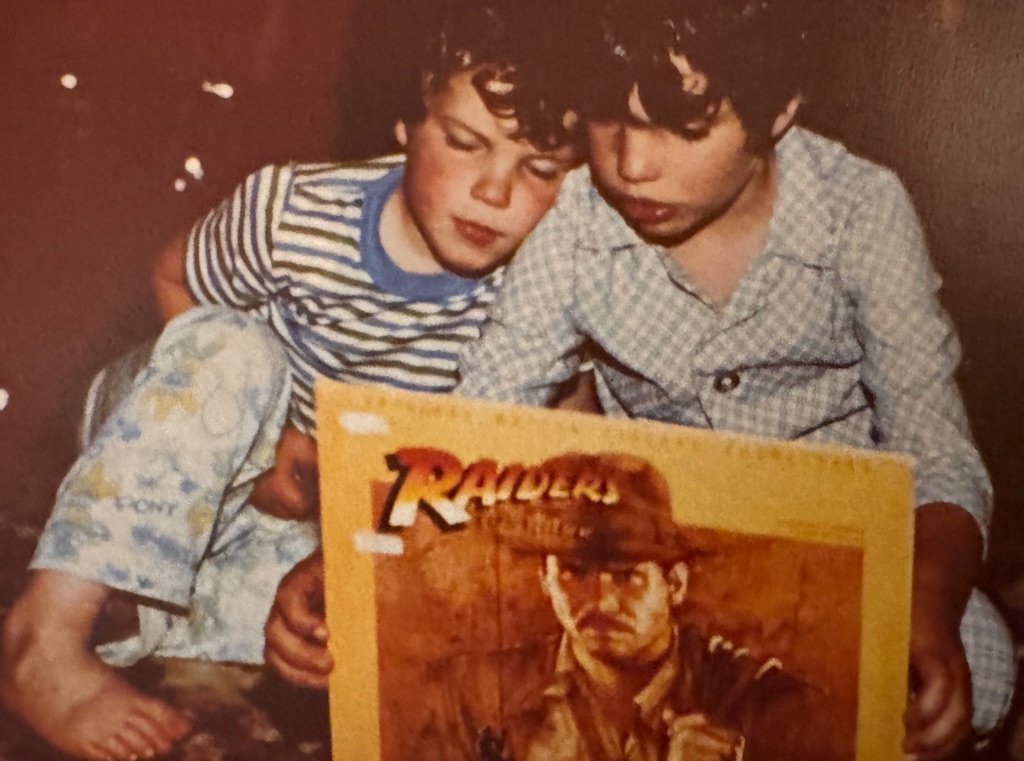
 Personally, I’d be lost. Or lesser, without it. The film was released in 1981 when I would have been 7 years old, so I doubt I saw it in the theater. But at some point early in my childhood the silhouette of a man with a fedora on his head and a bullwhip coiled at his side was forever etched in my brain. And my parents kindly purchased the soundtrack on vinyl, so experiencing the movie was as simple as turning on the music.
Joining Lucas and Spielberg was the incomparable John Williams with a soundtrack for the ages, and the oft-overlooked screenwriter: Lawrence Kasdan. Together they pulled off that rarest of feats in cinema: Story, characters, dialogue, cinematography, and music—not just occurring simultaneously, but synthesized into movie magic.
Later, in adolescence, Raiders was the film that ignited my interest in movie-making—a path I followed until I pivoted to advertising, which is just an industry full of wannabe filmmakers. More importantly, the sights and sounds of Raiders of the Lost Ark continues to renew in me the childlike wonder of hearing just a few notes of music and recognizing the call to adventure.
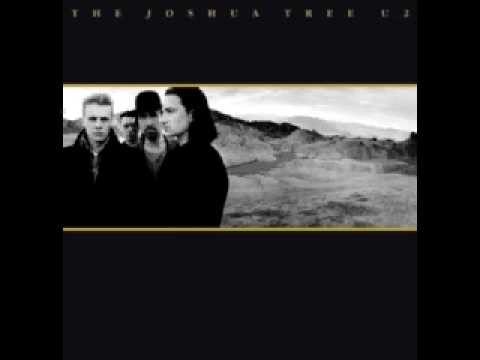 Of course it’s from U2. And no surprise that it comes from The Joshua Tree album. In 1987 it spawned three mega-hits: “With or Without You” and “I Still Haven’t Found What I’m Looking For”—the only two U2 singles that ever reached #1 in the U.S.—and “Where the Streets Have No Name”. Those are the first three songs on the album. Do you know of a better one-two-three punch to lead off an album? Ever? I sure don’t.
The song’s eventual power wasn’t easily harnessed. The band spent an inordinate amount of time trying to tame a wild stallion of a song that passed through different time signatures and a larger than usual batch of chord changes. It was like a riddle driving them mad. They knew they had something, but week after week, they didn’t quite have it. At one point, co-producer Brian Eno considered erasing the tapes holding what meager progress they had made—in the hopes the band would either give up and move on or start fresh and figure it out.
In the end, the band estimated they spent half of their studio time on The Joshua Tree just trying to solve what became the opening song. And solve it they did.
As for the lyrics, Bono was intrigued by the reported notion that you could identify someone’s religion and social status merely by knowing the street on which they lived in Belfast, Ireland. He pondered this idea and compared it with the tent cities that had sprung up in famine-plagued Ethiopia—cities so large they required actual streets. Streets that had no name. This latter style of streets that was home to those who had nothing and yet had everything in common, became a sort of yearning for Bono. Not for poverty or hunger, of course. But for the casting off of vanity, social status, and money in the pursuit of a higher ideal: Commonality and brotherly love.
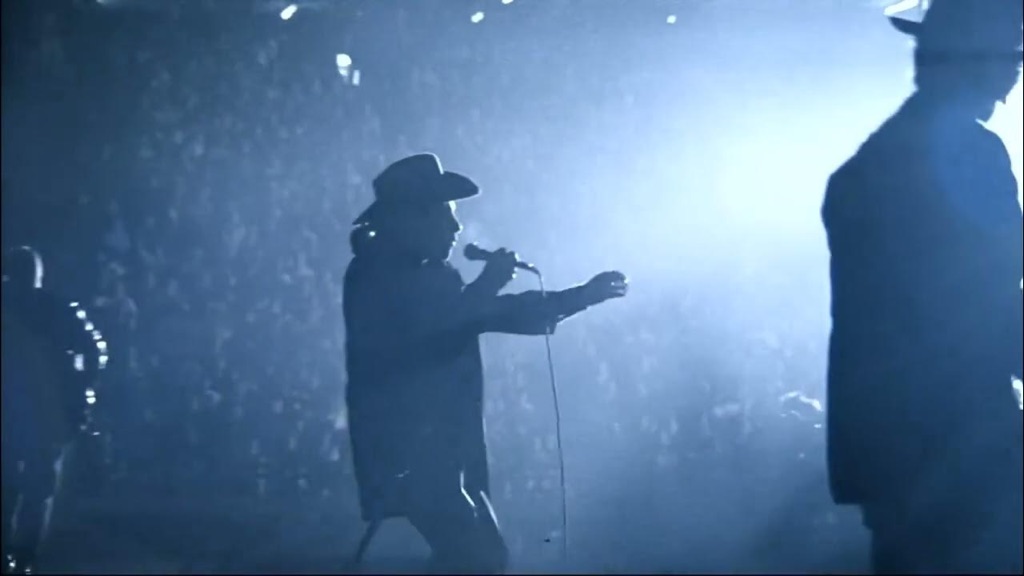 Here again is that rare trifecta: Lyrics, melody, and vocals that transcend being merely a “song”. It’s become a personal anthem for many, myself included. Rousting me from complacency. Firing up the neurons. And pointing me toward the next worthy horizon.
In the end, my wishes are simple: Bury me at sunset with the John Dunbar Theme softly playing. Then, on that glorious morning when I’m next in line for resurrection, turn the volume up. Way up. And press play. This is my song. And I’m a comin’.
Bonus: Footage of the band performing the song at Sun Devil Stadium in Tempe, Arizona, eight months after the album’s release.
