or Trails in the Sky#
Harry Hilliar
Day 1#
We landed in Kathmandu after a fairly ordinary pair of flights punctuated by a decent laksa. It’s great to see the guys again and as always, it was straight back to great chats and lots of laughs.
We didn’t see much of the city given our direct transfer, but the trip from the airport was eye opening. An incredible torrent of humanity surging through choked streets; shanties and shopfronts and wires and rubble and filth and chaos. These people drive cars with a fearlessness that can only be concomitant with a cheapness of human life. I was stunned by the sheer amount of vehicles we saw - the city clearly revolves around vehicular transport.
We checked into a pretty standard hotel, I roomed with Briz and we set up shop quickly and went for our first briefing on the roof. Our guide, Sangam took us through the basics. His accented English was hard to follow and I didn’t take much away from it. He was not as charismatic as our guides from Kili, but seemed competent - if a bit young. He recommended crampons, which Ned, myself and a few others disregarded. Arrogant westerners, probably - and more true than I’d like.
We went out to the streets to hire some gear. On foot, the city can be intimidating. Mopeds and motorbikes fly through cramped alleyways and we ducked and weaved our way past electric wiring that had been arranged haphazardly and was frequently dangling down at head height. We waited for an age at one of a milieu of equipment hire/purchase shops. I eventually hired a sleeping bag that was rated for -20C and was much larger than I anticipated - which made me anxious about my pack composition. I bought some trekking poles too - figuring they might alleviate some of the pain in my foot and avoid the disaster of the Kili descent. We did some other fairly uninteresting shopping and then went back to the hotel and got changed for dinner.
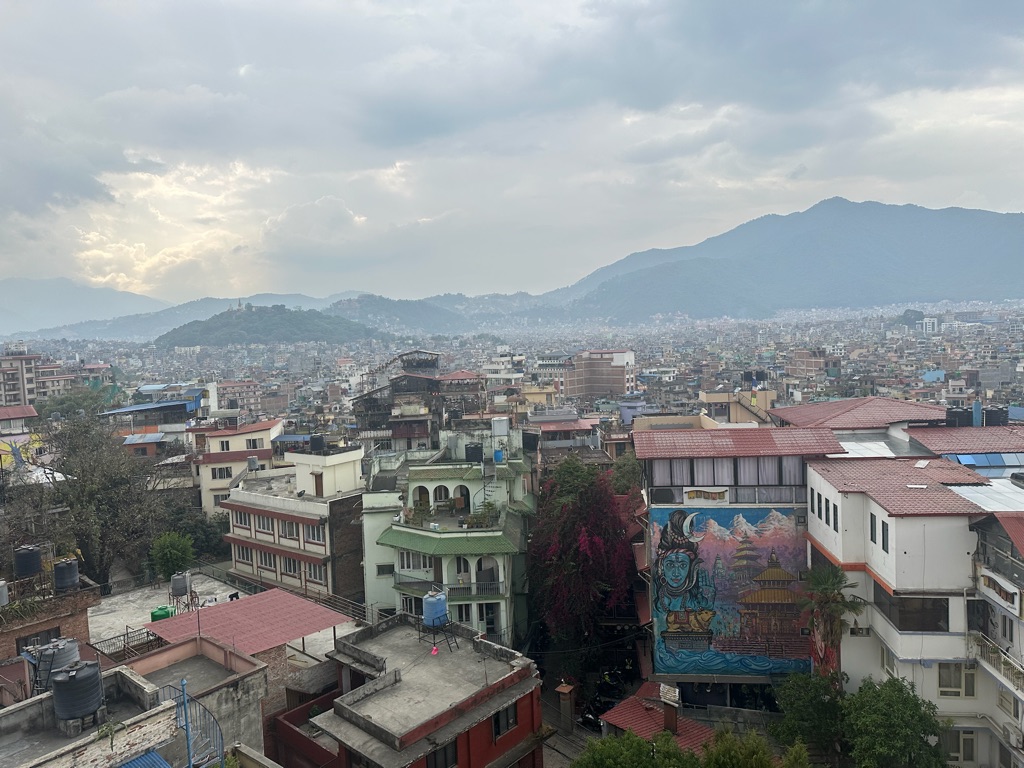
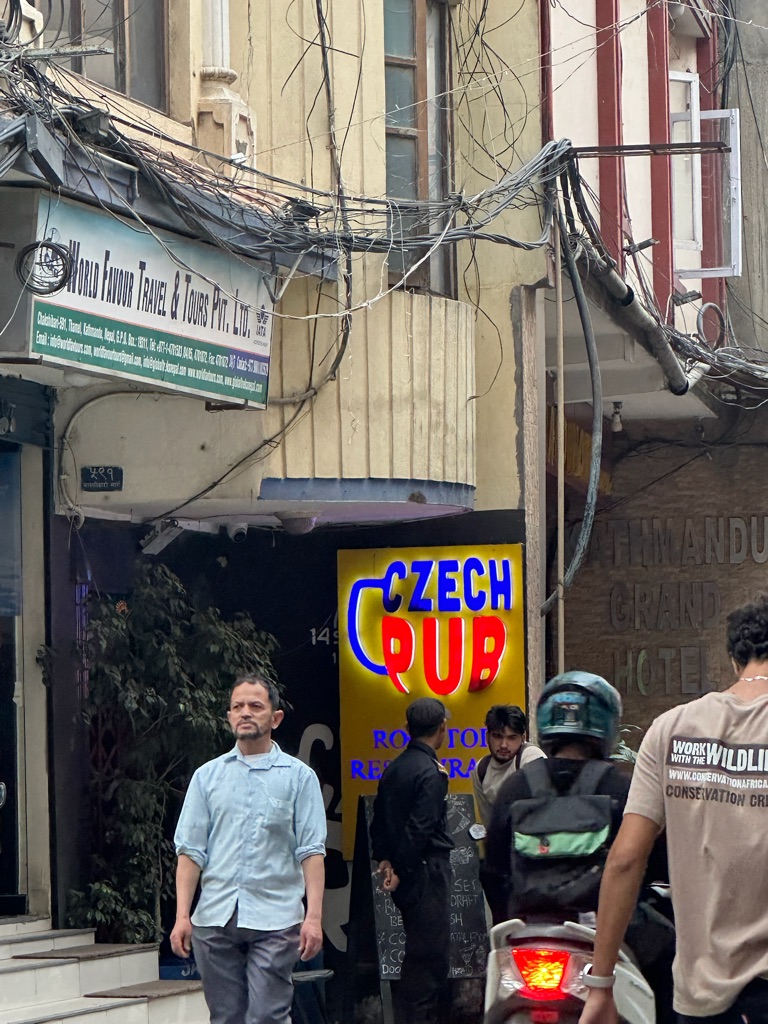 Dinner was at a fairly up market local restaurant which felt like a bit of a tourist trap. There was a band in the anteroom playing traditional Nepalese music. We all got vegetable thali, which is also more commonly called “daal bhat” - a beloved traditional dish of rice, aloo curry, lentil soup, pickled vegetable and spinach (or saag). We also got some momos, a Nepalese steamed dumpling. The food was great. We all shared a beer and enjoyed our night, despite having to wait an extended period for Jake’s apple fritters and my gulab jamun, ordered spontaneously towards the end of the night.
We returned home with orders to present to the lobby at 5:45am for our bus to Besisahar, where the trek would begin. I spent some time fucking around with my pack configuration and eventually landed on a happy setup. It would be about 14kg+ with 3L of water, which made me a bit nervous - but let’s see how we go.
Day 2#
I awoke from a pretty shit sleep as usual, got kitted and went downstairs. We crammed into our bus and set off for Besisahar. The bus ride was 7 hours, but incredibly went quite quickly with conversation rollicking along.
I had thought that in our mid 30s and post marriage for most our chat might have changed - but there is still much affection and hilarity in juvenile shit talking. Despite frequently hanging shit on each other and generally smack talking, the group dynamics clearly clicked well and everyone was obviously enjoying themselves. It made me feel good, to spend time in this environment with these people. They are all good people and I care about each of them very much, even if I struggle to show sometimes.
The long road was frequently punctuated by homes, businesses and small communities. There was rarely a long stretch of road without some presence of civilisation, which I found interesting. We stopped for breakfast at a waterfront restaurant (which was currently in the middle of a blackout) that had set up a Bain Marie buffet for us - the food was absolutely delicious. Fried rice, roti, onion pokoras and other accoutrements made for an excellent meal which everyone roundly enjoyed, despite the rain pouring around our outdoor setting.
We hit the road again for another long stretch before arriving in Besisahar, where we immediately had lunch after being introduced to our other guides - Roshan and Ratna. Their English was slightly better than Sangam’s, and we hit it off quickly. I had the daal bhat for lunch, given it seems to be the default meal option - I was still stuffed from breakfast but couldn’t help myself. The food was great. I bought a beanie for 300r (about $3.50) and we set off on our trek.
The first leg was a 4 hour walk to our first stop in Ngadi. Despite starting out in long pants, the heat of the day quickly caused me to zip off into shorts and hike in a t shirt. The boots weren’t as comfortable as I hoped, but as we started progressing the beauty of the landscape made itself plainer.
The biome was one that I was somewhat unfamiliar with. Sort of a cross between jungle and more temperate climate, there was dense grassland, forests, rivers and - above all - undulating valleys that lead to great mountains that peer down imperious and uncaring on our tiny group. No snow caps yet, but easily bigger than anything we would find back home.
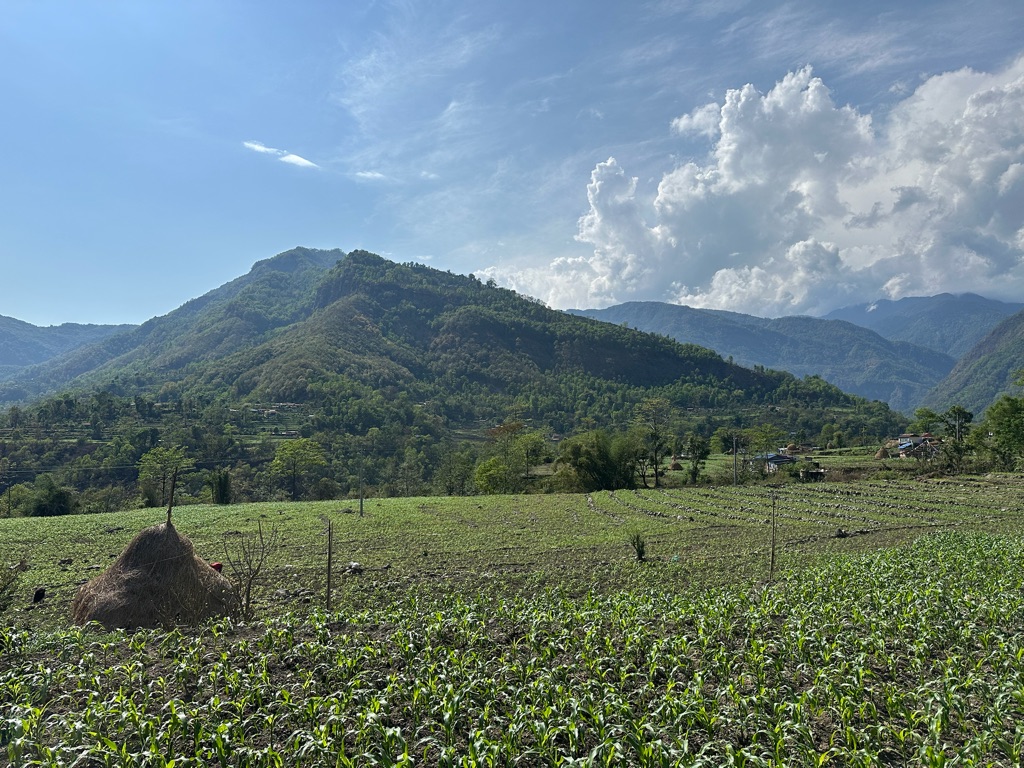
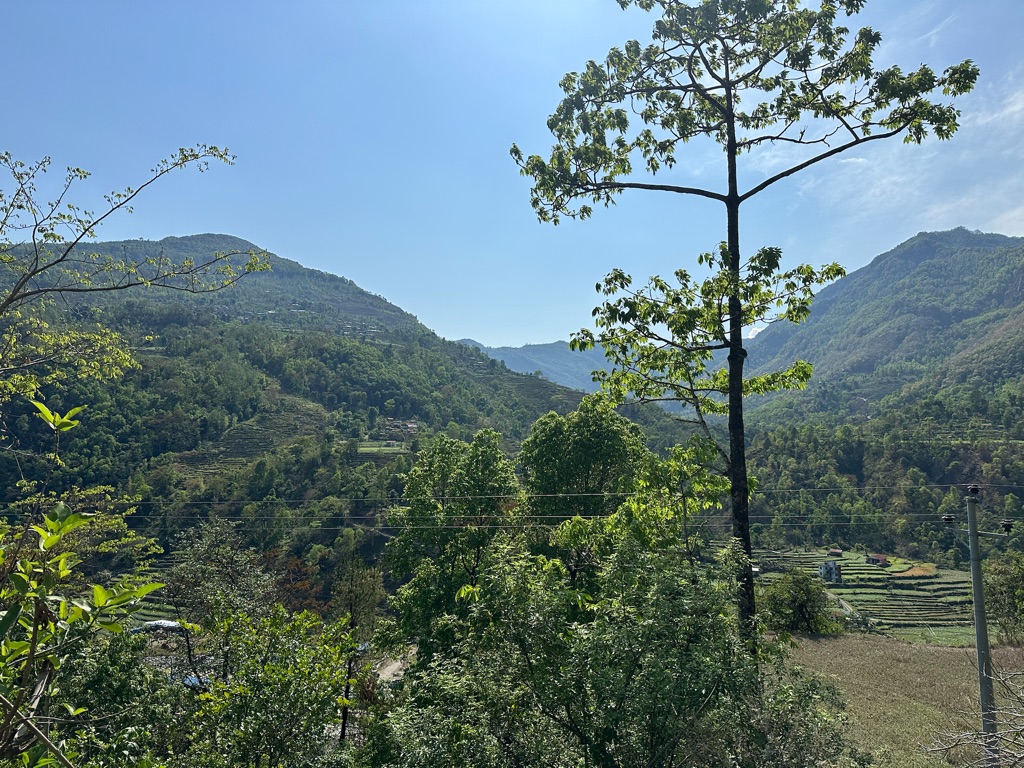 Our trail wound through this landscape, frequently zigzagging up steep slopes. We made reasonably frequent stops for water, and whilst the pack was heavy it wasn’t particularly fatiguing at this point - which was good, given it was only a four hour trek on day 1.
We encountered a large hydro power installation, which had clearly been built by the Chinese, probably as part of the Belt and Road programme. They had rerouted the raging river through that station and built a massive tunnel through the mountain, which we walked through. At this stage it became apparent that at times we would be sharing the road with general traffic, which was a little immersion breaking but not unduly so. Following the river, we came to our first stop - a tea house in Ngadi, which was set in a broad valley that looked to be agriculturally dominated.
Putting our packs down and sitting in a chair after a four hour walk with a heavy pack was bliss. The fellas were generally elated to be sitting down and having a chat. Our guides the effectively acted as waiters to the tea house - taking our order for dinner after handing us menus and then subsequently serving it to us - though they did this much later in the evening.
I roomed with Jake, and the room itself was a little cabin as part of a few linked rows of cabins - probably 10 in total - which each held two beds. We unpacked our kit and chatted for a while until it was dinner time. I ordered an egg curry, which was pretty nice - but was roundly dunked on by the fellas for not joining them in getting a daal bhat. I was happy enough with my choice. Brown, Jakob and I had a beer with dinner, which were served in long necks.
Overall a pleasant day ending at a peaceful location. I’m feeling good about the trip, but our guides have told us we will be walking for 8 hours and over 19km tomorrow, which should be a good challenge for the kit and body.
Day 3#
We woke at 6am to breakfast, which we ordered the night before. I had Tibetan bread, which was a bit like a pretzel, served with an omelette. Very filling food. We set out shortly thereafter up the road towards our destination, a town called Chyamche.
The start of the trek was along the road, where we passed another hydro power station before heading off on a trekking trail up into the mountains. We encountered a small village in the hills, where we saw a local man high up in a tree chopping branches down. He stopped to wave at us, which seemed unreasonably dangerous - but we enjoyed the interaction.
The agriculture in the mountains is achieved through tiered farm plots, which look like a giant staircase with elongated steps that move with the contour of the land. It makes me wonder what inspired the people that settled here to build villages in such difficult terrain. The architecture of the village similarly moved with the mountainside, with houses set at precarious angles or cantilevered over cliffs. The pathways through the village were steep, but it was an interesting first encounter with the mountainside dwelling locals and we were thrilled by it.
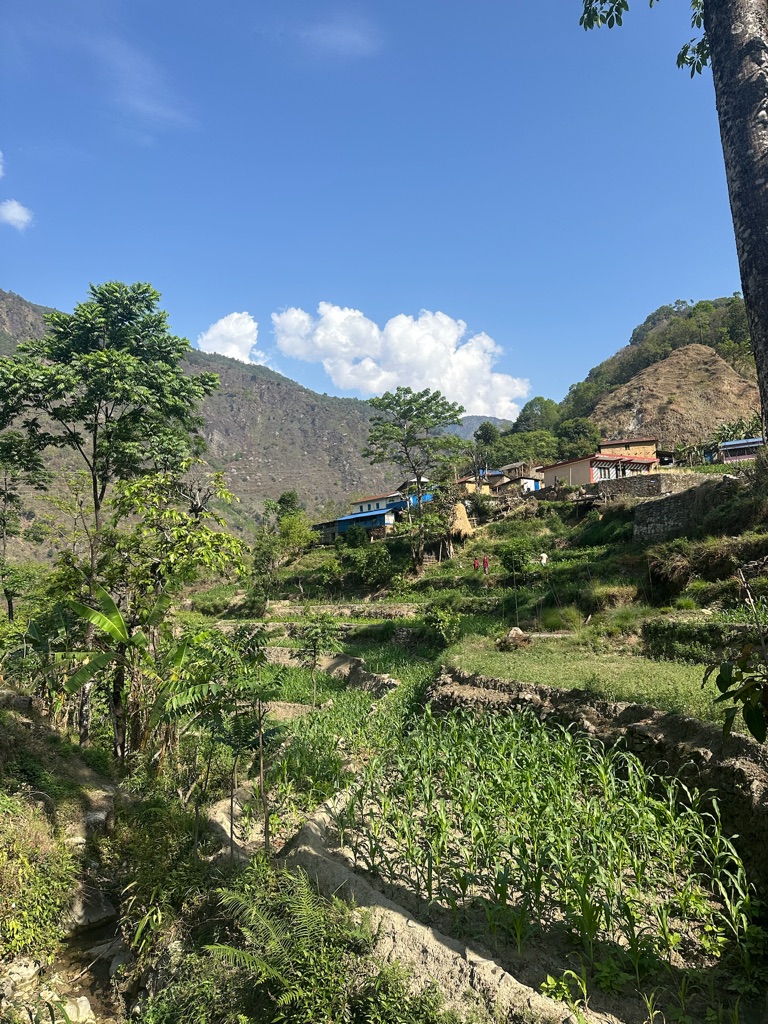 Making our way onwards to our first stop, we crossed a wire bridge which spanned a small crevasse in the mountain. The bridge swayed and bounced as our group traversed it, which was pretty nerve wracking - though thrilling at the same time. The bridge seemed to be of sturdy construction though. As we crossed it, someone pointed out a dead animal lying in the bushes next to the tree. It looked like a dog, which made me think of Willy and feel sad. I miss him and Amelia already.
We arrived at our morning tea spot, the aptly named Superb View Hotel, which was at the apex point of another mountain town. We enjoyed some tea and took photos of the spectacular vista. My pack had become quite heavy by this point and I was beginning to appreciate the level of physical effort this trek would require.
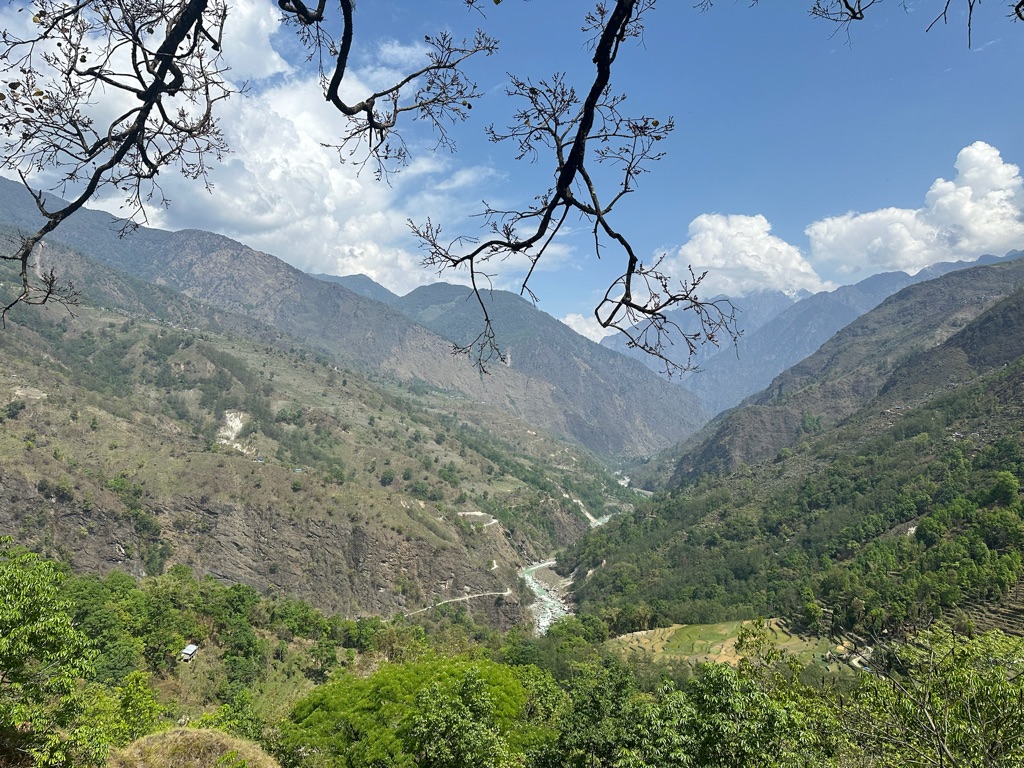
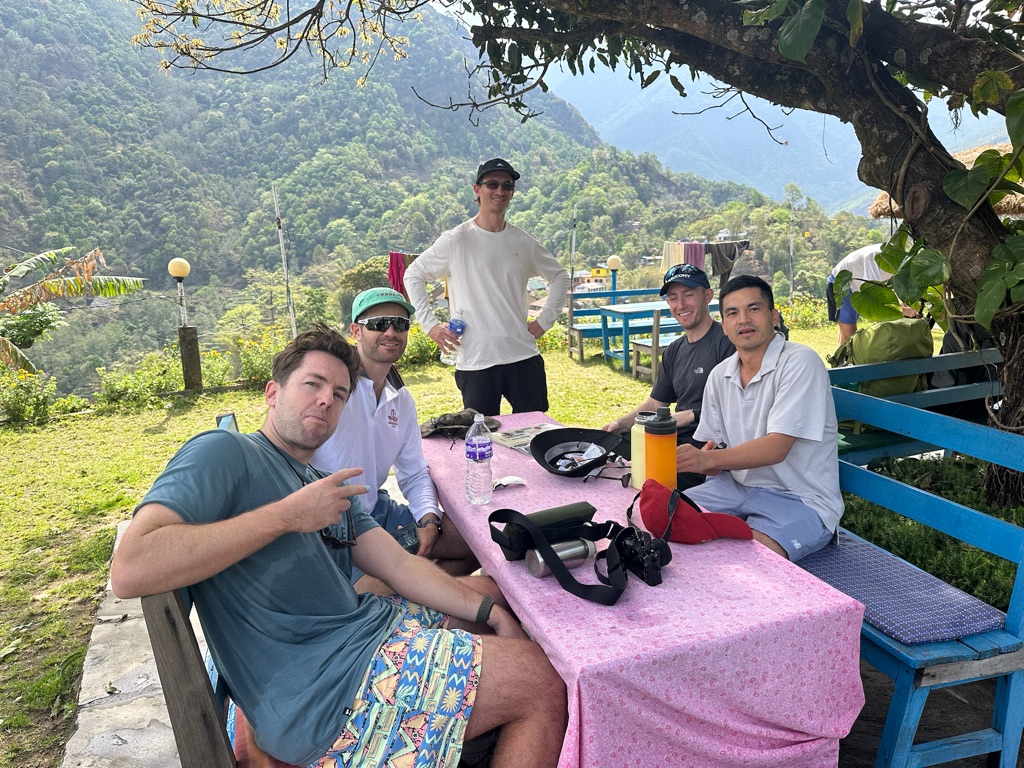 We walked on, rejoining the road before arriving at our lunch stop just as the rain began to fall. I opted for daal bhat again, despite not being particularly hungry. It was explained to us that with daal bhat, you get additional serves of the component foods - it is a little plain, but very filling and quite tasty. Our guides would regularly exclaim: “Daal Bhat power 24 hour no toilet no shower!” They eat it for almost every meal, often with their fingers and no cutlery.
I am trying to learn some basic Nepalese, things like please (kripaya) thank you (dhanyabad) and others. The people are all very courteous and polite, many greeting us with “namaste” and a smile. Unlike other developing countries I have visited, we have not been hassled for money or similar - which is quite refreshing.
The other challenge is the impact of the extended walking on our feet. I broke out the trekking poles today which made a significant difference after a few steep descents started to cause some pain around my toes. I also wrapped some hikers wool around my toes underneath my sock, which was a revelation in terms of reducing pain.
After lunch we walked along the road for a short period before ascending some incredibly steep stone stairs that struck off from the side. After four hours of trekking and a big lunch, this was exhausting. It was a real challenge to push through it, but in the end we all got there. I went back to my tried and tested method of counting every 10 steps and doing a little mental self-congratulation on the tenth.
The stairs then rejoined the road, which was one of the more unpleasant portions of the day as we would regularly have to hug the mountain when trucks, cars and motorbikes passed us. They threw up dust which was a little choking, so I put on my buff and breathed through it (taking the lead from our guides with this) which helped a lot. We continued to yap away with each other as well, which made the time fly.
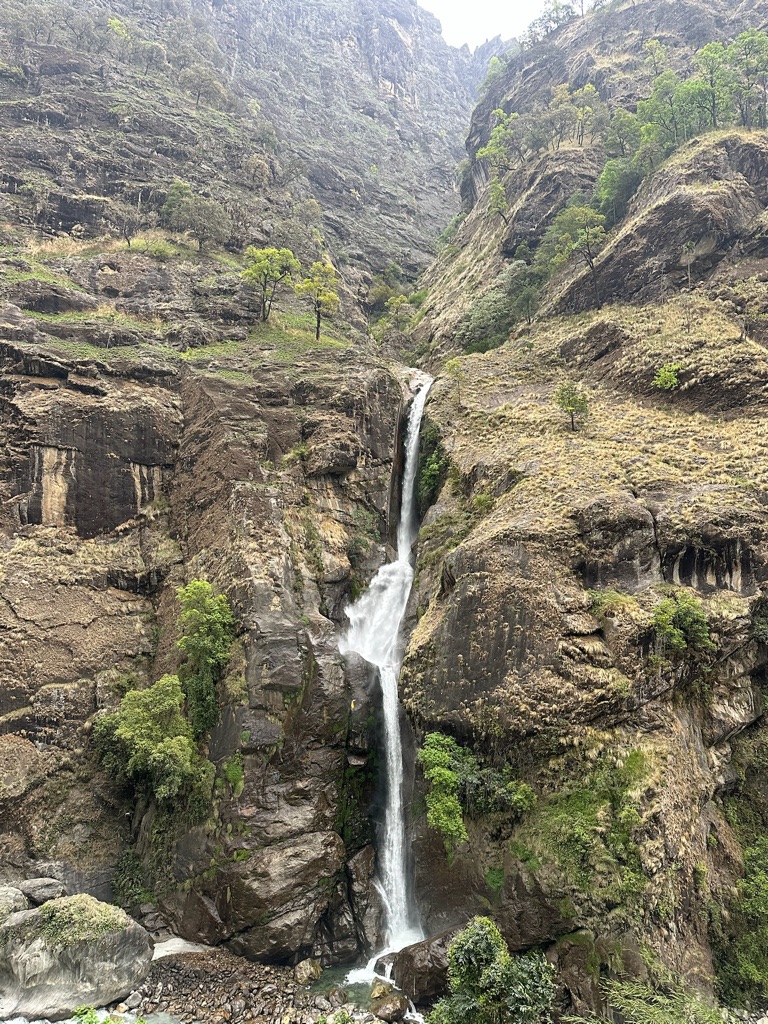
We came to small dip in the mountainside road with a small restaurant looking out at a huge waterfall. The force of the water crashing down through the rocks and into the raging river below was immense. The rock face parallel to our route was enormous and in many places completely sheer. Our guides showed us a cluster of bee hives which had been created by bees that ate a particular flower - causing them to create a honey that had an intoxicating effect. The locals had crafted a terrifying ladder and gangway leading to the hives to harvest the honey, which looked nothing less than insanely dangerous. We assumed the honey and its effects must have been awesome to warrant such risks.
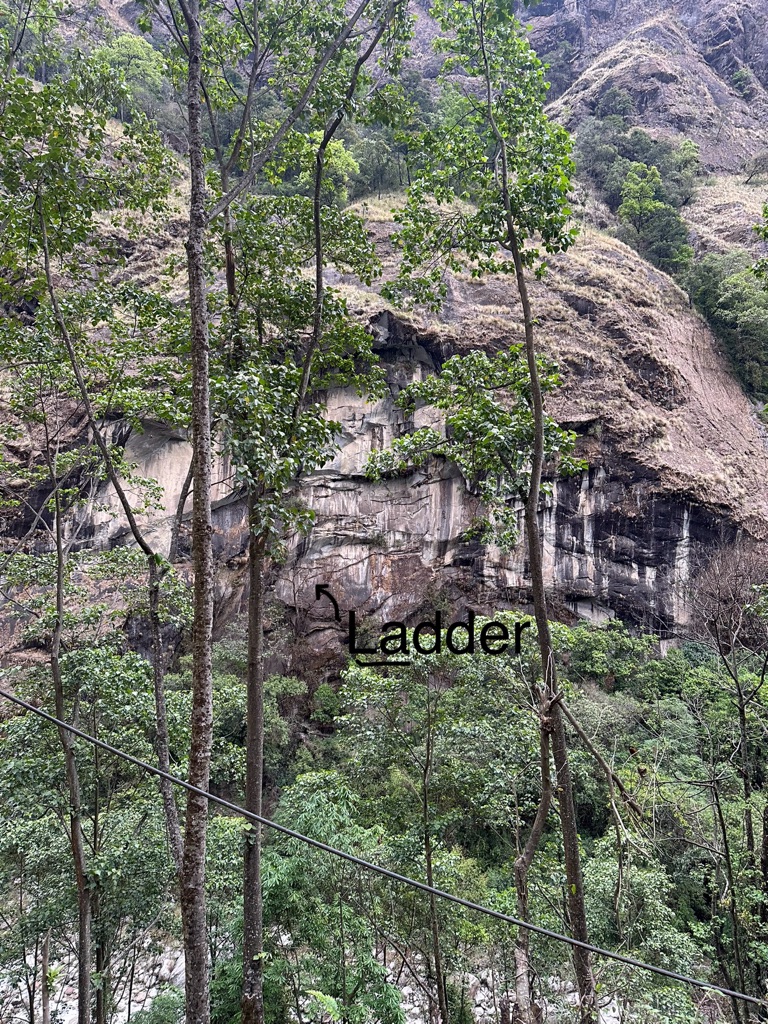
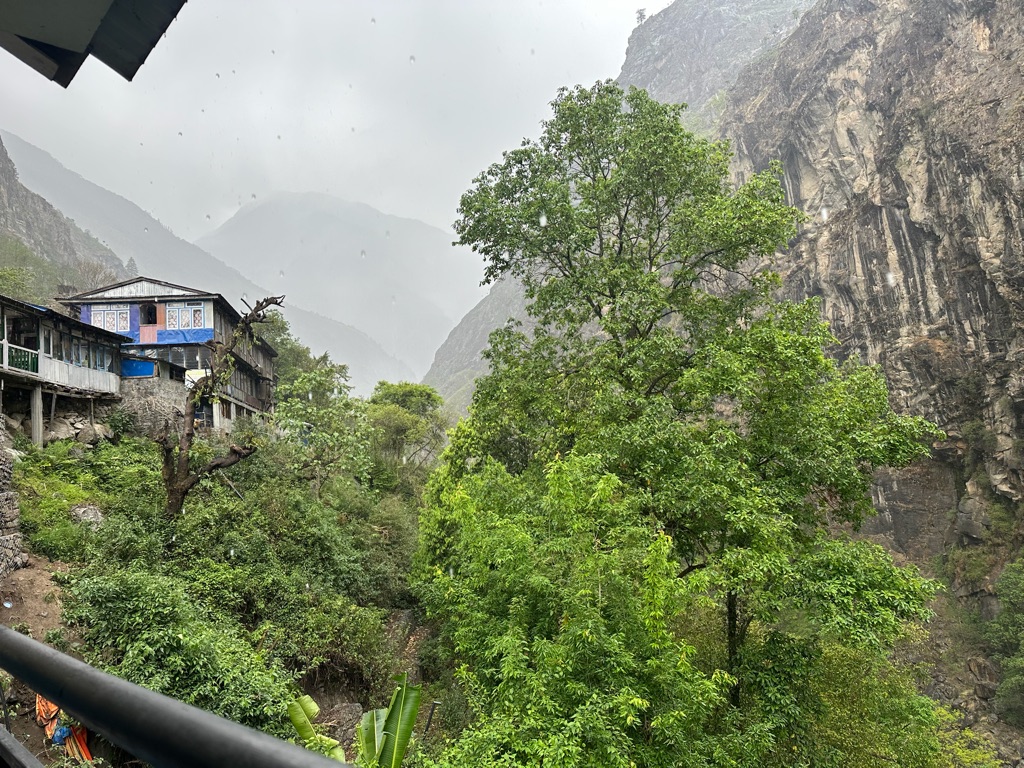
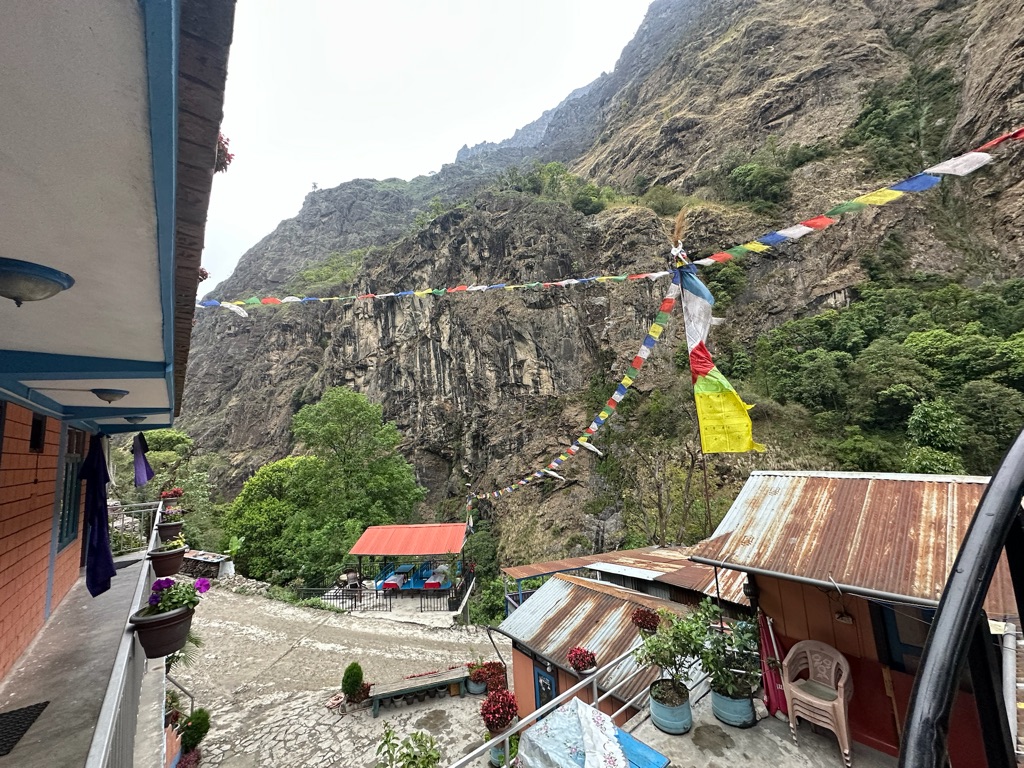
 Shortly after, we arrived at Chyamche. It was a surreal experience - we were showed to a covered table area that protruded over the edge of the rock face. The entire village had been built ingeniously into a mountainside. We wondered aloud how a decision would have been made to settle here, in terrain that would probably have initially warranted the description ‘impassable’. Based on their fearless driving through relatively poorly maintained mountain roads, the locals are clearly inured to the instinctive fear that comes with being a few metres away from a fatal fall at any given time.
Our rooms here were comparatively luxurious, each having an ensuite and a long bed. We were exhausted after the long trek and talked of having beers but ultimately resisted the urge - leaning into seeking the purity of the moment following Ned sharing a quote from his book that morning about a similar experience in the high places of the world by its author.
We purchased a big jug of tea and played cards - Monopoly Deal proving to be an early favourite - and were overtaken by a sense of euphoria which prompted us to wonder whether the tea was laced with something (it wasn’t). The mood around the group was high despite a challenging day and I sensed a general presence of mind that facilitated enthusiastic conversation.
The stairs to the rooms snaked in a tight spiral to the upper level. The whole town seemed perched at geometrically improbable angles, with each viewpoint providing line of sight to the deep valley and roaring river below. I was completely taken in by the majesty of this tiny town, located somewhere that felt completely incapable of settlement.
 For dinner I had thupka, a noodle soup with egg, vegetables and thin slices of dried meat. A few of the boys opted for a ‘Swiss rosti’, which turned out to be a strangely textured disc of potato with yak cheese melted on top. It was broadly regarded as a poor choice. I had my own share of bad luck with my ‘rice pudding’, which turned out to be rice boiled in milk and served as a thin soup with coconut pieces and sultanas.
After some more conversation and highly competitive games of monopoly deal, we hit the hay. Surprisingly, the bed was long enough for my feet not to hang off the edge. Nepal is one of the last places I’d expected to find that.
Day 4#
We enjoyed a bit more of a sleep in this morning, with breakfast scheduled for 7.30am. Some of the guys had woken a bit earlier and headed out to the sheltered space overlooking the valley for their respective morning activities. Breakfast for me was just porridge and banana - having figured that we will have access to daal bhat for lunch and I’d only need to be tided over til then.
We mucked around with a local kid for a bit, throwing Jake’s foam roller back and forth pretending it was a dumbbell - it looked like an old style strongman weight. Most Nepalese keep to themselves, but some of the younger ones are happier to interact with us beyond a perfunctory ‘namaste’. I saw a guy I went to school with - Josh Jesse - walking through the town. I shouted out to him and we shared a hug and quick chat - it was good to see him after so many years.
We began our journey to Tharapani and set out down a low trail across another long cable bridge and started our ascent beneath an overcast sky. It was nice to be off the road, but we started to see other trekkers for the first time which was a bit of an adjustment - it felt like we had the track mostly to ourselves up until this point. The track arced back and forth across the gradient of the valley side as we made our way up to our tea stop. The mountains are becoming increasingly dominant - imposing themselves on the skyline in every direction.
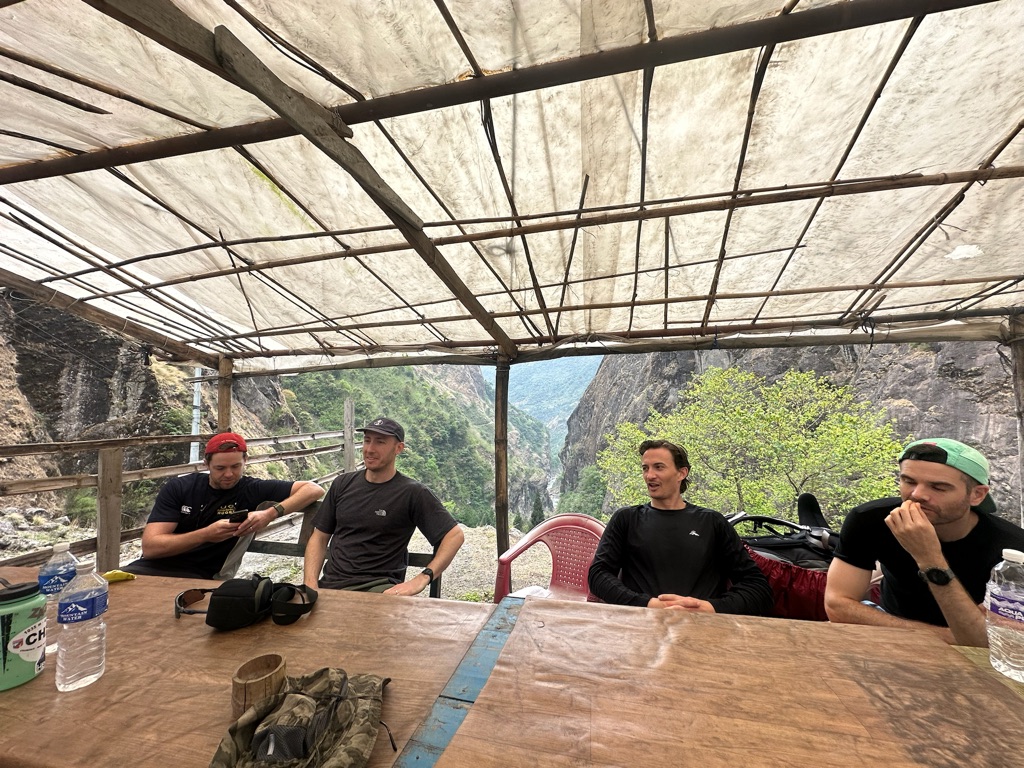
We arrived at a tiny little cafe operated by an old woman who plied us with sweet milk tea and glucose biscuits. We moved under a sheltered outdoor table as the clouds gave way to rain. The stop was perfectly timed, as just after we attached our rain covers and got our wet kit on, it eased off.
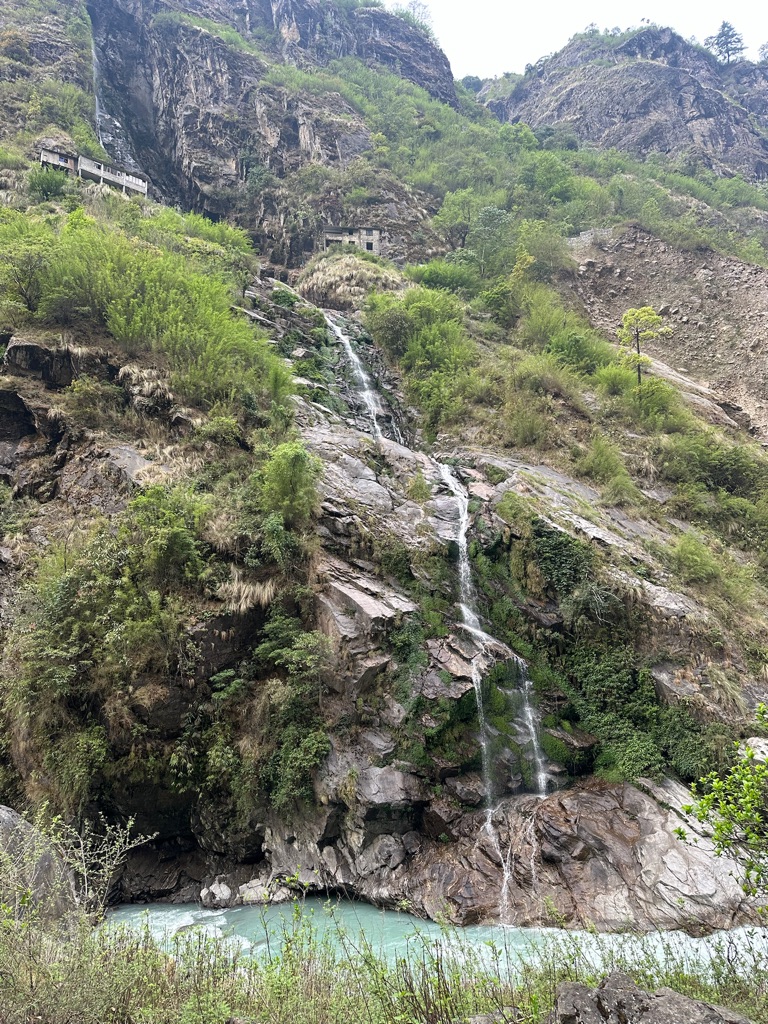
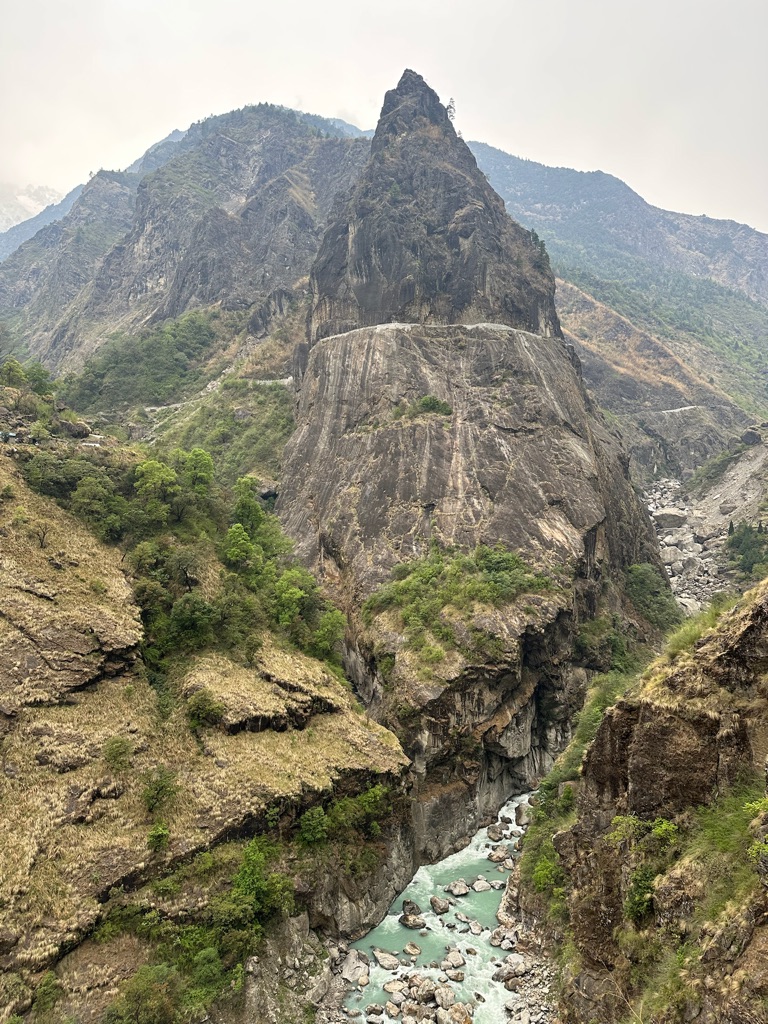 We walked on, reaching the peak of the ridge that we were ascending for the morning. People are farming everywhere here - we found a hut filled with goats, more tiered agriculture and people and houses almost everywhere, scattered seemingly haphazardly across the steepling landscape. Some villages are positioned so high up the mountainside that we wondered how you could live up there and be adequately supplied. I suppose they must live off subsistence agriculture.
We descended again gradually, traversing another zig zagging decline before making our way down into a large flat valley - devoid of any plant life and about three hundred to four hundred metres across at its widest point. Our guides later told us that the river had swollen to such a point that the whole bed of the valley was water - presumably not, however, the small town of Tal that was located slightly above water level. During our passage through the valley floor, the river was quite small - making it somewhat difficult to imagine the significant size of the river at full flow.
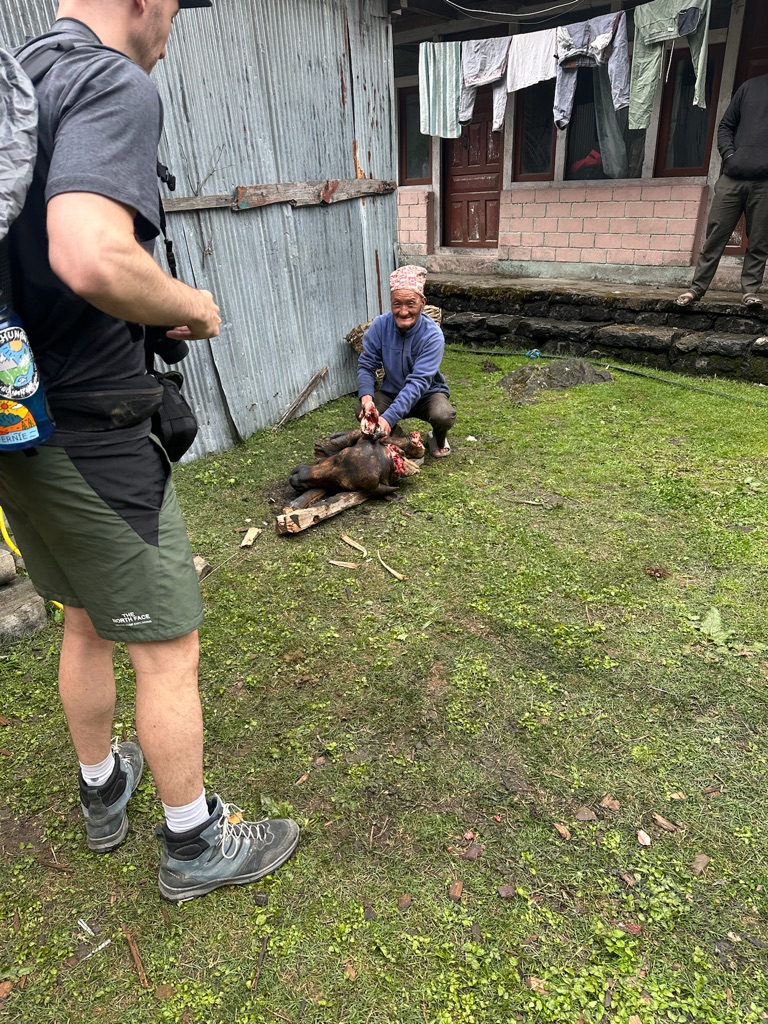
We saw a small cluster of huts where some locals were firing a flame jet at a decapitated ox head. The man operating the blow torch would have been older than 70. His wizened face broke into a broad and toothless smile as we approached, and he yelled “happy Nepalese new year!” Our guides had told us the previous night that this was new years’ day, but we thought they might have been joking. There didn’t appear to be much celebration to mark the occasion - unless you count blasting an ox’s severed head with flames I suppose.
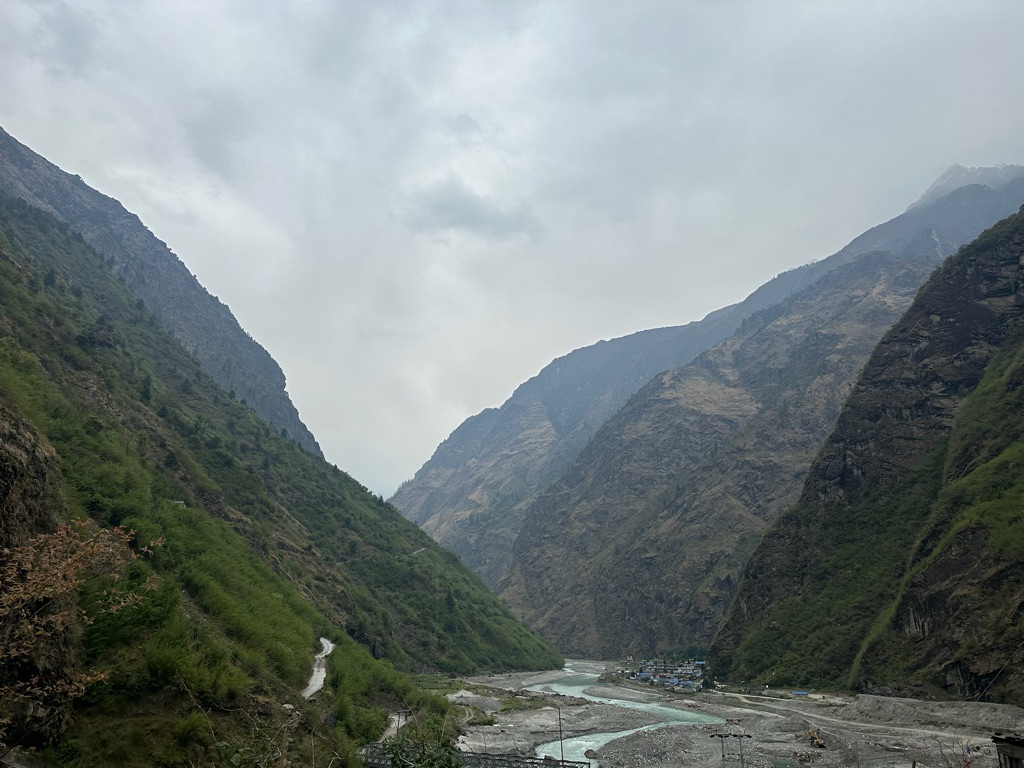 We stopped in at a local village for lunch, with everyone opting for daal bhat. Jake and I added on the chicken curry, which was probably a little speculative but we’d seen enough chickens wandering around to feel like it would be fresh. The meal was immaculate and easily my favourite of the trip so far. They brought out fresh kimchi as well, with some chillis grown locally. The spice levels gave me the hiccups but it was definitely a heart starter. The meal was roundly enjoyed by all and we set off again in high spirits after a comparatively long lunch break.
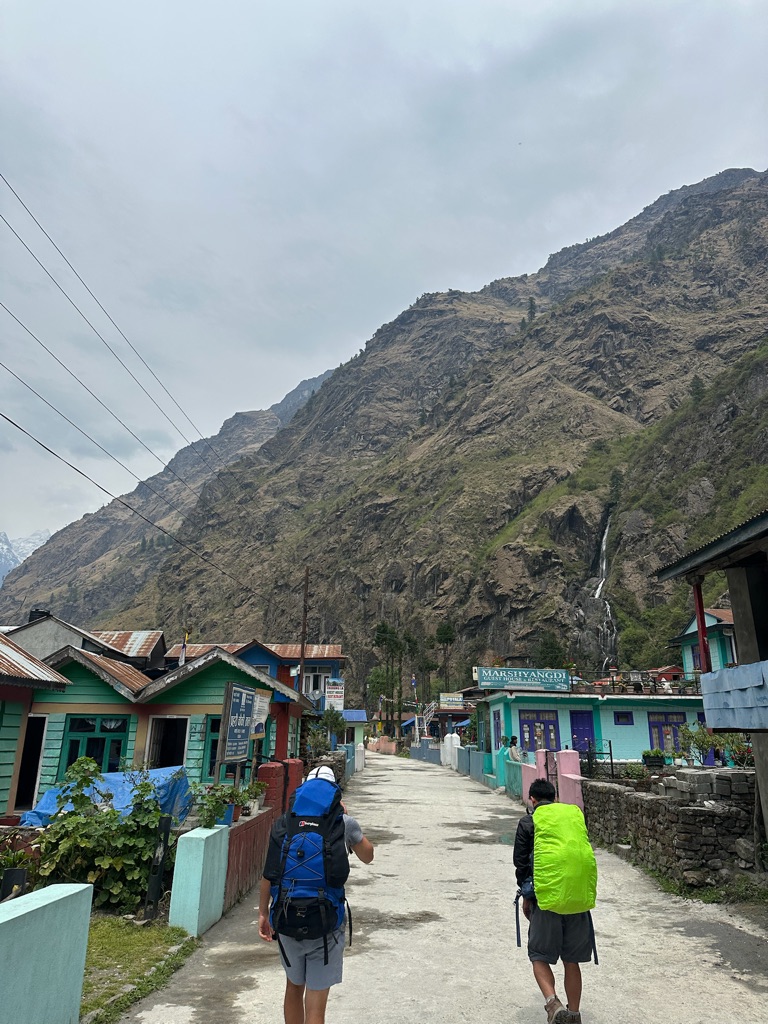 We continued to traverse the riverbed before ascending a small staircase built into a shelf in the rock and crossed a cable bridge which would have been 200 metres long, strung with multi-coloured Buddhist prayer flags. It was hard not to notice the rust and degradation of the cables holding the bridge up. This would retrospectively become even more frightening when we saw another bridge that had been swept away by high river water.
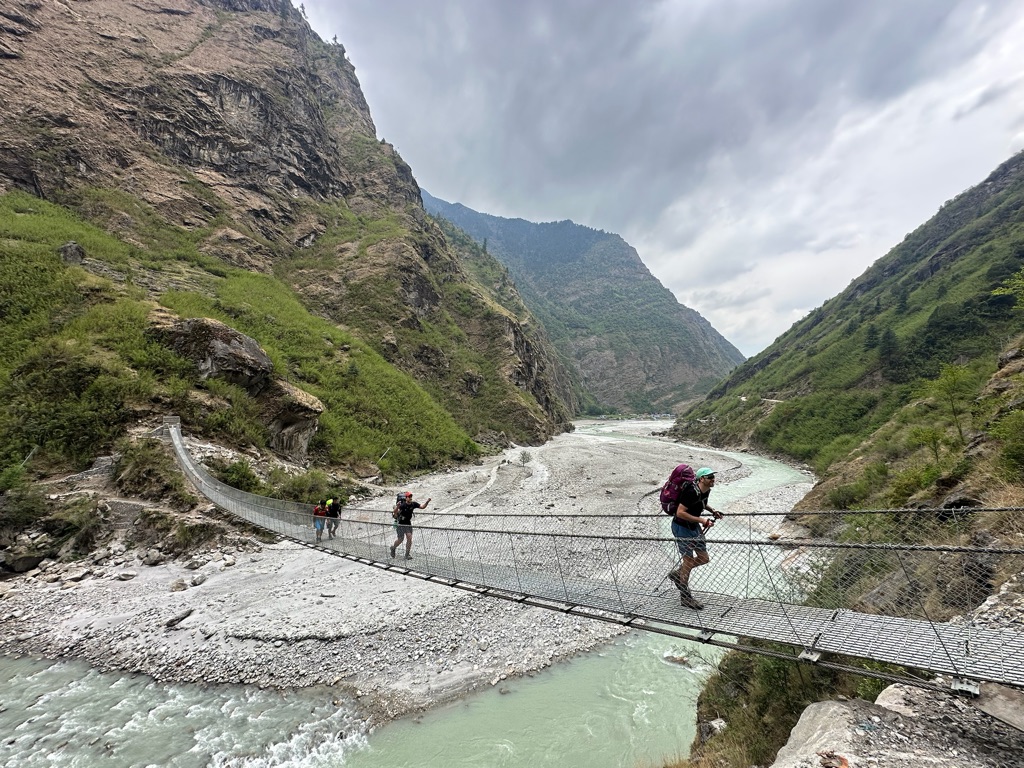 I was developing a bit of a headache at this point so I decided to start taking diamox along with some pain killers. The pain subsided and we encountered some white monkeys in a tree high up on the cliff side. They were too far off to get a good look at though. We walked on along a road cut into the side of the mountain, passing a waterfall crashing down from a great height before rounding another descending ridge and seeing the first great mountain. Its peak rose up in a way that reminded us of the toblerone logo - it was incredibly majestic and gave us a taste of what was to come.
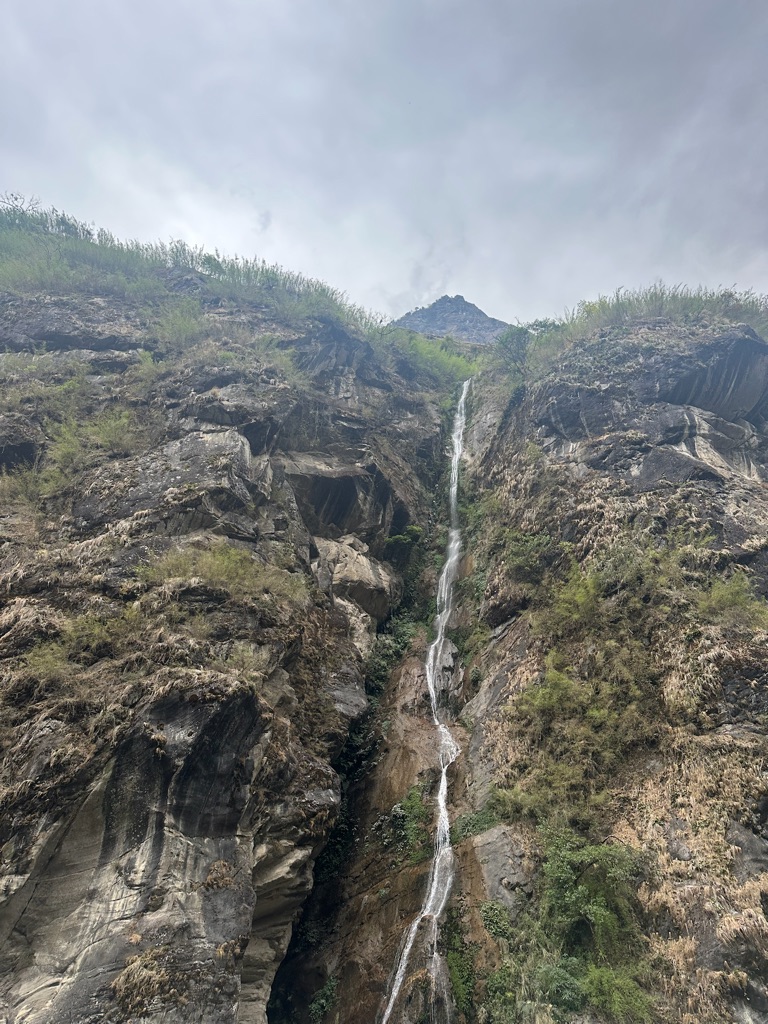
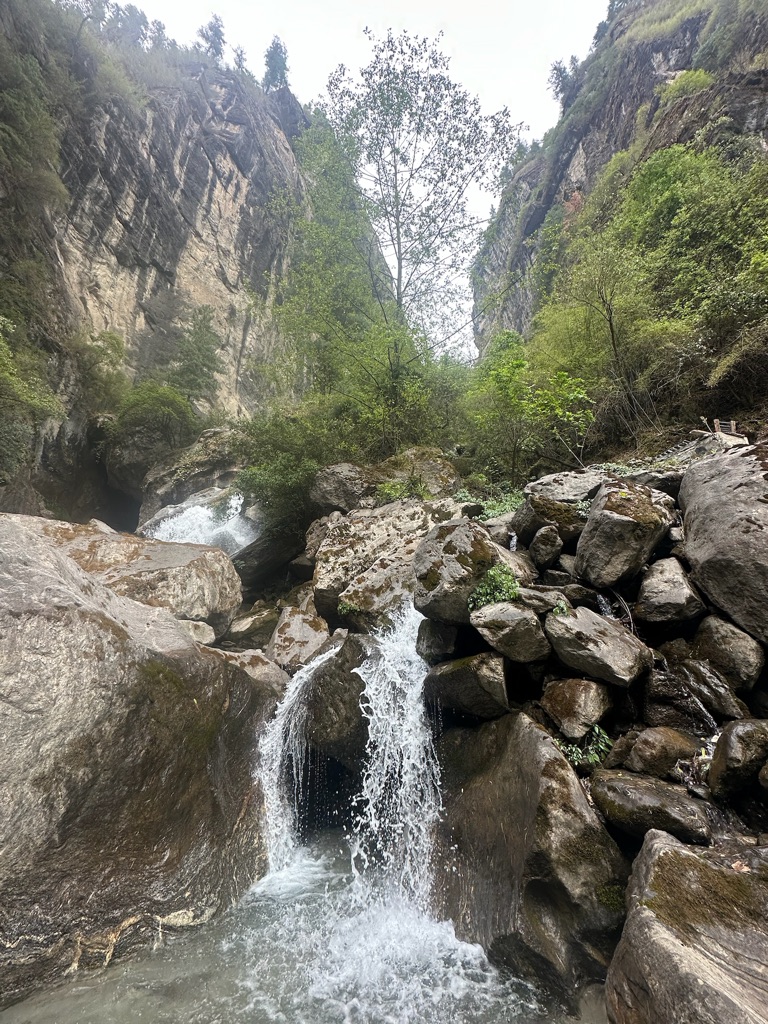
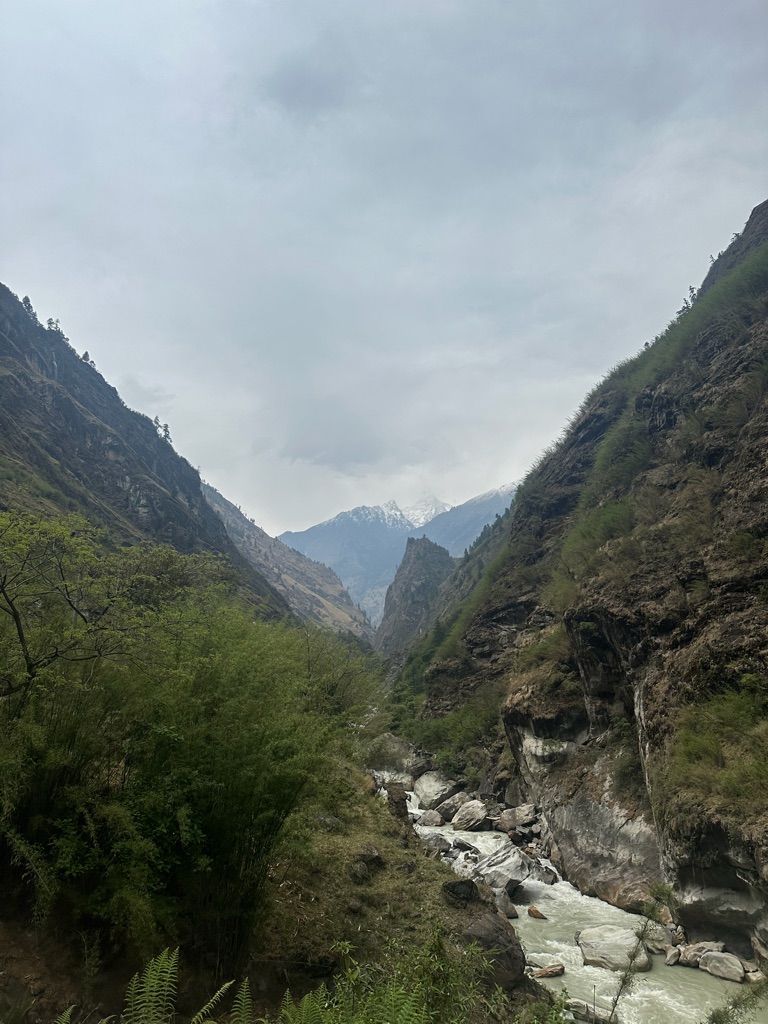 We wound our way along the road for another hour or so before we arrived at our destination, a smaller town called Tharapani which was preceded by another waterfall which was accessible by cable bridge. Ned thought it looked like a good place to swim, which was on his mountain activity list - so we decided to drop our bags at the tea house and return with a change of clothes for a swim.
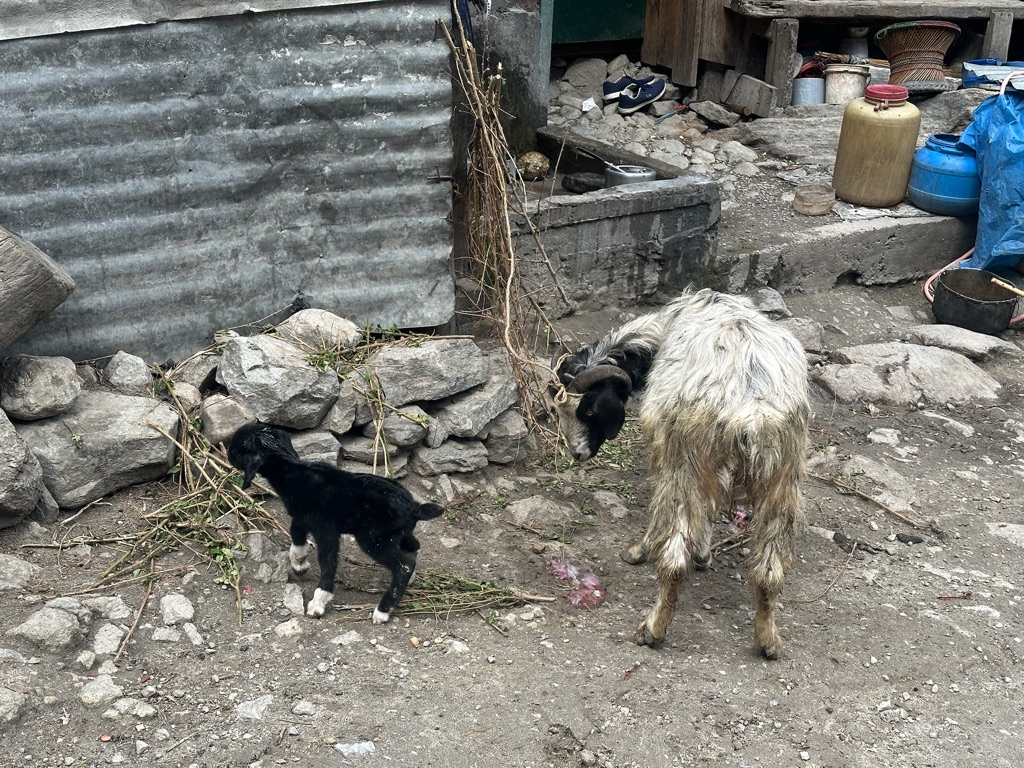
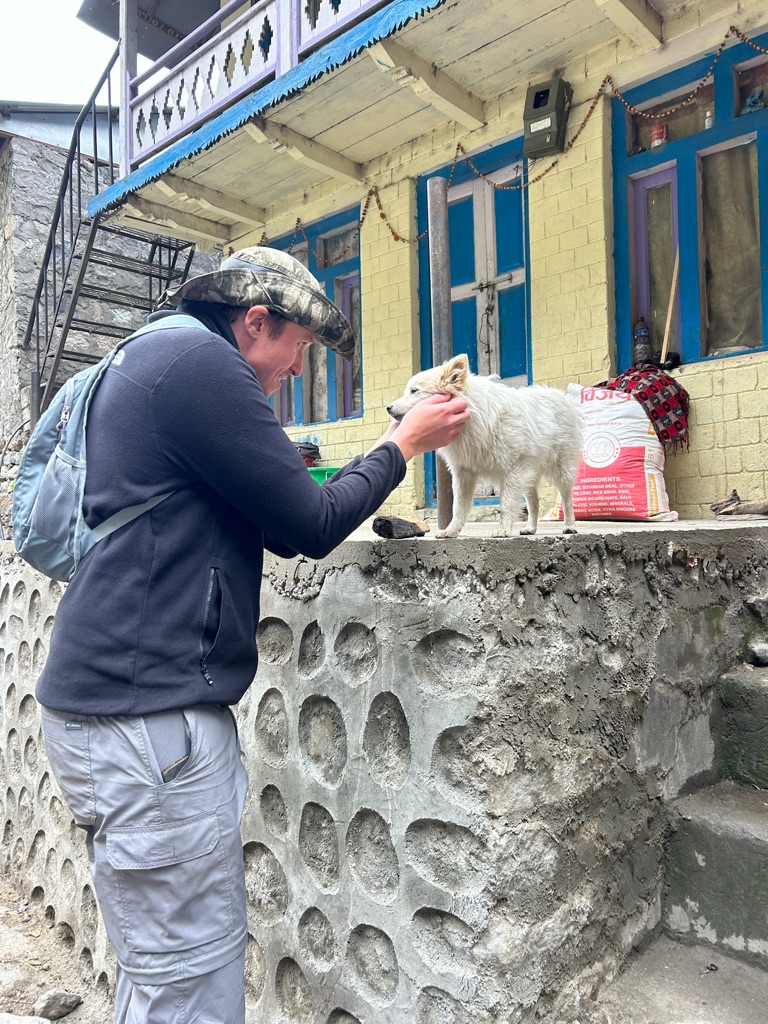
On the way there, we saw a baby goat that had just been born, his mother roped by her horns to a nearby shack. The blood and viscera were still hanging from the mother’s rear end and was splayed across the ground. The baby goat was bleating loudly as it tried to get a handle on its oversized legs. The local owners looked on relatively impassively from the steps at the front of their dwelling. It was a strange scene. It felt wrong that the mother was tied up after she had given birth - but it was also beautiful to see new life taking its first steps in the world. I also encountered plenty of very docile dogs in town, a few of which I befriended with a scratch under the chin. Good boys.
 The tea house was less impressive than the previous day - which would have been hard to top under any circumstances. However the rooms looked comfy enough. We grabbed some swimming clothes and made to leave for the waterfall - but one of our guides, Ratna, learned of our plan in conversation and discouraged us. He made the argument that the locals wouldn’t appreciate a bunch of blokes in the nude cavorting about in the water near the village, as well as that the water temperature and fast flowing river was dangerous. We told him we would just have a look and not swim.
As we travelled there, we figured the advice was likely conservative as he would lose his job if anything happened to us. He also probably thought we intended to swim in the main river near the village which was fast flowing, rather than the more secluded pool at the base of a waterfall that we’d been eyeing off earlier in the trek. We walked across the cable bridge I mentioned, encountering a goatherd who was having trouble with his flock which kept manoeuvring up the almost sheer hillside. The goatherd clearly spoke no English, but pointed us towards the waterfall and made a gesture with his arms that mimed washing himself. This gave us some comfort that our plan wasn’t completely harebrained.
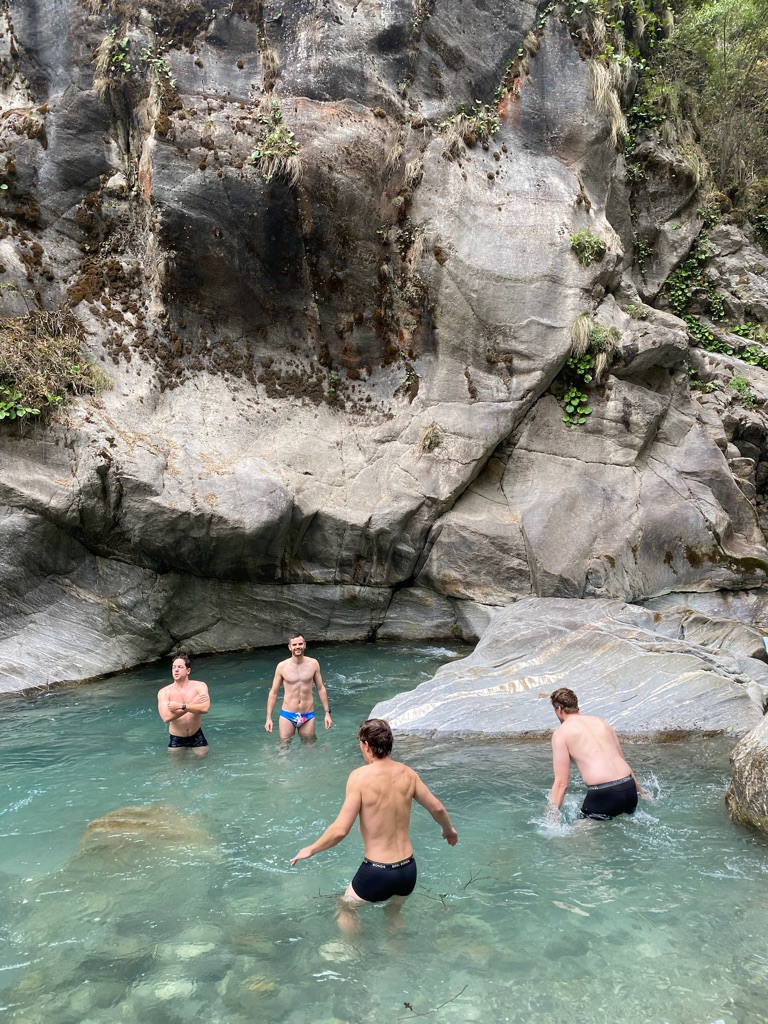
We arrived at the pool and changed, each of us stepping into the near frigid water. It was incredibly refreshing - a pure moment, exulting in glacial mountain water after a day of trekking in the dust and wind and rain. We all carried on a bit in the water, submerging our heads and coming up for air throwing out ‘woo!’ Whilst I was initially nervous about disregarding our guides’ advice, it was absolutely worth it to come here and experience this.
 We returned for dinner afterwards. I dramatically over-ordered (some habits die hard) and tucked into some vegetable and egg spring rolls which had been hand made in the kitchen, as well as a fried noodle dish. I then had half an apple pie and chocolate pudding for dessert. The meal was great; but I think I will limit my dessert orders for a little while after feeling like a fat cunt despite trekking for 6 hours that day.
We played a few boisterous rounds of card games which facilitated some great chat. There were two solo trekkers in the tea house with us - I found it a bit odd that this was the third instance of solo trekkers we had come across in as many days. It would be an interesting experience to have alone.
Day 5#
After a great sleep, we awoke to a simple breakfast (porridge again) and cracked on quickly. Today we were ascending 800 metres and walking approximately 17km to a town called Chame. The trek began with an incline ascent along the road, which was still frequented reasonably regularly by traffic. The day was warm and sunny, and we quickly abandoned our outer layers in favour of t shirt and shorts (I stuck with pants because I couldn’t be arsed taking my boots off to zip off the legs).
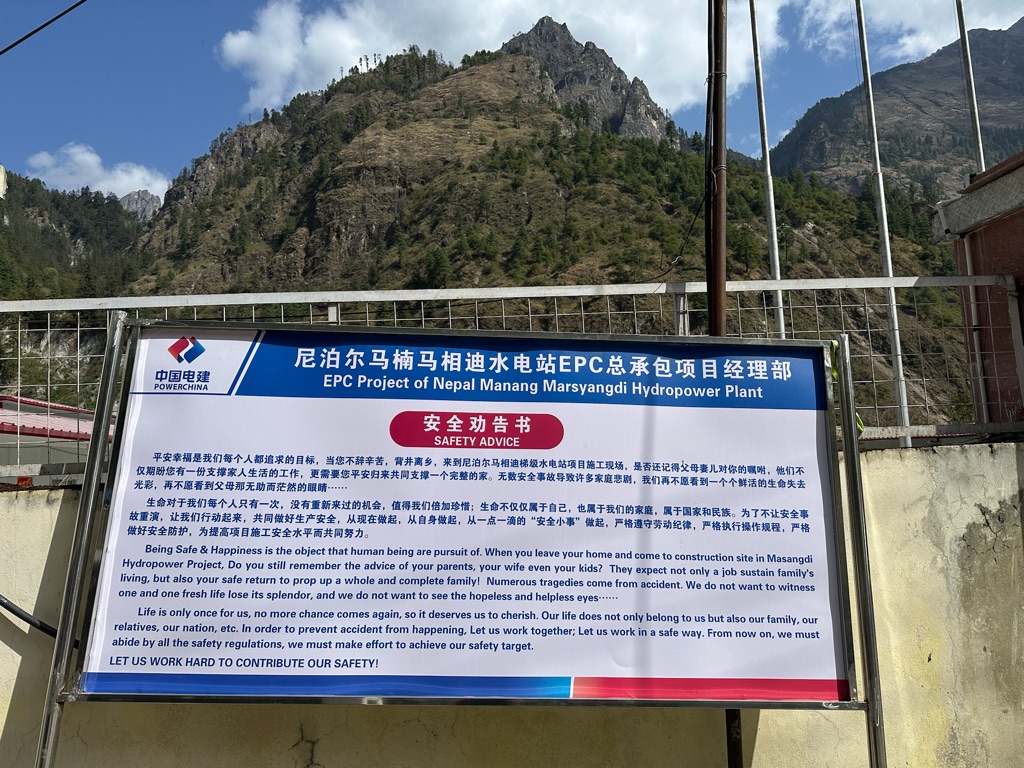
We encountered another major Chinese infrastructure project - another hydro power installation. It was jarringly situated across from a small shrine which contained a large prayer wheel and had a large sign out the front in broken English encouraging safe work practices. Prayer wheels are vertical cylinders wrapped with Nepalese script which are spun whilst reciting a chant as part of a Buddhist ritual. Most are around 30cm high with a 15cm diameter, but the one in the shrine was well over a metre and required substantial exertion to spin while pulling on a tassel.
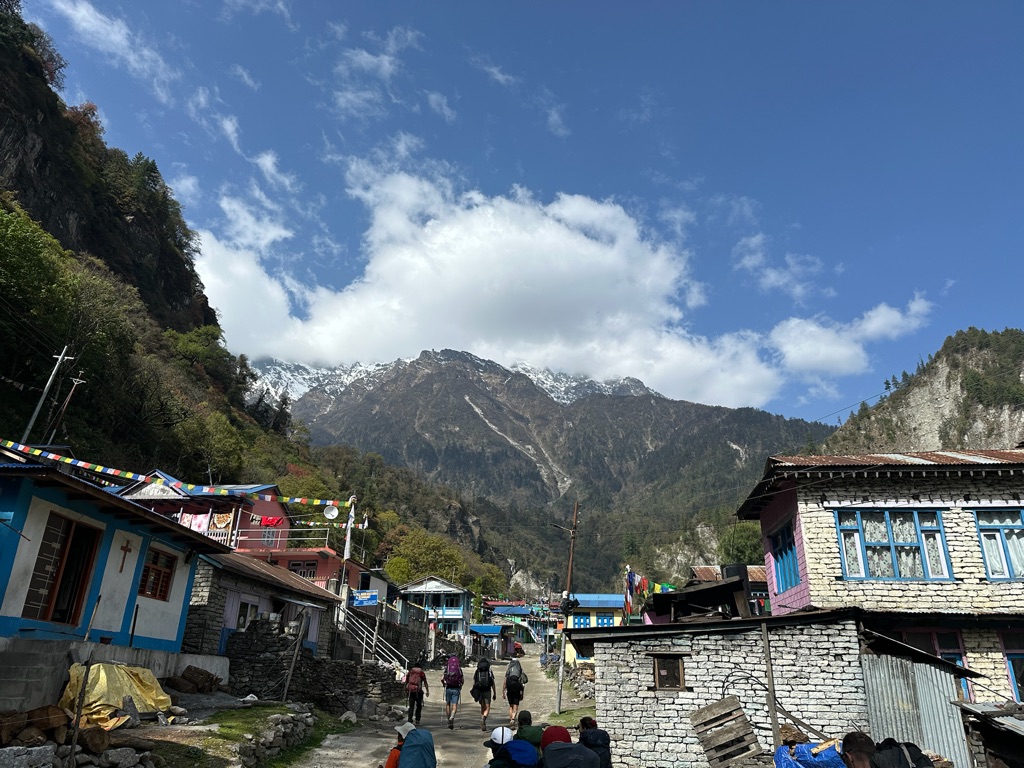
 We continued a steep incline along the road before we had the opportunity to diverge to stairs, which we decided to take to limit contact with the still-prevalent vehicles. What followed was a gruelling stair climb which took a number of hours to complete, but also provided commanding views back through the valley we had come from.
The volume of trekkers we saw definitely increased by this point. We encountered a few groups along the way, a mixture of solo, couple and groups. Most were polite and at least nodded, but rarely would any seek to strike up a conversation with us. The sharpness of the ascent may have had something to do with it - it was quite tiring while going up, but many in our group were quite capable of continuing to chat away despite the physical effort involved with carrying a 15kg pack up hundreds of stairs.
The landscape was frequently dotted by large alpine trees growing vertically from incredibly steep mountainsides. The ascent was punctuated by regular stops, during which we would take in the surrounds with a general sense of awe. The trek had gradually introduced some of the more spectacular scenery over time, and we frequently gazed up at the towering peaks around us and recognised that these were not even the highest mountains we would be seeing.
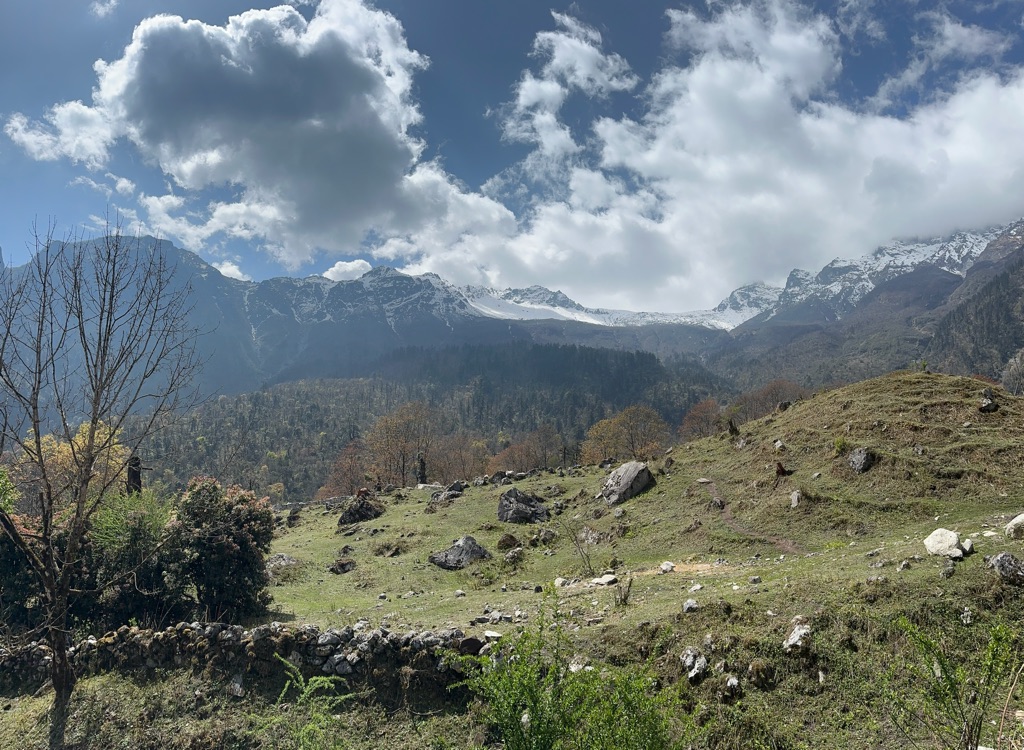
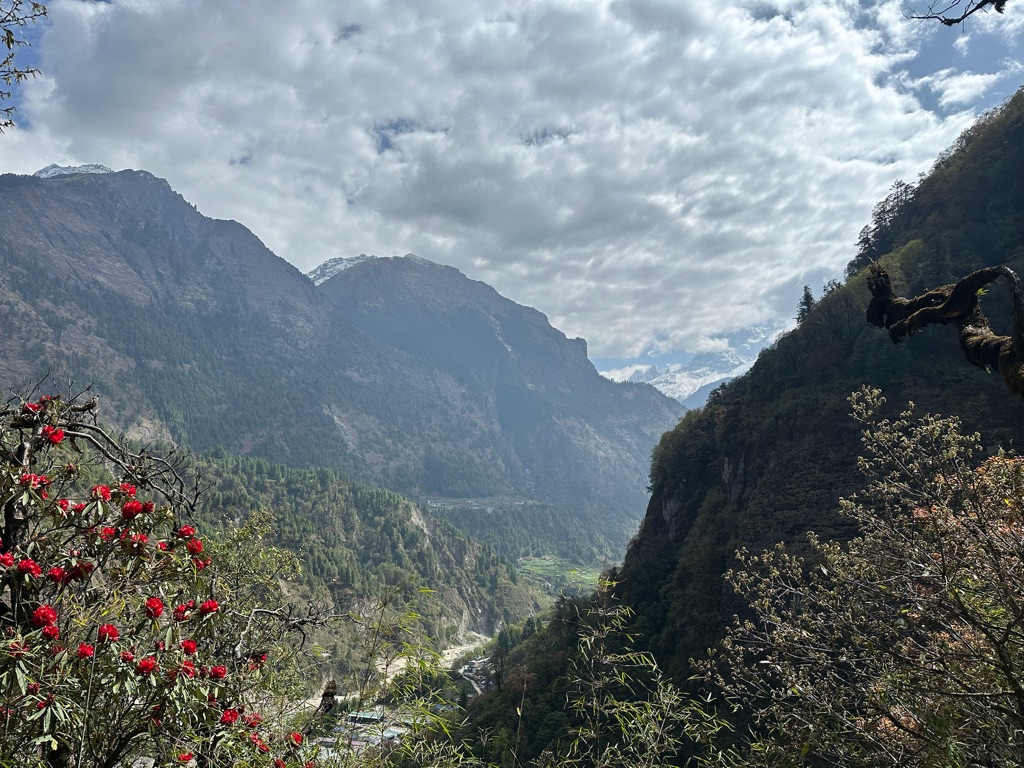 We arrived at our first tea stop, which was situated in another mountainside town carved into steep terrain. After ascending a few more stairs we sat on the rooftop of a cafe painted all pink under blazing sun and drank tea. The panoramic views from the rooftop were breathtaking and it was great to get some rest after a pretty tough morning of trekking.
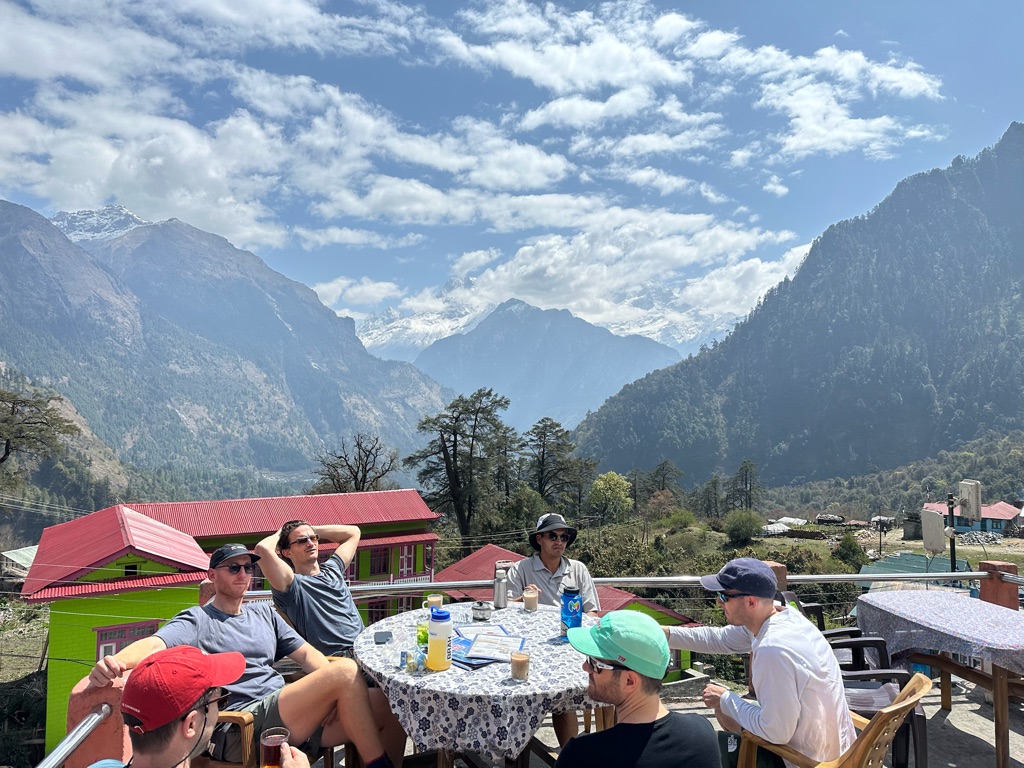 We shouldered our packs again and walked on. We were unfortunately back on the road by this stage, though mercifully the ascent was slightly less acute and we only had another short period of walking until we reached our lunch destination. There, we had the customary daal bhat - however the soup was thicker with a greenish hue. It was absolutely the best meal of the trip, with a combination of flavours across the pickled vegetables and aloo that was just sensational. We reached consensus on this and tipped the chef handsomely.
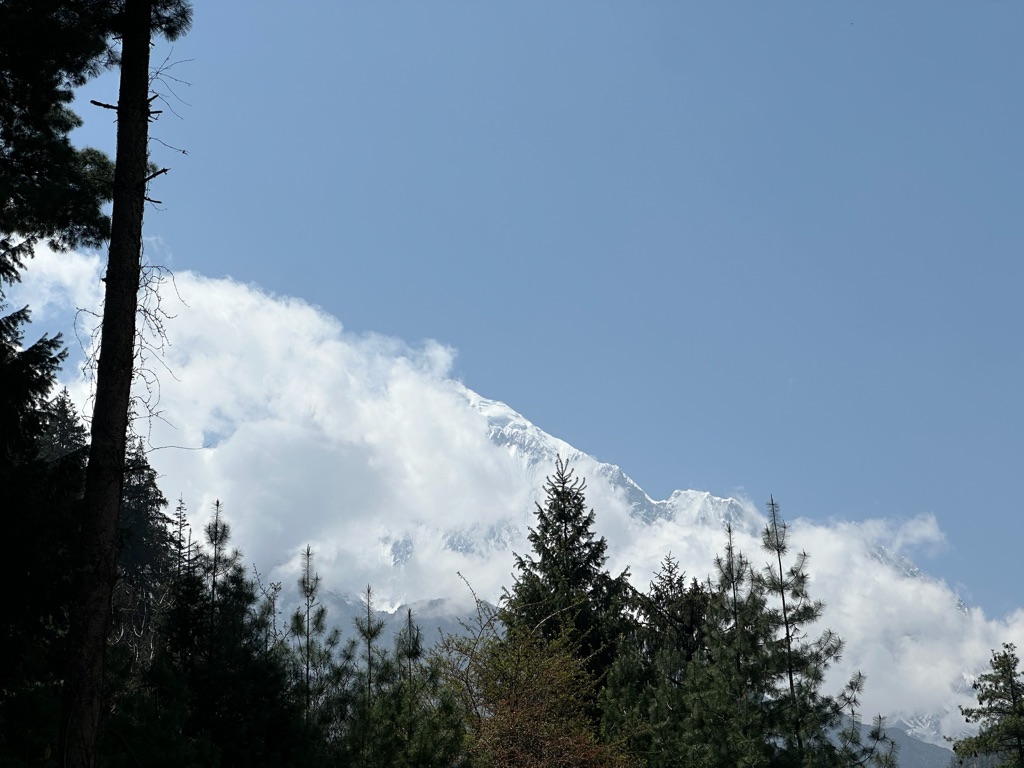
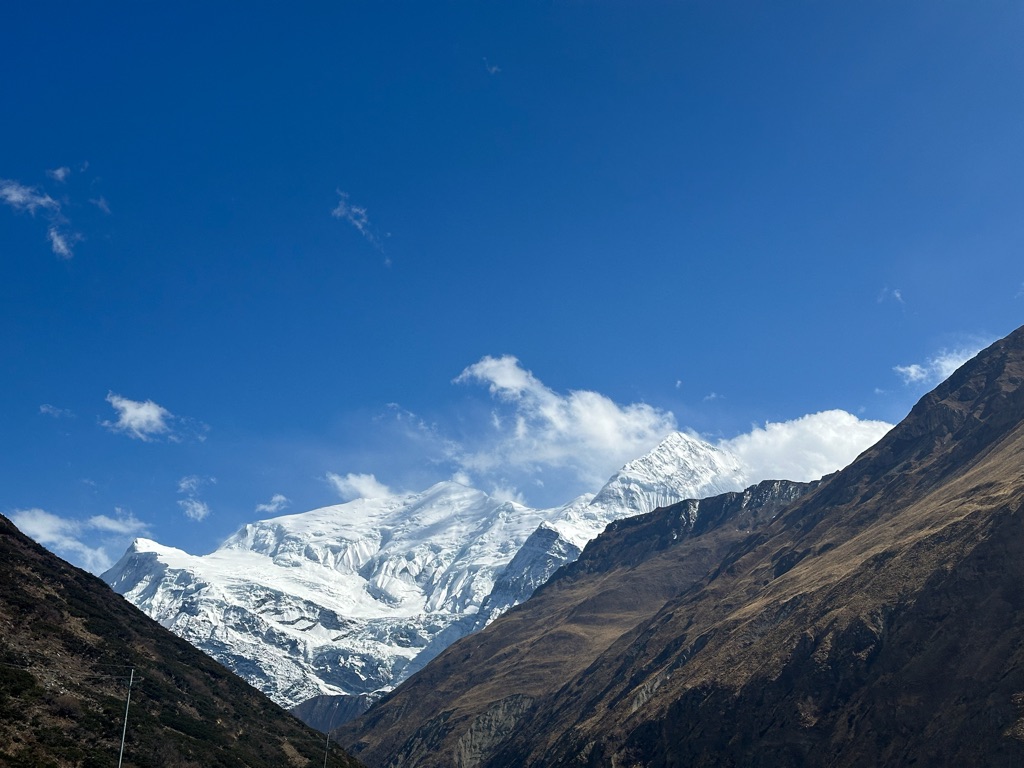
We walked on, mostly following the road as it gradually wound down towards Chame. We rounded a corner and Annapurna II came into view. The size of it was awesome. The ridge leading to the summit pierced the clouds floating ponderously to the south west, and as those clouds drifted across we were given a momentary glimpse of a peak nearly 8 kilometres above sea level.
 We continued on along the road. We passed by a small settlement nestled in a relatively flat area, where the locals were growing wheat. The wind was slowly picking up, and it rippled through the young, green wheat shoots in tiered waves. It looked a bit like the old default Windows XP wallpaper.
There were an increasing number of motorcycle riders passing us, many of which rode bikes festooned with flags snapping and fluttering behind them. The Indian national flag was common, but there were many other flags denoting local biker clubs with varied designs. It later turned out that there was a gathering of motorcycle clubs in Chame, where they played loud music well into the night. Passing them in town, they were generally pretty friendly. When one of them learned we were Australian, he responded with “cheers mate!”
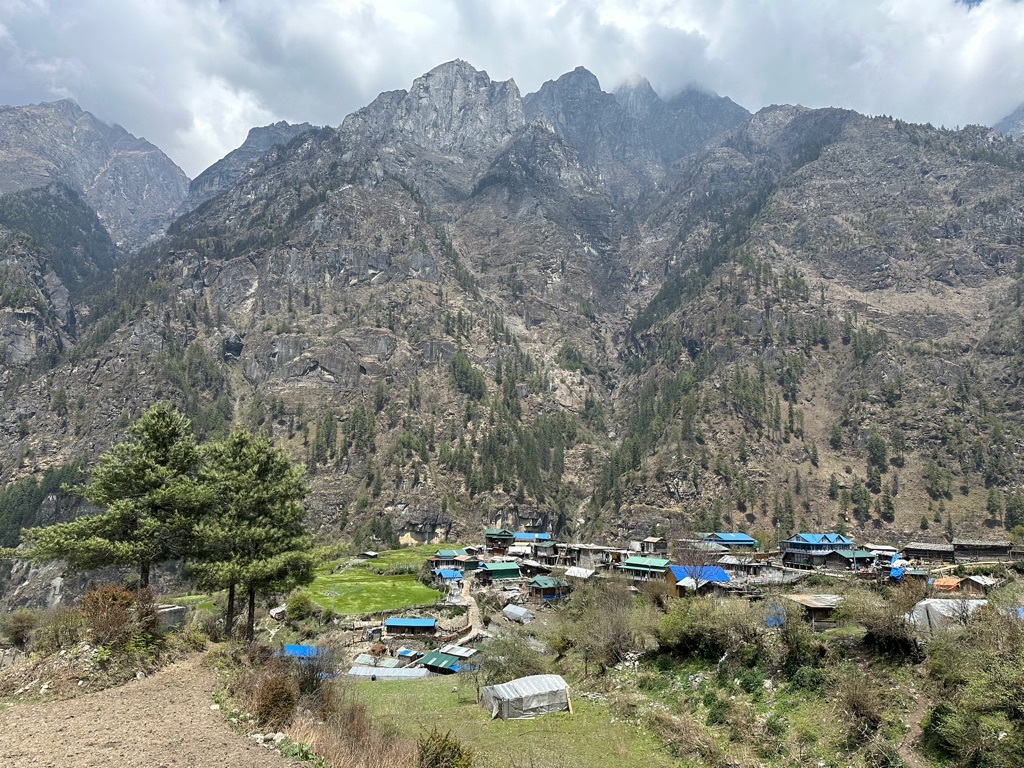 As we were arriving into town, we passed another Chinese hydro power construction site. The sound of heavy machinery, clouds of dust and infrequent detonations of tunnelling dynamite dragged us away from the surreal beauty of the landscape. It’s an incredible confluence of old ways of living - chopping wood, cooking over fire - and the new, of power lines, mobile phones and wifi access. It feels almost a shame that this pristine, awesome landscape is being corrupted by the encroachment of modernity - but such is the price of progress.
There was a little trekking supplies shop across the road where Jakob replaced his shoes, which were starting to fall apart. We also purchased a knock off Arcteryx flap hat with a face cover which the loser of our card game Shithead would have to wear whilst they do a stupid dance. Real consequences make games more thrilling, after all. Regrettably, I ended up getting stuck with the hat by virtue of being the shithead in the final game of the night, and clipped it to my bag as a badge of this dishonour.
We also started monitoring altitude sickness as we reached 2,600m of altitude. They place a device on your left index finger that reads your blood oxygenation. We also completed a form that talked to our general symptoms. We all felt pretty good, so there wasn’t much to report. We will travel to Upper Pisang tomorrow, at an altitude of 3,300m - over a kilometre above the highest point in Australia. The body is starting to feel a little fatigued, but we get an extra rest day in three days so just need to push through til then.
Day 6#
After awakening from another really good sleep to a brilliant sunny day, the mood was high. I had a breakfast of porridge with apple chunks and peanut butter, the latter of which was an extra 100 rupees. The boys covertly engaged in a peanut butter heist, surreptitiously dolloping my hard earned and paid for PB on their own meals like the grifters they are. The ever-watchful Ratna was none the wiser. Afterwards, we set out on the wet and muddy road through Chame. The road was dotted with rebar-grate manhole covers - one of them was left off and unmarked, showing a dark opening that certainly looked like it could have been a trip ender.
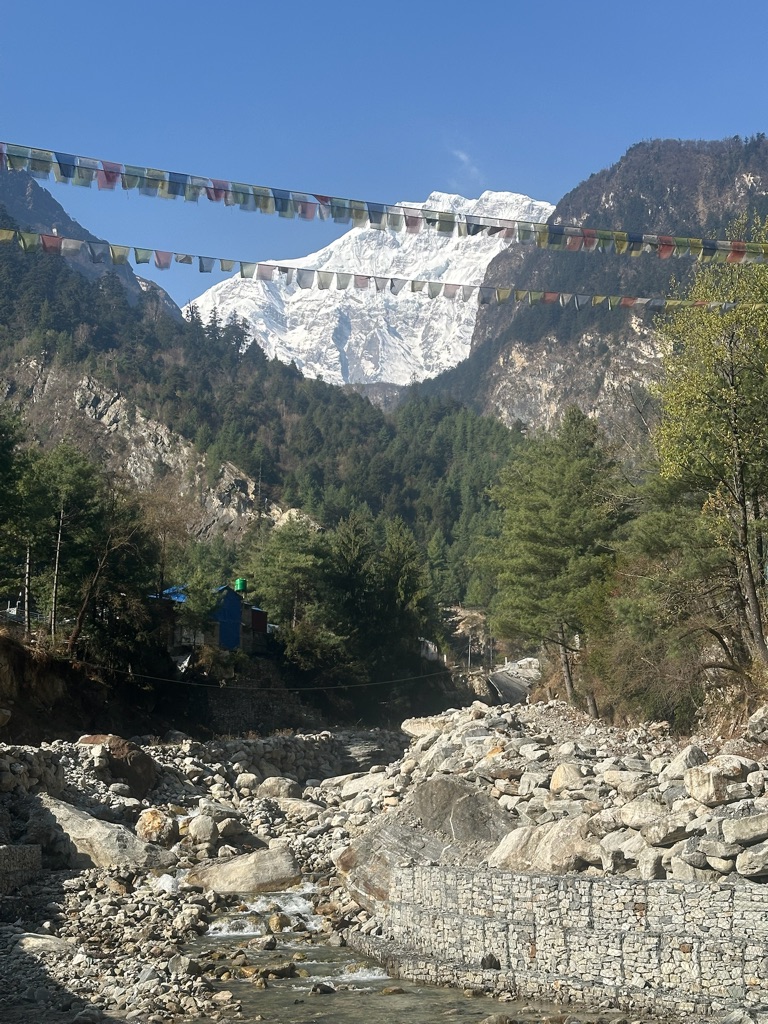
As we traversed the town, the peak of Annapurna II came into view again, peeking out above the smaller mountain range that we would ascend past today. The size of it was difficult to grapple with, as we craned our necks backward to be able to see it. We were keen to get past the traffic of the town, so we moved on.
 Once again we followed the road, being semi-regularly passed by bikers who were no doubt a bit dusty from their big night. We gradually wound our way through the mountains. I was finding the cumulative fatigue of the last few days impacting my trekking, but the benefit of a large group is that it keeps you motivated to stay moving. Our guides, as always, gave us reasonably regular breaks as we steadily ascended to our destination altitude.
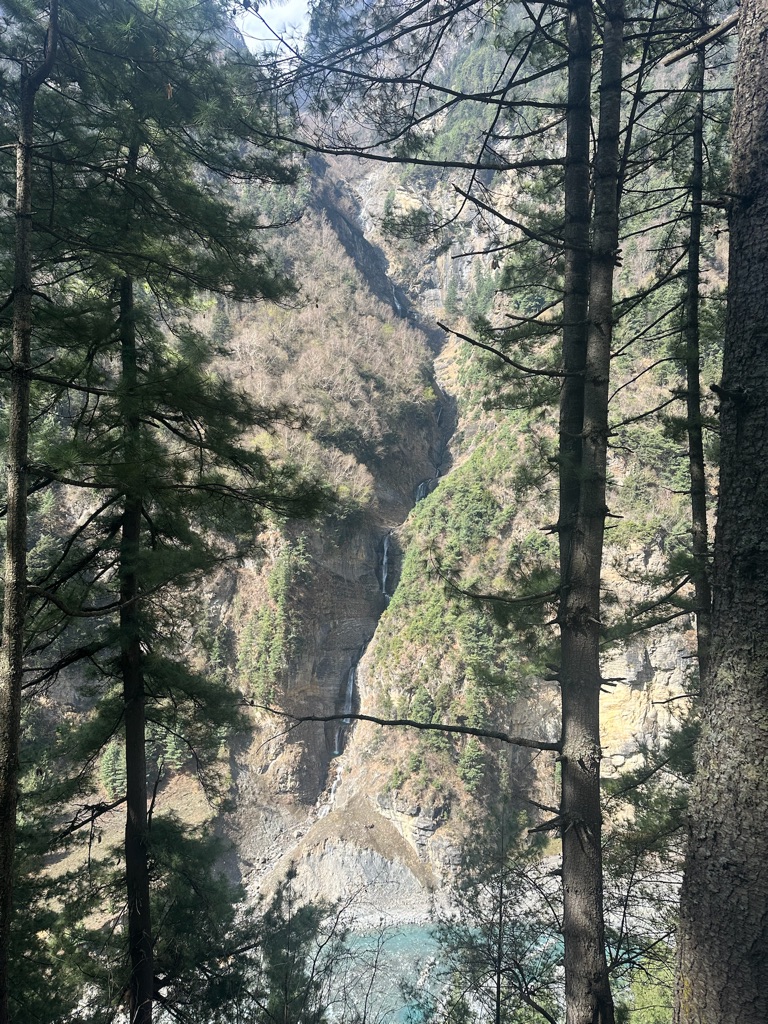 We stopped in at a ski lodge with a bakery out the front, which was comparatively heaving with trekker traffic. There was a large group of Israelis there along with some Russians - one of whom spoke decent English and we chatted with for a spell. The Israeli group were pretty rude to the serving staff, a theme we had observed earlier in the trek and would continue to observe at lunch. It’s happening a bit too regularly to chalk up to language barrier, I feel.
We bought some baked goods which were top tier; and enjoyed a nice cup of tea out in the sun. There was a putting strip (regrettably only with a right handed putter - highly discriminatory in my view) and a swinging chair and a pool table in the lodge - it looked like a nice place to spend some time but for all the battlers kicking around.
We walked on, through a pretty hairy section of track where the rock face hung out over the trail. There were many large cracks in the rocks and it felt like only a matter of time until a serious rockfall caused some damage to the track - hopefully there won’t be anyone on it when it does. Jake told us about a substance that they inject between the cracks in the rock which then expands and improves stability - we could see a few examples of it but far from enough to make me feel safe.
The wind was also starting to whip up as it clouded over, and the exercise shirt and shorts felt like less of a good idea than it had when the sun was out in the morning. It shot through the half tunnel created by the rock overhang and sliced through our light layer. It was the first part of the trek where I felt a little unsettled by the terrain. That feeling didn’t subside when we came to a cable bridge that was well rusted, and clanked and swayed under us as we crossed. I snapped off a photo and in the end it was a pretty thrilling experience.
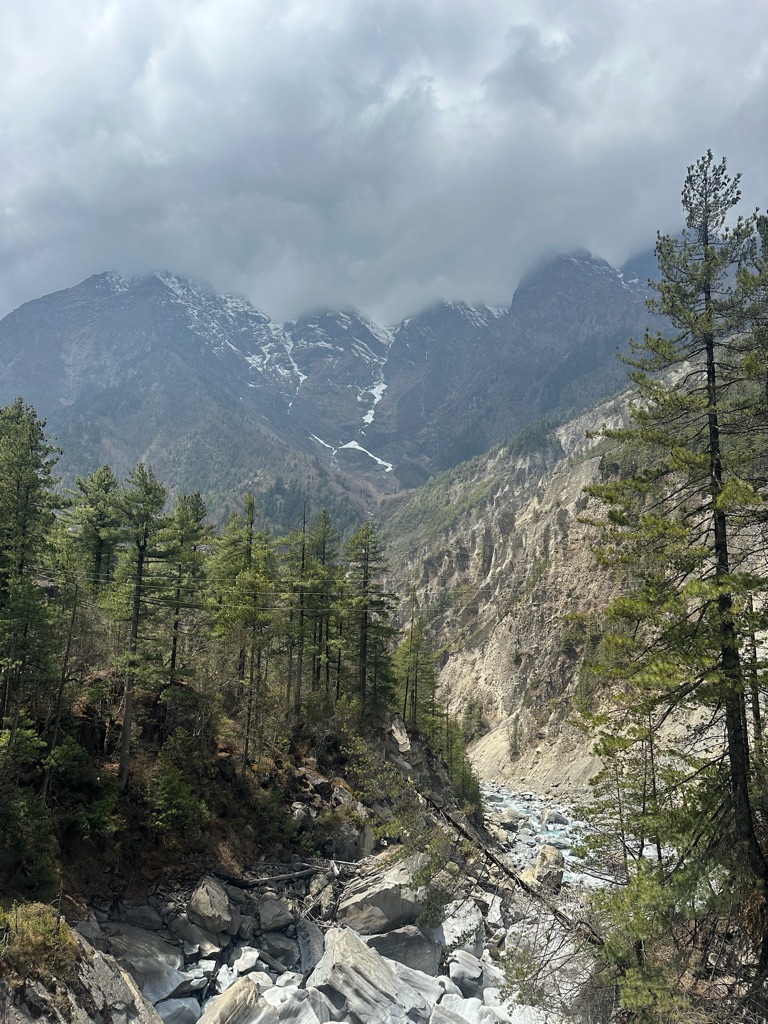 The trail then switched back and forth up a steep incline taking us to the top of a ridge. Looking back towards the road we came from, an incredible vista opened up - an escarpment hundreds of kilometres wide that sloped smoothly up to a craggy bluff streaked with snow. The size of this terrain was once again difficult to comprehend. Ned suggested it would make for good mountain biking trail - maybe so if you want to eat through a straw for the rest of your life.
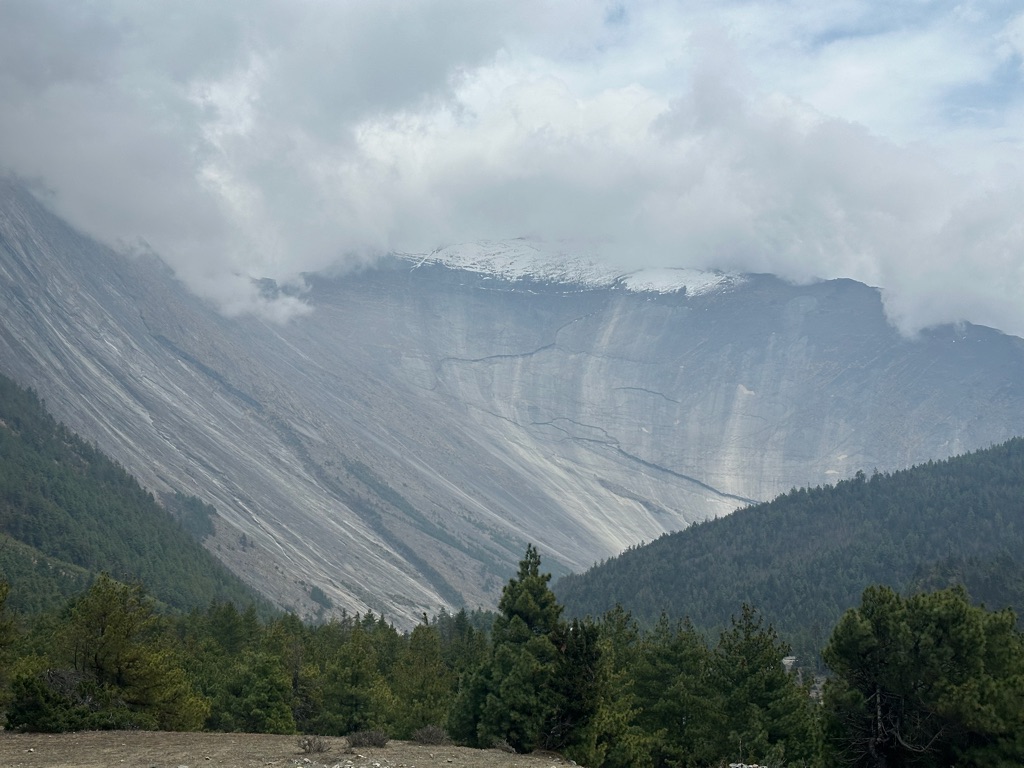 The trail made its way through thick pine forests, the scent of their needles heavy in the air. The fatigue had set in properly at this point but we all continued on, exploring conversational topics spanning from the role of megacorporations in society to our interpersonal relationships past and present. The trail struck the road and we started downhill again, making our way into our lunch stop.
Our lunch venue was a like a well apportioned ski lodge with cushioned seats and a prominent aroma of timber and woodsmoke. Our guides recommended we have the local Thupka (noodle soup) and the Tibetan bread. I’d had the latter at our first stop, but this one was fried much better and went great with the soup and tea. The restaurant was situated in a spot without the usual expansive views, but it was cozy and enjoyable.
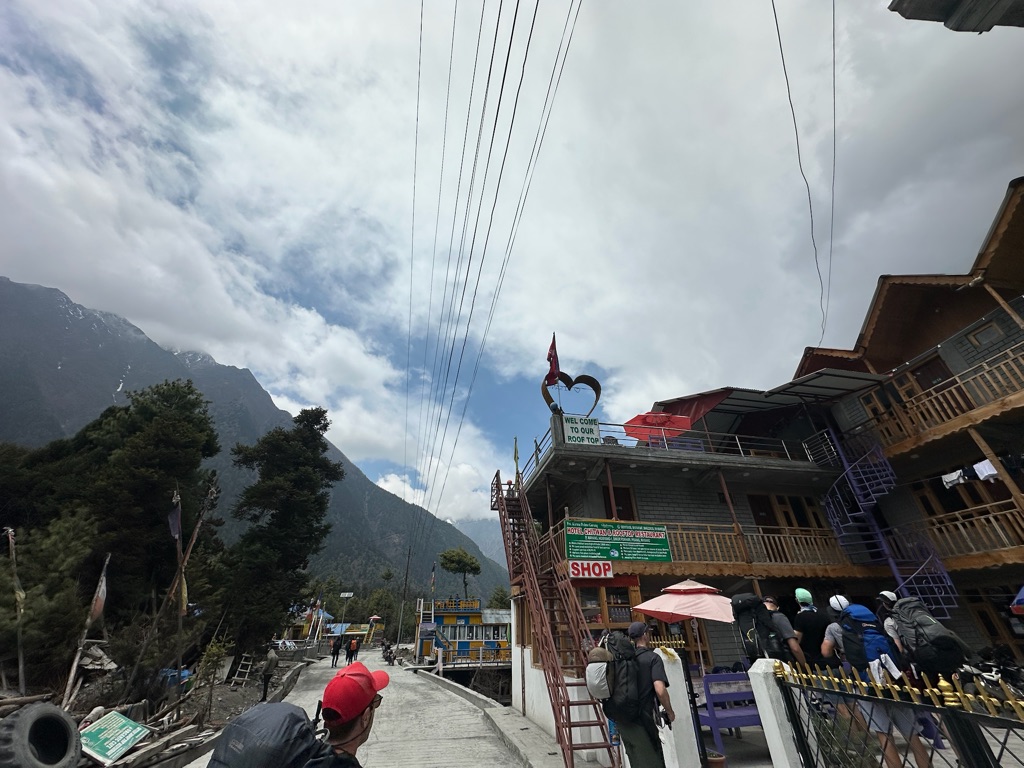
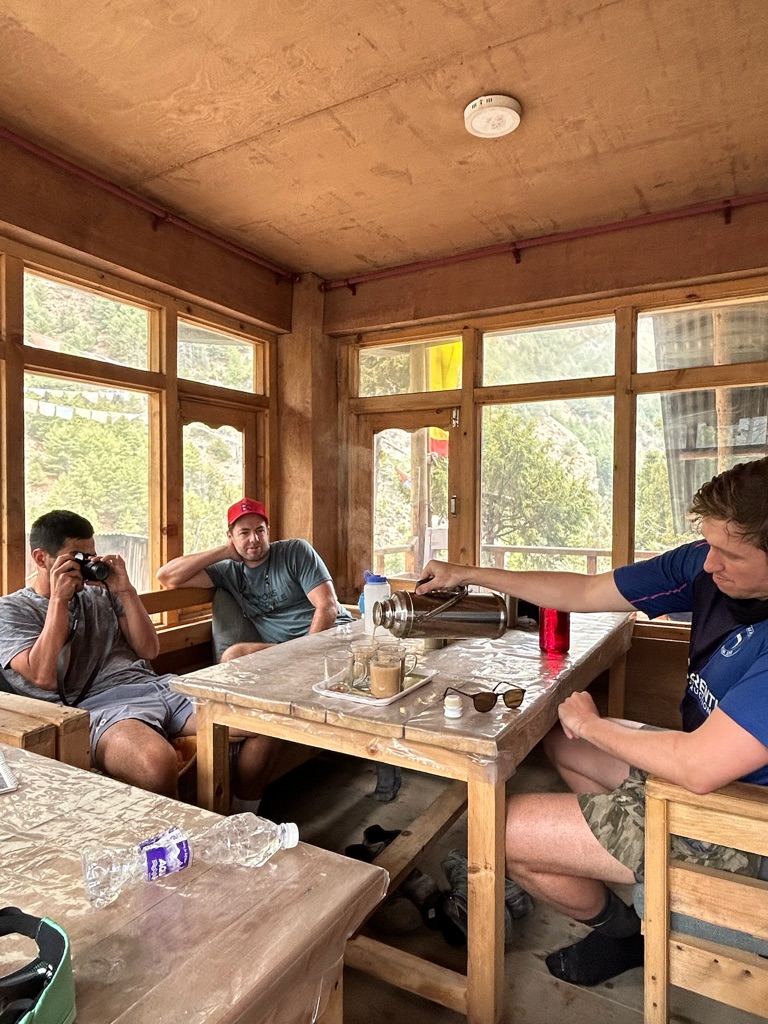 The weather had turned cold, and we departed the restaurant and continued along the road. Most of us donned a second layer, either fleece or soft shell. I put on my new gloves which, whilst not high quality, did the trick with my customarily cold extremities. As we diverged off the road again and onto a trekking trail, we had a brief chat with another Aussie who was coincidentally also from the north shore of Sydney - small world isn’t it?
We trekked up a steady incline to Upper Pisang. The road forked about 20 minutes from town - with the aptly named Lower Pisang being at the bottom of a wider valley cut through by the same river that snaked along beside the trail. Upper Pisang was built higher into the valley’s mountainside, with a number of tea houses constructed so that their common rooms jutted out from the land and perched airily, supported by concrete beams reaching to the ground below.
We made our way into the town and found our tea house, immediately entering the common room. It was a smaller space with a few sturdy wooden tables and benches with an iron fireplace in the centre. The windows looked out down to Lower Pisang and the opposite valley side. Brown and I had a room with a side window parallel with the common room which I felt was pick of the bunch.
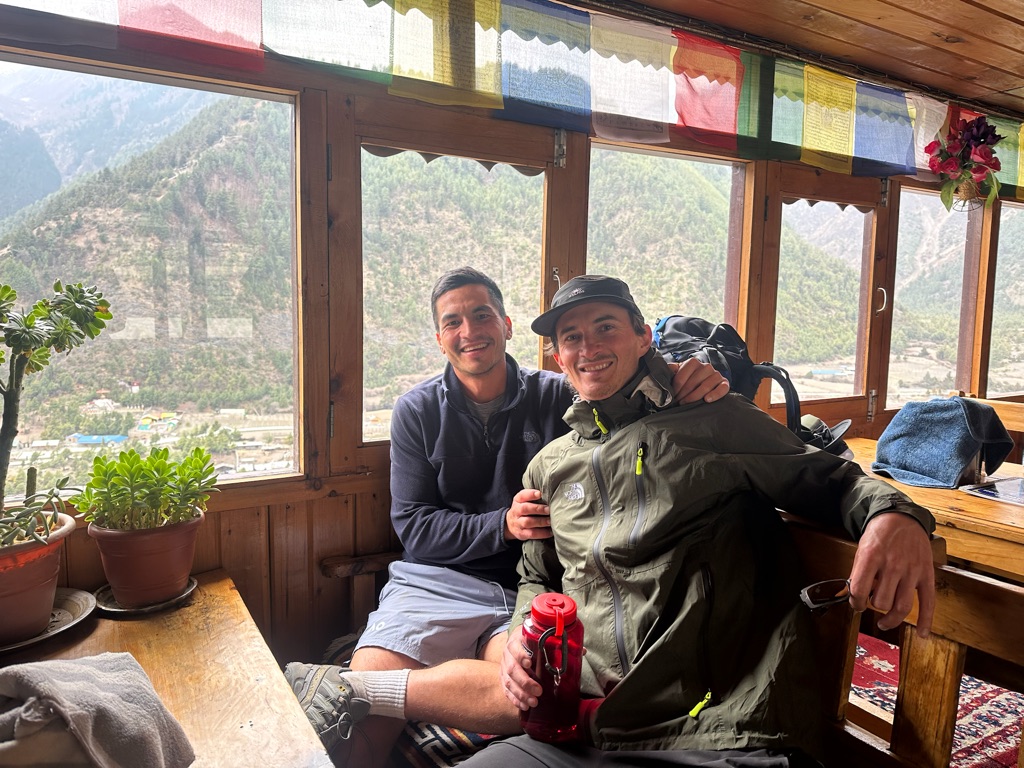 Some of the guys made the most of the afternoon and took a short walk up to a small temple. I laid in bed for a bit and listened to music - and ended up falling asleep for a bit, which the guides counselled me against doing again.
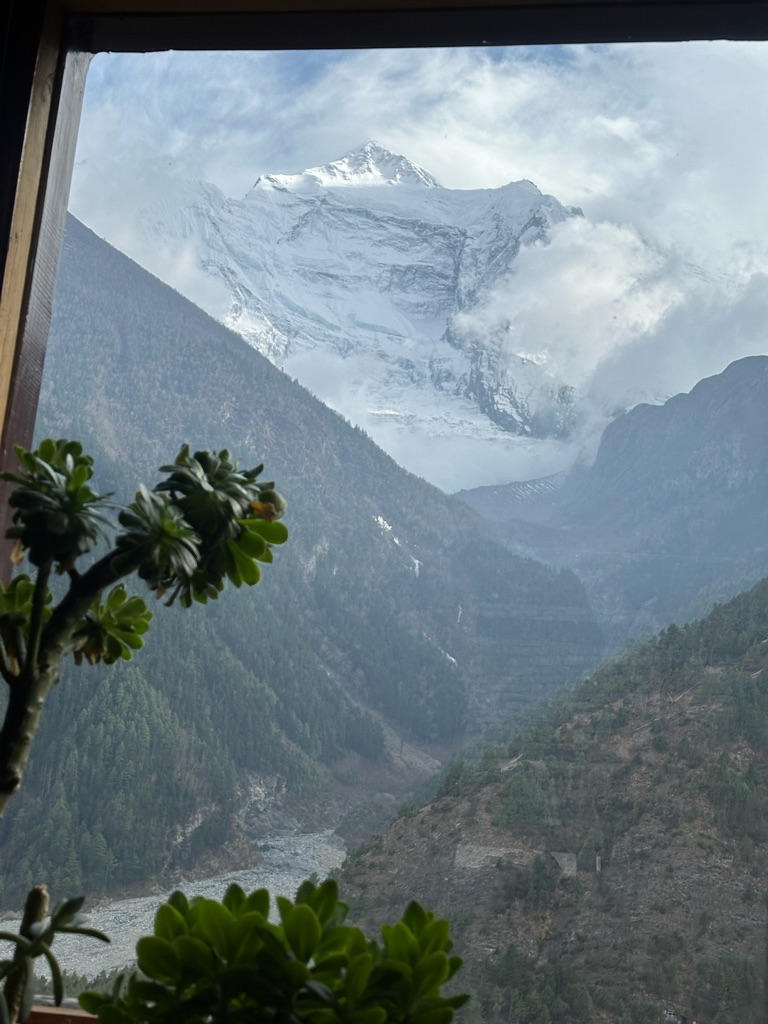
When I awoke and went downstairs to order dinner, the sun had returned and burned off much of the cloud that obscured the top of the valley opposite. It became apparent that Annapurna II towered over the other side of the valley, and in the current weather we could finally see it in all its glory. It was simply awesome to behold - a behemoth of sharp ridges, steep defiles, pure snow and glaciers that culminated in a sharp peak in the aspect of a pyramid. We walked up the back stairs of the tea house and spent some time admiring it. It was certainly the most spectacular sight of the trip so far: the 16th tallest mountain in the world bathed in glorious sunlight.
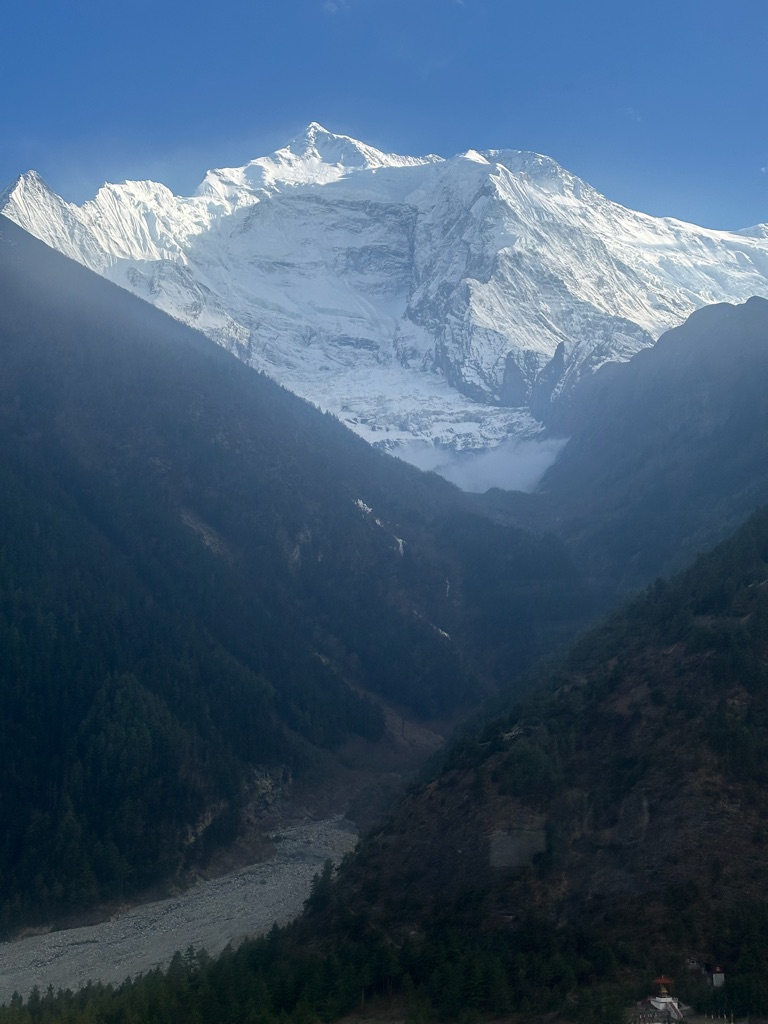
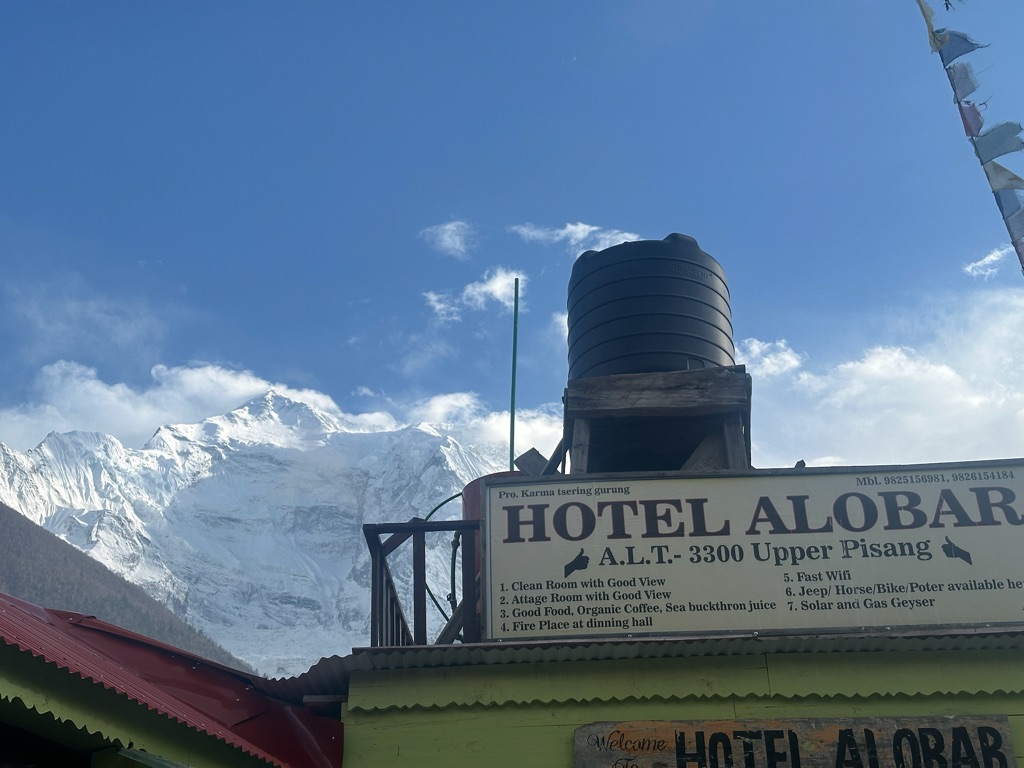
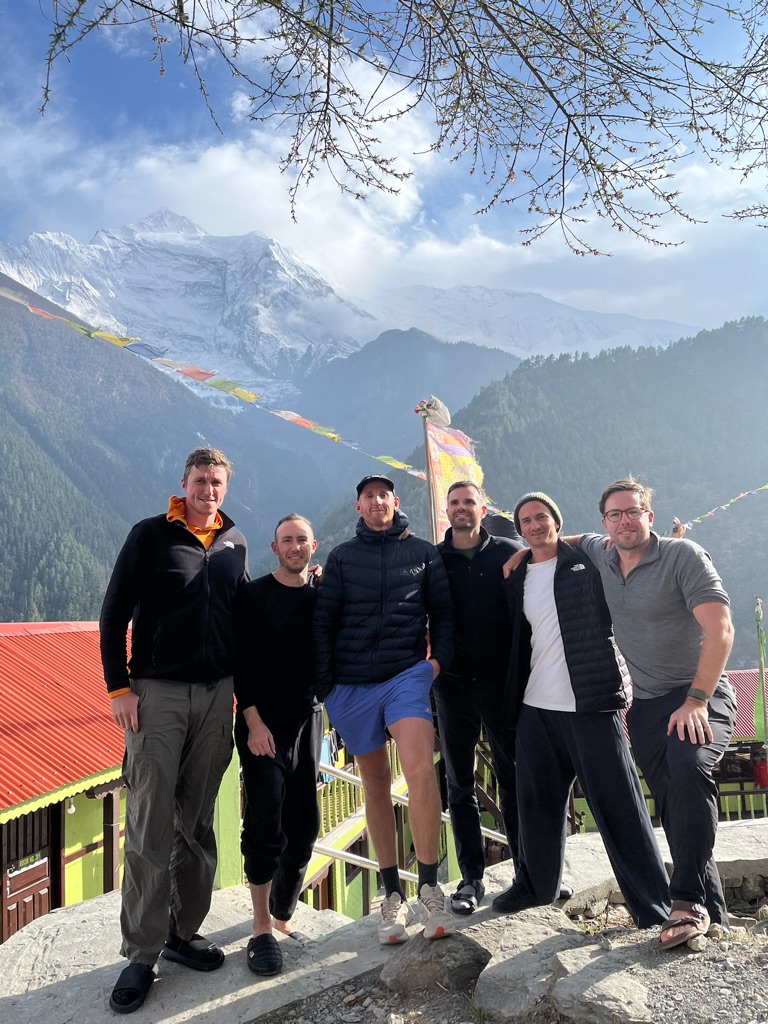 We learned that it had only been summited a few times, with a fatality rate of 30%. There are no commercial ascent options or sherpas, meaning any adventurer wishing to do so would need to assemble their own team, plans and equipment. Peaks like these are some of the last pristine places remaining on earth, and gazing up at them evokes feelings of awe and wonder. To see it out the window across from our accommodation was a unique privilege, and it was difficult to stop ourselves peering out at it from the window.
 I had a dinner of fried noodles with egg, vegetables and some meat. They brought us a home made chilli sauce that kicked like a mule and made Gothy sweat more than he has on any of the hikes to date. The food was, as always, hearty, filling and served in well sized portions. I tried picking up some more Nepali from our guides with mixed success. They seem to be amused by my relatively hamfisted attempts at grasping their language, so it’s a good bit of fun to try and learn new words.
After dinner, we turned to shithead - I was certain I would cast off the dreaded flap hat to some other poor sucker. Regrettably, I went on to lose both games of the night - making it three on the trot. As is ever the case, playing the villain in these games (as I am unable to help myself from doing) came back to bite me on the ass when both games finished with me in a winnable position but finding myself dusted by some excellent flips of the face down cards by my adversaries. All in all, both games were pretty electric and despite having my ass handed to me it made for some enjoyable theatre - marking a pretty strong finish to a terrific afternoon.
Tomorrow, we trek 21 kilometres to Manang, which will be the longest walk of the trip to date. We will, however, only ascend 300m or so. We will then do a relatively short acclimatisation hike the following day without packs, which will present a good opportunity for some active recovery. In terms of tomorrow, the only way through is through - so I’ll put on my big boy pants and crack on. Helpfully, my feet are in pretty reasonable nick so with any luck the wool will continue to do the job.
Day 7#
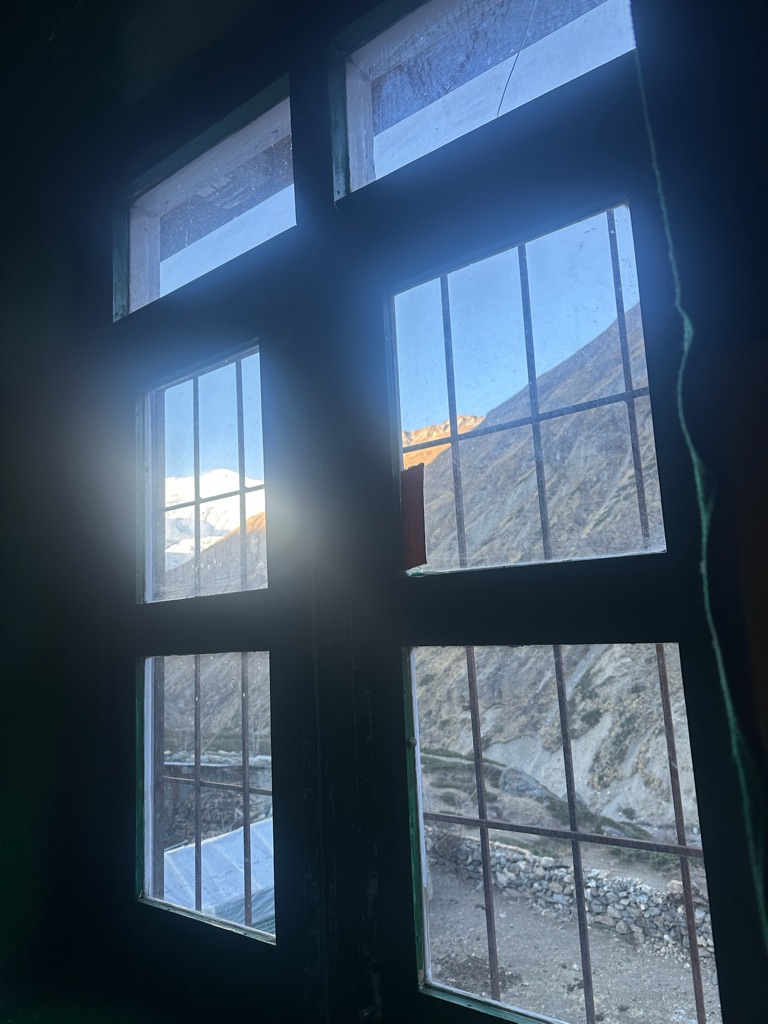
I awoke from a very restful sleep to a brilliant morning, the sun streaming through the window. Less brilliant was Jake standing in my doorway telling me to get out of bed. It was just before 6am and we were due for breakfast at 6.30am. I spent a leisurely amount of time packing my bag, stopping regularly to stare out the window at the towering form of Annapurna II, looming up less than five kilometres from our window bathed in glorious morning light.
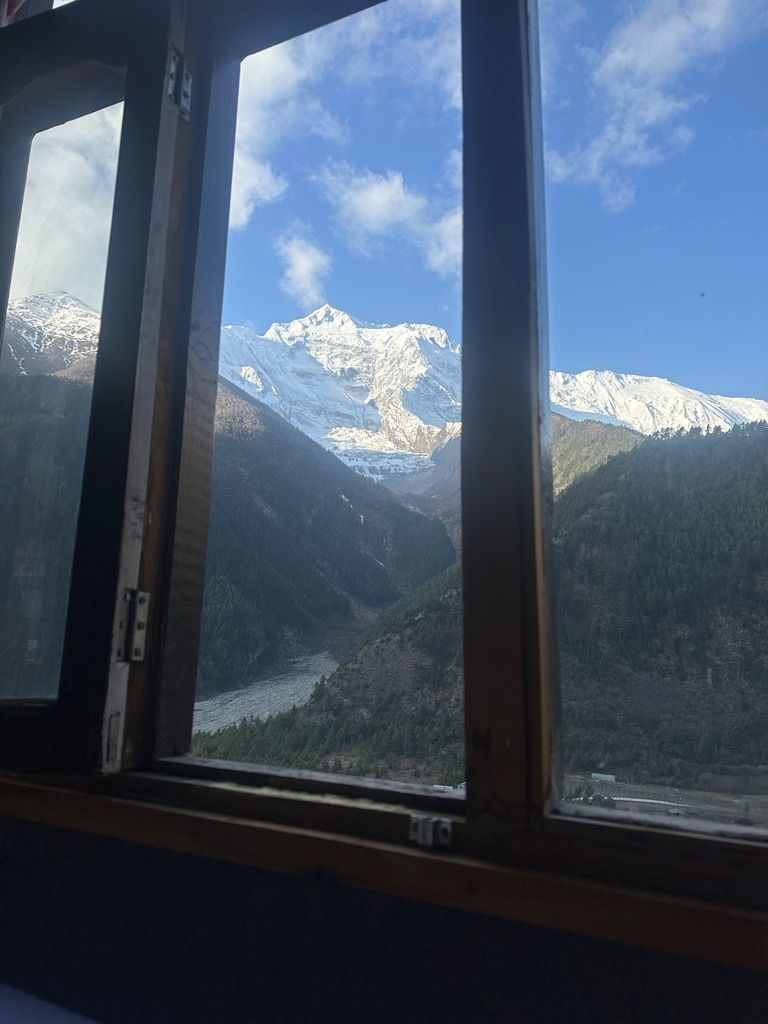 We made our way to the common room where I learned that some of the guys had had interrupted sleeps. No doubt the exertions of the trip were starting to take their toll, but nonetheless the mood was high. I had a breakfast of apple porridge with a chocolate chip pancake, as we would not have the usual morning tea stop and our guides indicated it would be more than five hours to our lunch location. The food was solid and we set out a bit later than expected on our long day of trekking.
The path skirted the ridgeline where Upper Pisang was situated and the initial part of the walk was reasonably flat, with the landscape gently undulating away from our origin point. There were a few others on the trail, but it didn’t feel particularly crowded. A lot of them had the full trekking kit - poles, headbands, the works. Our general perspective was that they looked like gimps at best and oxygen thieves at worst. Notwithstanding that, we were treated to more spectacular views of Annapurna II on a clear but cold morning.
 The glorious morning would not last however, as we began an ascent of significance under the increasingly hot sun with little breeze as we were shielded from wind by the ridge line. The trail switched back and forth remorselessly, ascending well over 600 metres without any flat stretch providing reprieve.
The first blisters of the trip appeared, with Briz developing one on his heel and Jakob shortly after. We had compeeds to hand and the damage was stemmed reasonably quickly. I was thankful for the break whilst running repairs took place, as the ascent was undoubtedly the toughest stretch physically of the trip to date. We reached the top of the switchback trail when it met the road, and were rewarded with a slightly gentler incline until we made a stop at a mountain shrine decorated with more Buddhist flag strings.
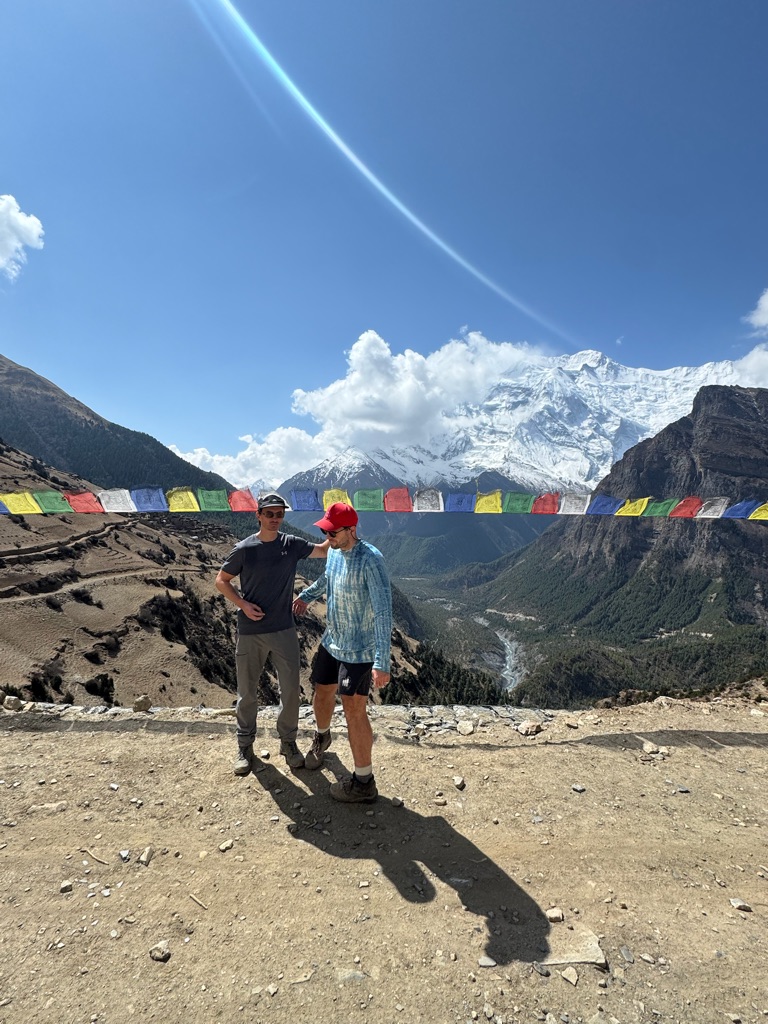
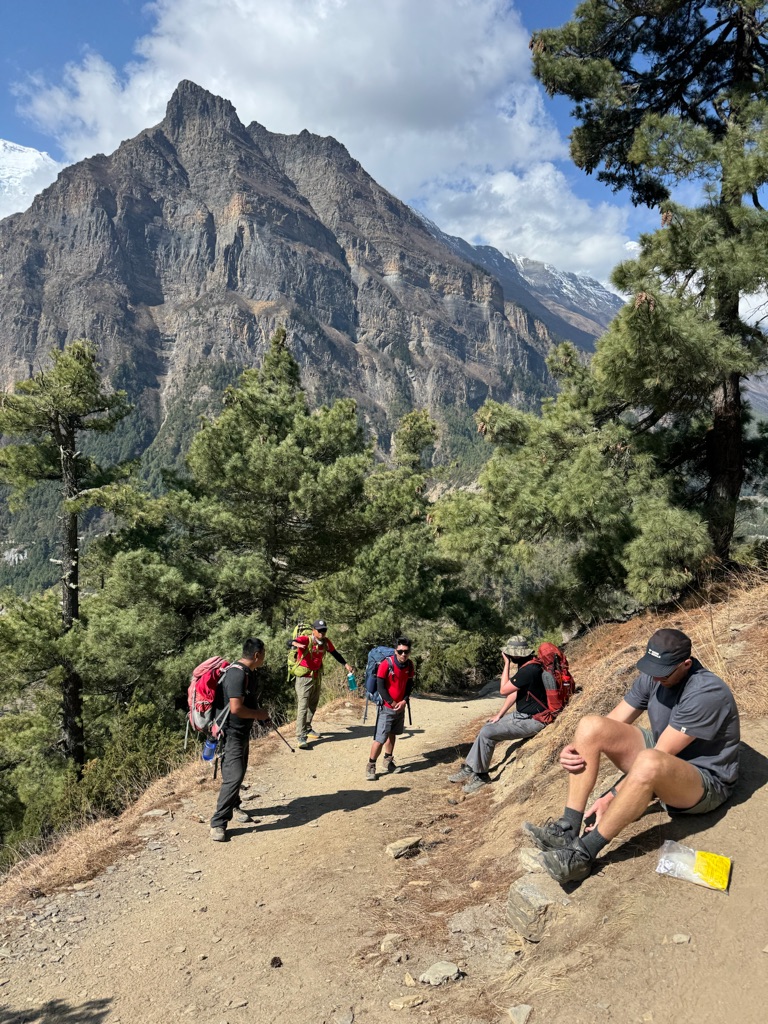
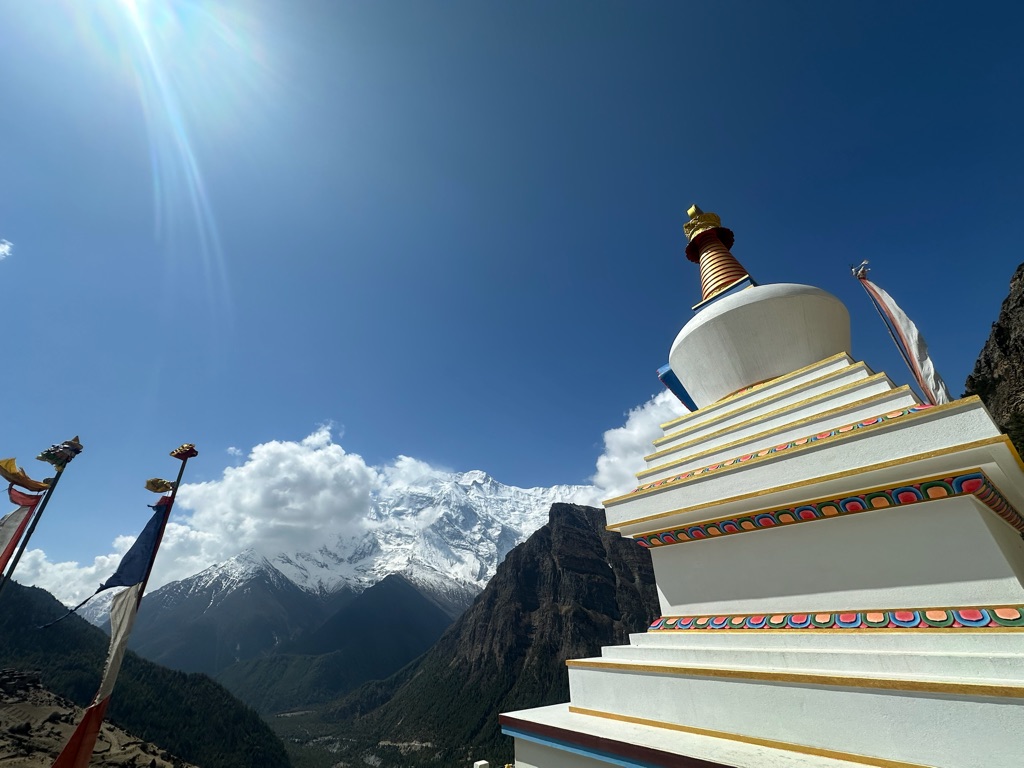 We walked on, along the road and winding around the mountainside to our next destination. Our guides told us that the lunch spot offered a yak curry in addition to the customary daal bhat set which Jake and I were keen to try. Mercifully, the road gently declined to the small town where our lunch stop was located. The lunch building was two storeys, and we claimed the upper balcony which had a view through glass of the other side of the valley.
Our lunch was served and despite a strong recommendation from our guides regarding the quality of the daal bhat, it failed to shoot the lights out. The yak curry was gamey but I was happy to have tried it; it was certainly far from inedible. The man running the restaurant was clearly of Mongolian heritage - just one of the many ethnic groups and castes in Nepal. He took great pleasure in conversing with me in broken Nepalese.
I think the locals really appreciate visitors making an effort to communicate with them in their language. Interestingly, our guide told us that many of the ethnic groups and castes had their own ‘mother tongue’ which was not intelligible to other Nepalese ethnic groups - but Nepalese was their common tongue by which mutual understanding and national identity could be established.
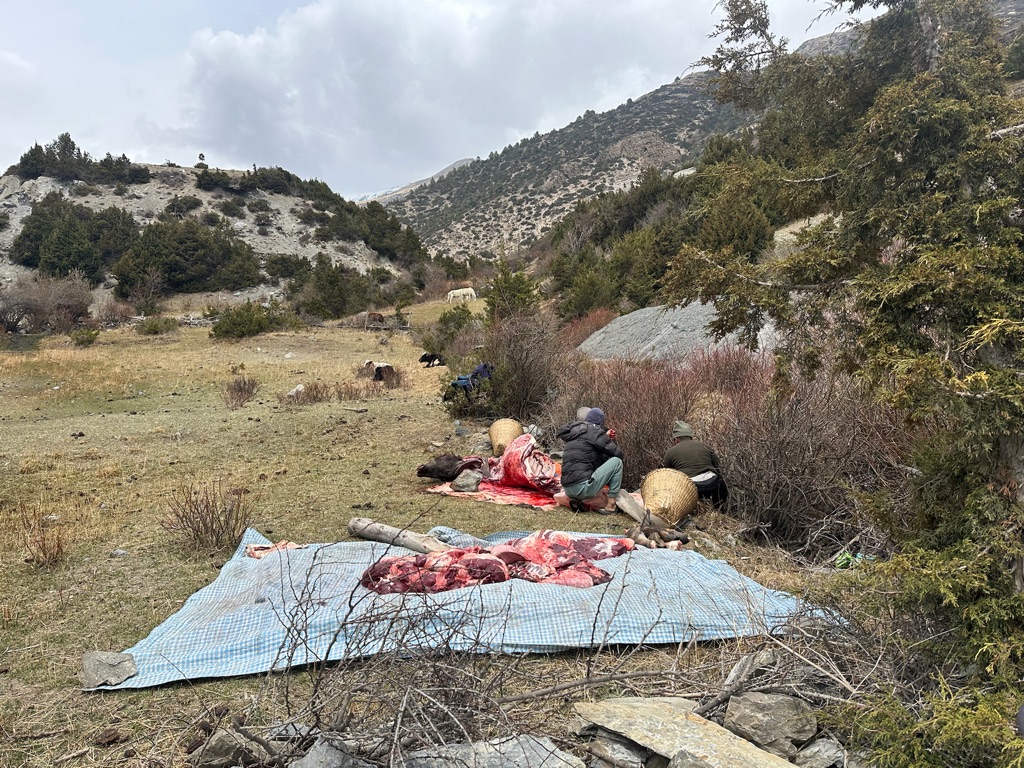
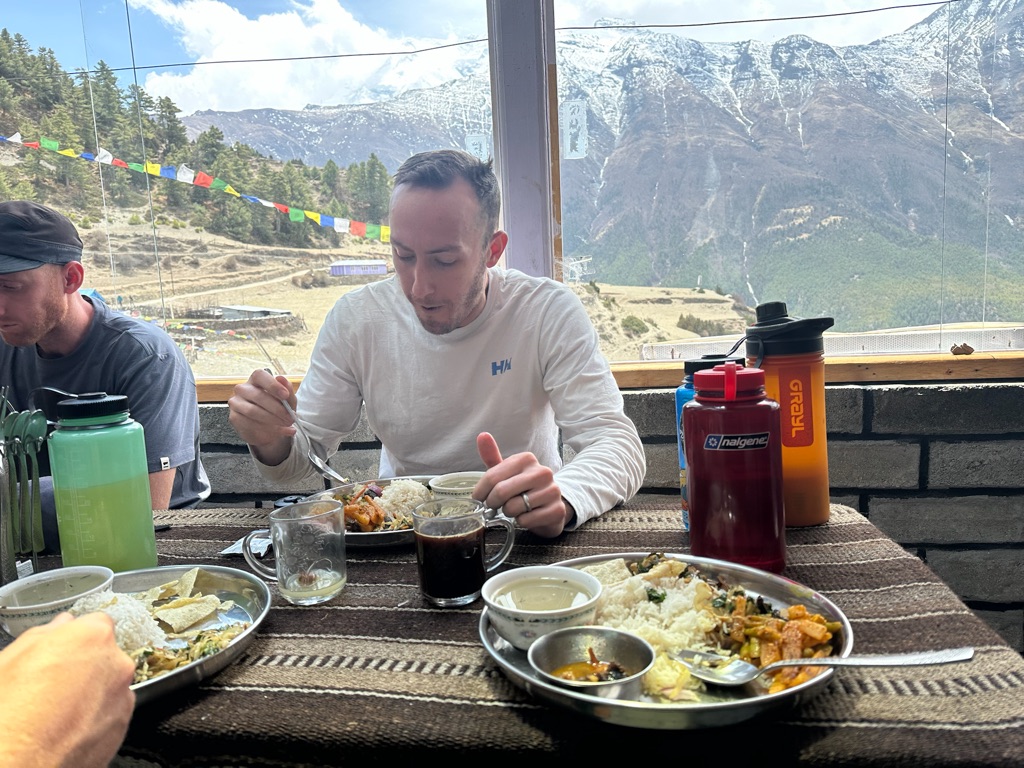 We walked on, traversing the small town and the gentle curving decline around the other side of the elevated terrain we had ascended to earlier that morning. We passed by a group of men butchering a slaughtered ox in the corner of a field. It looked like hard work being performed by hard people.
As we rounded the next ridge, from our elevated vantage point we could see the best part of five kilometres distant - and our destination of Manang was nowhere in sight. The road was relatively new and made from concrete, and we descended quite quickly to a lower altitude. We looked ahead to the distant ridge and hoped that Manang would be visible on the other side.
The road cut along the side of a broad valley filled with orchards, sparse livestock and dotted with squat dwellings. Compared to the grandiose vistas of Annapurna II from the morning, it made for less inspiring hiking - but that was likely a feature of being spoiled for choice with so much spectacular scenery wherever I looked. The peaks of the opposite mountains were also largely obscured by cloud - the sky had greyed over and the wind had whipped up.
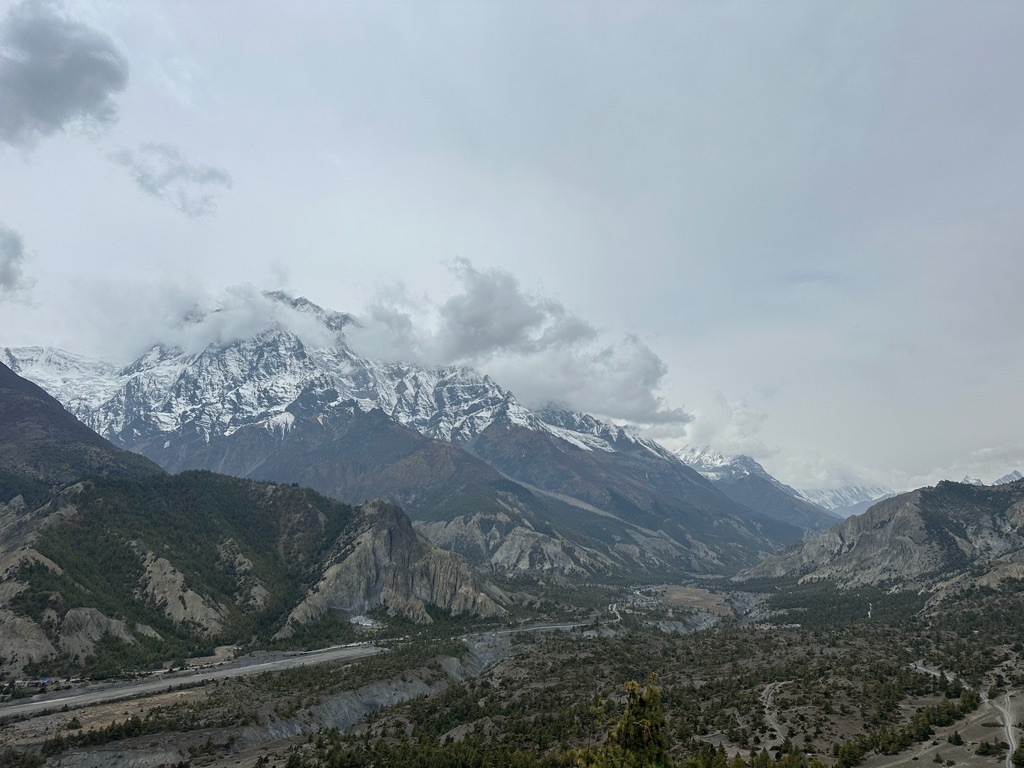
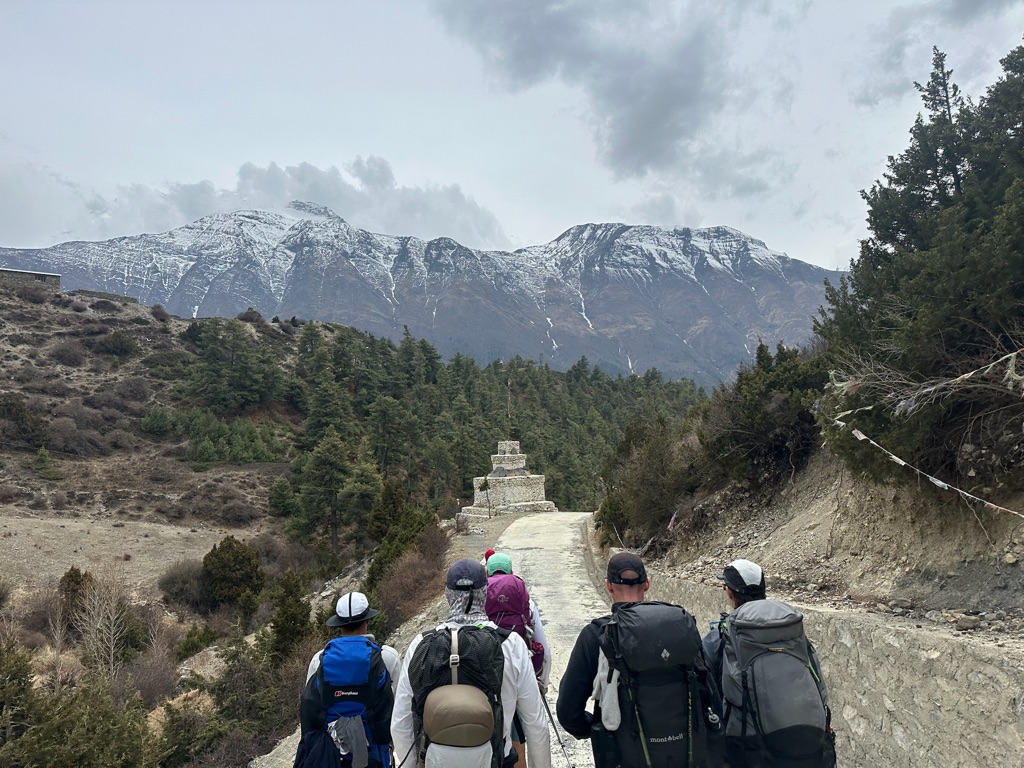
 The road rolled on before us, with the aforementioned ridgeline that we were hoping would yield Manang in the distance failing to do so. Fatigue had set in by this point, with well over 15km of trekking and the morning’s steep ascent under our belts already. We kept up conversation as we passed through another small village with the usual plethora of tea houses, shops and locals going about their day. There was a constantly rotating prayer wheel powered by a water spout in the ground below it by the roadside which I found fascinating.
At last, Manang revealed itself to us on a hill in the distance - preceded by another small village called Bhakra. With a good tailwind, we closed the gap with narrow minded focus, not so much looking at scenery - largely obscured by the overcast conditions in any event - as our destination by this stage. We passed under an archway and along a road with black posts at two metre intervals on either side, strode up the last hill of the day and arrived at Manang.
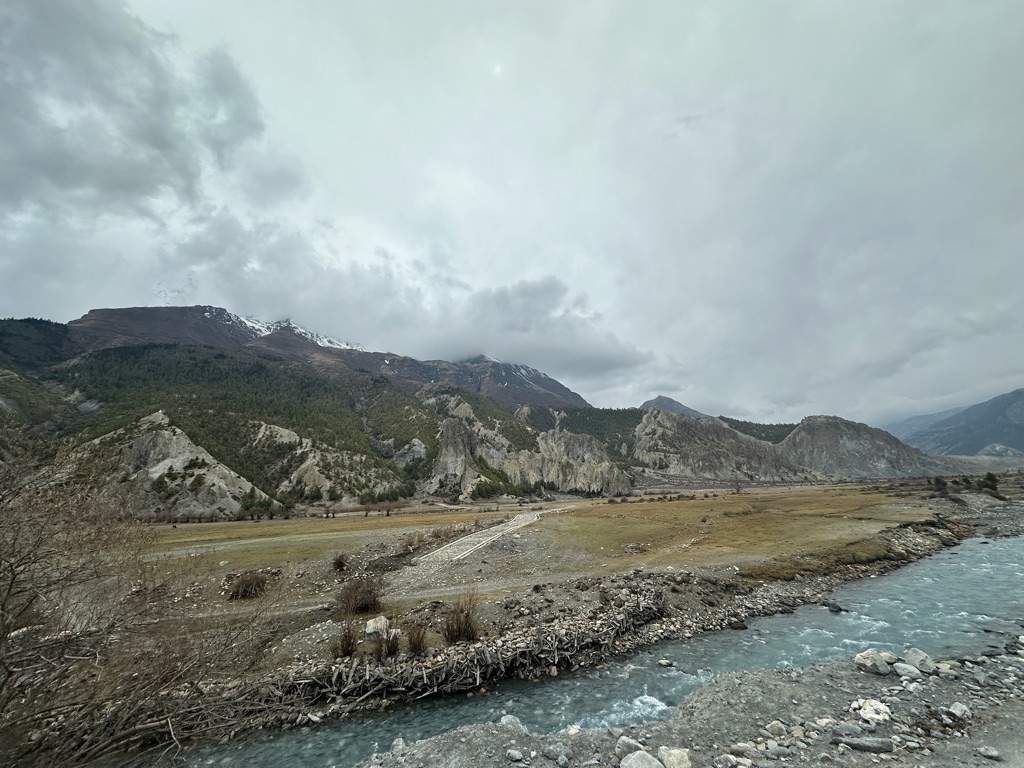 Our hotel was a three storey stone building with varnished hardwood floors. It was definitely a substantial step up from our accommodation up to this point. We ordered dinner - a few of us opted for pizza, others for a yak burger - and went to our rooms where we were greeted with a properly hot shower with high water pressure. It was awesome to wash off the accumulated filth of a few days and get properly clean before getting changed and sitting in front of the fire for a while.
The food was pretty good - a solid 6-7 out of 10, probably slightly marked up on the basis that we were in the ass end of absolutely nowhere. Dessert was an apple crumble that would have been substantially improved by ice cream - but there aren’t any freezers here so we had custard pudding with it instead. We ate way too much, which when paired with an extended hike left us feeling pretty bushed. We went upstairs for a quick game of shithead and I broke my three-game losing streak, which brought sweet relief. Now Gothy would have to attach the gimp arcteryx flap hat to his pack until the next game.
Tomorrow we are staying in Manang, but undertaking a comparatively short (3 hour) acclimatisation hike up the mountainside to adjust to the altitude. We are now half way through the trip. It has been great to disconnect from the outside world and be present in this beautiful landscape surrounded by old friends. Today gave the strongest indication yet of the difficulty of traversing Thorong-La Pass with a full pack. I’m excited by the challenges ahead and confident that between the 7 of us and our guides, we will prove up to the task.
Day 8#
I woke up after a fairly torrid evening - I’d risen a few times during the night to throw up after gambling (and losing) on a meat lover’s pizza. After my last big heave at about midnight I finally felt a bit better and could get some sleep. That will probably be the last time I chance my arm with meat dishes. I woke up feeling alright but a long way from great.
This was somewhat alleviated by pulling back the curtain and looking out the window, which showed blue sky without a cloud in sight. With the absence of the overcast cloud cover of the previous day, I saw that Manang sat beneath the mountain of Gangapurna - which speared into the sky right outside the window. This did more than a bit for my morale.
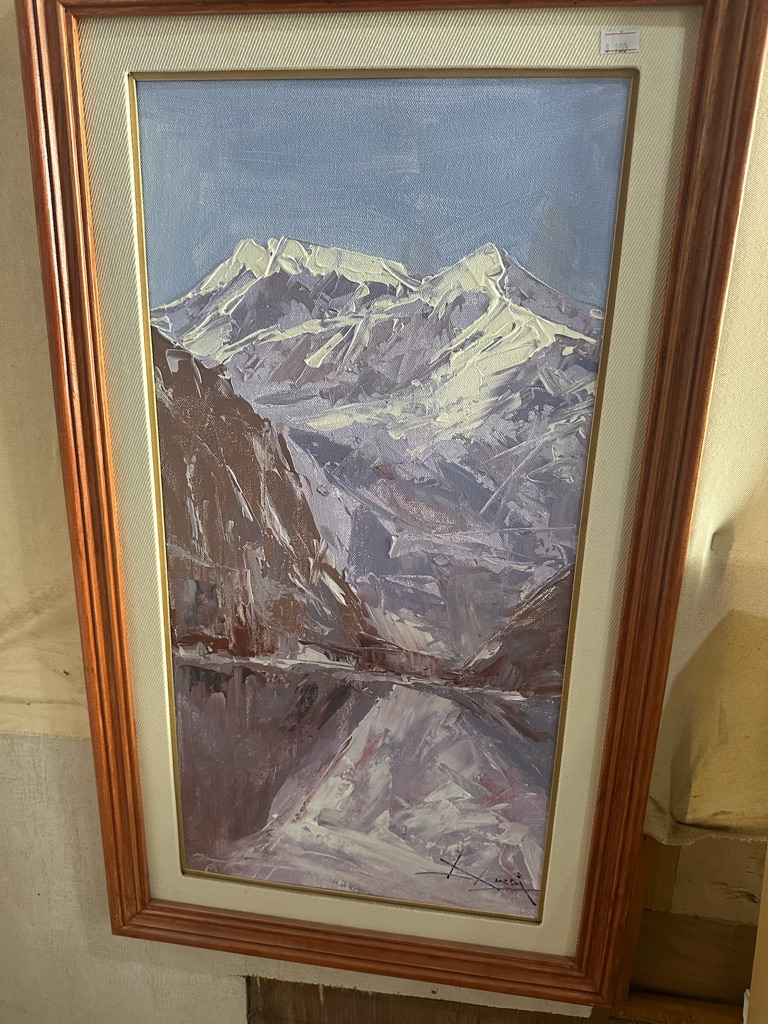
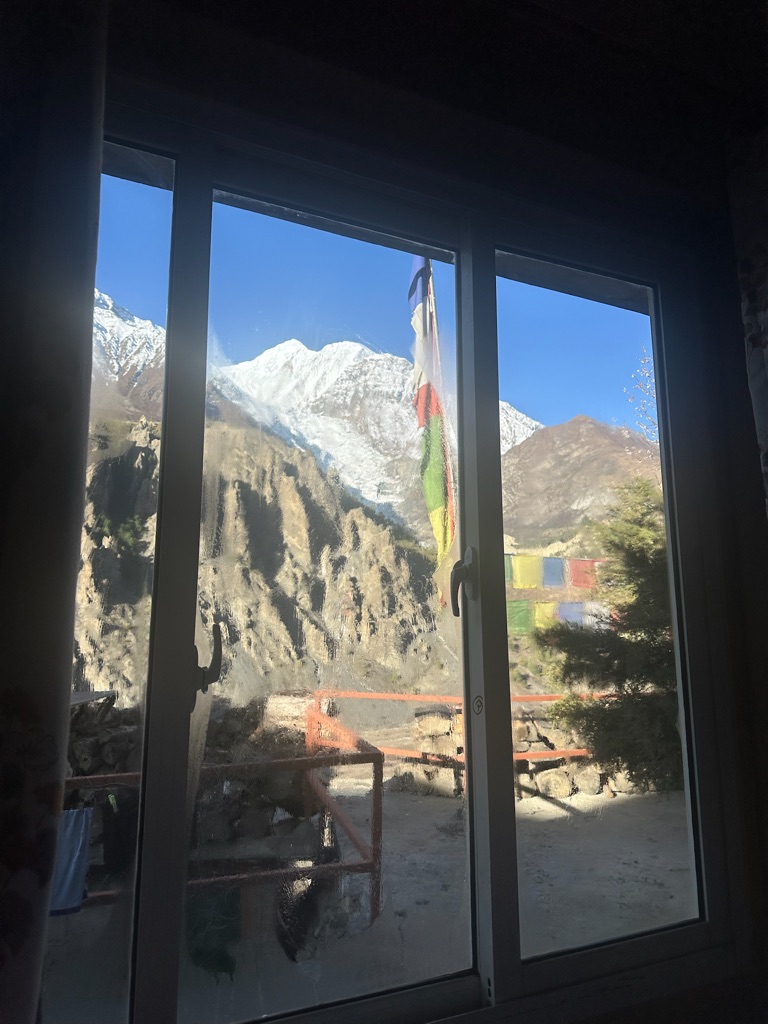 During the morning review session my oxygen levels were fine, so I decided to go on with the day’s hike. However, I did pass on the sausages that were served with my breakfast, which our guides were pretty happy to scoff instead. I then popped into a local art shop, where a Manang-based painter used a heavy paint style to describe some of the landscapes we have seen and will see. I popped into the shop and had a brief chat to him - turned out he ships them all over the world. I said I’d come back later for a look.
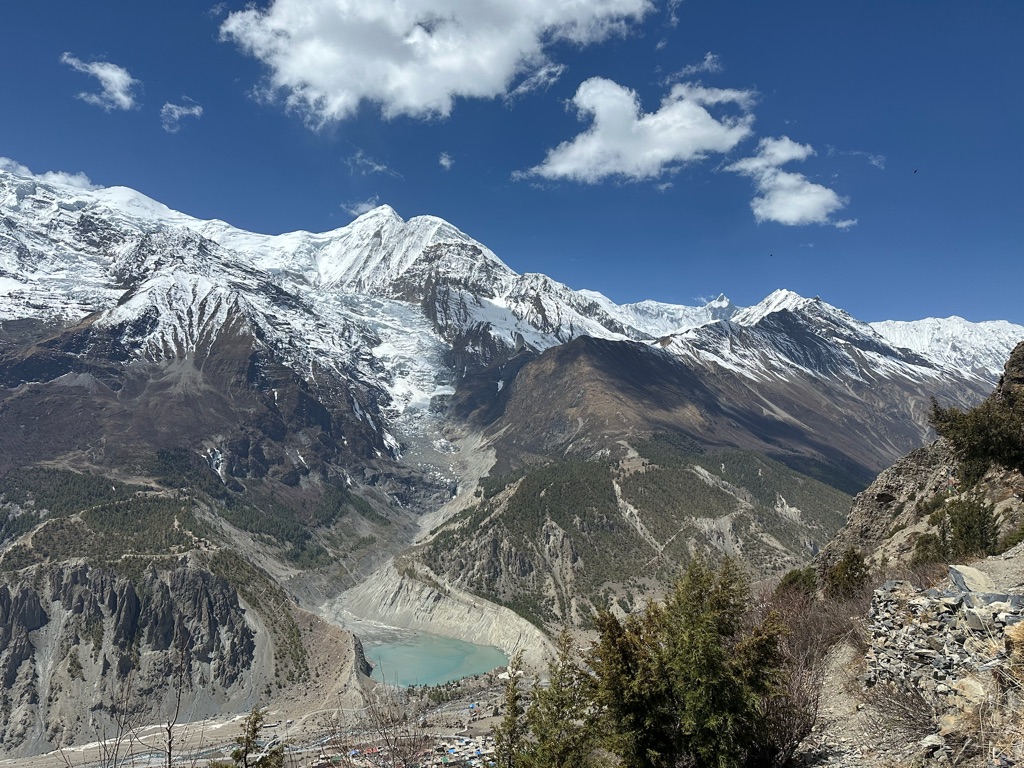
Today we would ascend to almost 4000m for our acclimatisation hike. We left the tea house at around 9am and started up a track behind the town. First stop was another of the tall, white Buddhist shrines we found semi-regularly in the high places on the trail. We saw a few large bearded vultures riding the wind - barely moving their two-metre wingspan as they circled a broad defile in the mountainside. We took many photos at this spot, but really should have saved our time given what was to come.
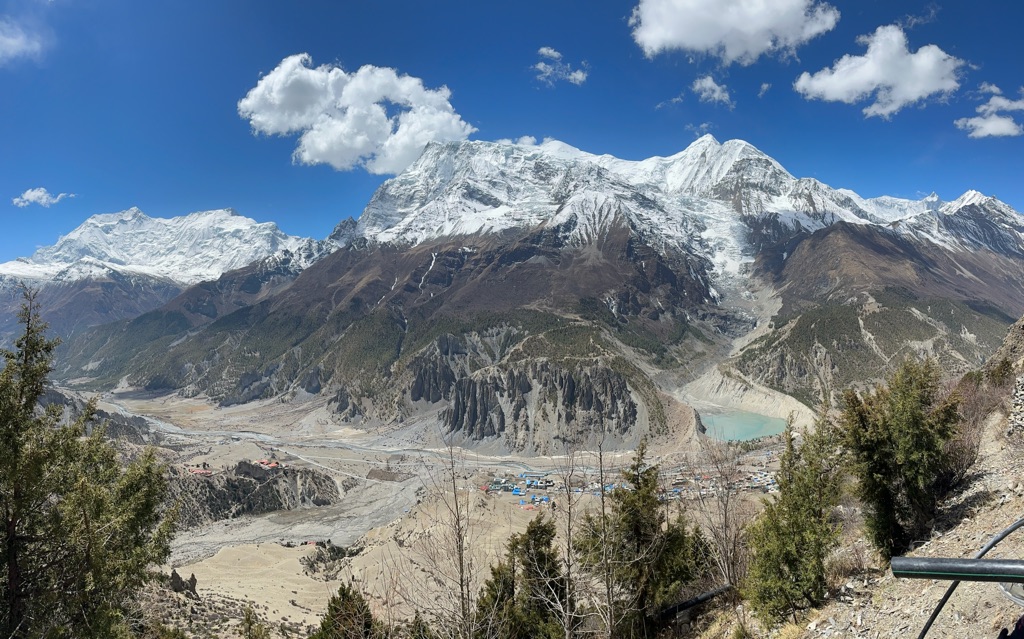 We continued up a fairly steep track, encountering more birds and getting a proper sense of our destination - a temple at the top of the scalable part of the mountain. We stopped briefly at one of the ubiquitous shop / restaurant type places - this one however was closed, so we rested briefly and ate some spicy twisty type chips that Ratna had brought. I was feeling pretty unwell at this point, and the combination of the altitude, lack of sleep and my stomach problems from the night before were starting to become a problem.
We carried on ascending up the mountainside along the narrow trail. It switched back a couple of times and although we had no packs, the cumulative fatigue and altitude made it challenging. We finally arrived at the destination - another white Buddhist shrine where the local Aani (monk) and her attendant were burning juniper and restringing prayer flags. The view from up here was magnificent. We had a panorama of Annapurna II, III, IV and Gangapurna which we took in as we sat on the stone benches of packed slate.
 The most special experience was yet to come. We were invited into the Goumba to be blessed by the Aani. We made our way under a low door and up a flight of stone stairs carved into the mountain. We took off our shoes and entered a worship room, which was a small alcove filled with ornaments, photographs, portraits and depictions of Buddha. There were many photos of the Dalai Lama hung reverently on the walls.
The Aani lit incense which filled the room with a calming aroma. She then called each of us forward, whispering words of blessing for our passage through Thorong-La Pass into the meditative silence that had descended upon our group following our entry therein. She tied a necklace of multi coloured fabric around our necks - the same colours that adorned the prayer flags - and then pressed a sacred book to our foreheads.
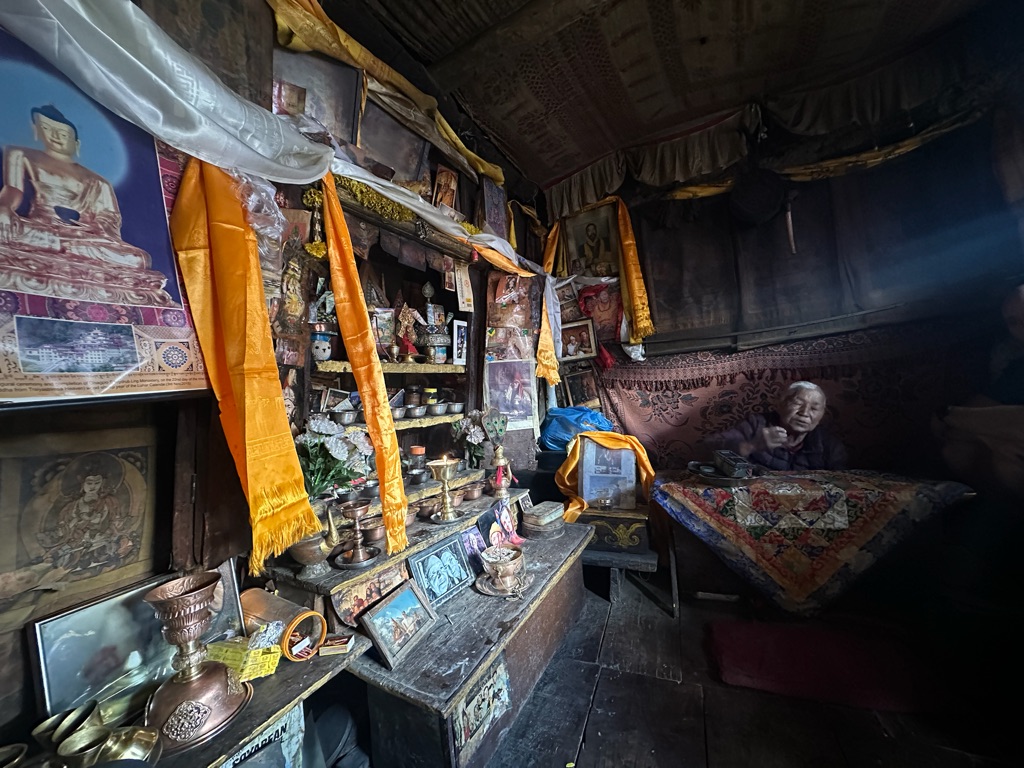 Whilst I’m about the least woo-woo person there is, as I sat back on the bench I felt much of the morning’s malaise wash away from me - replaced by a feeling of tranquility. After blessings were bestowed, we asked her a few questions which were translated by our guide. We learned she had been there for more than 40 years, and had learned the old ways at a temple away from here. She lived here in the high places, and the small Goumba had an ancient kitchen and more stone stairs climbing to what we assumed was a bedchamber.
We were saddened to learn that there was no apprentice in waiting to take stewardship of this place once the Aani passed on. It felt emblematic, harkening back to my earlier thoughts about the unhappy confluence between technology and the old ways, that this special and spiritual place may lapse unattended. We were lucky to have experienced it. Awakening from the dreamlike encounter, we walked outside to an incredible view from the open air antechamber of the temple.
We departed from the temple and started our descent, which always sounds better in theory - but in practice generally causes more strain on the knees and mashes your toes into the front of your hiking boots. We walked reasonably quickly though - with the side benefit being that it’s easier to hold a conversation. We talked rugby league, gossiped and generally passed the time as we re-entered Manang for lunch followed by a bit of free time.
After flying too close to the sun last night with the four meat pizza, I settled for a vegetable fried rice which was solid. We had observed Gangapurna Lake earlier in the day and Brown had his heart set on skimming some rocks across it. So, after a short break we set out without our guides along the trail towards it. More walking was honestly the last thing I wanted to do, but from a distance it looked worth seeing.
We walked out of town on a descending trail roughly westward, which stepped down a hundred metres or so and then splayed across the valley floor. We went over yet another cable bridge and up a trail in the side of a small ridge, finding that there was no access to the lake from there. We traversed across to the other side of the ridge and saw a route to the lake.
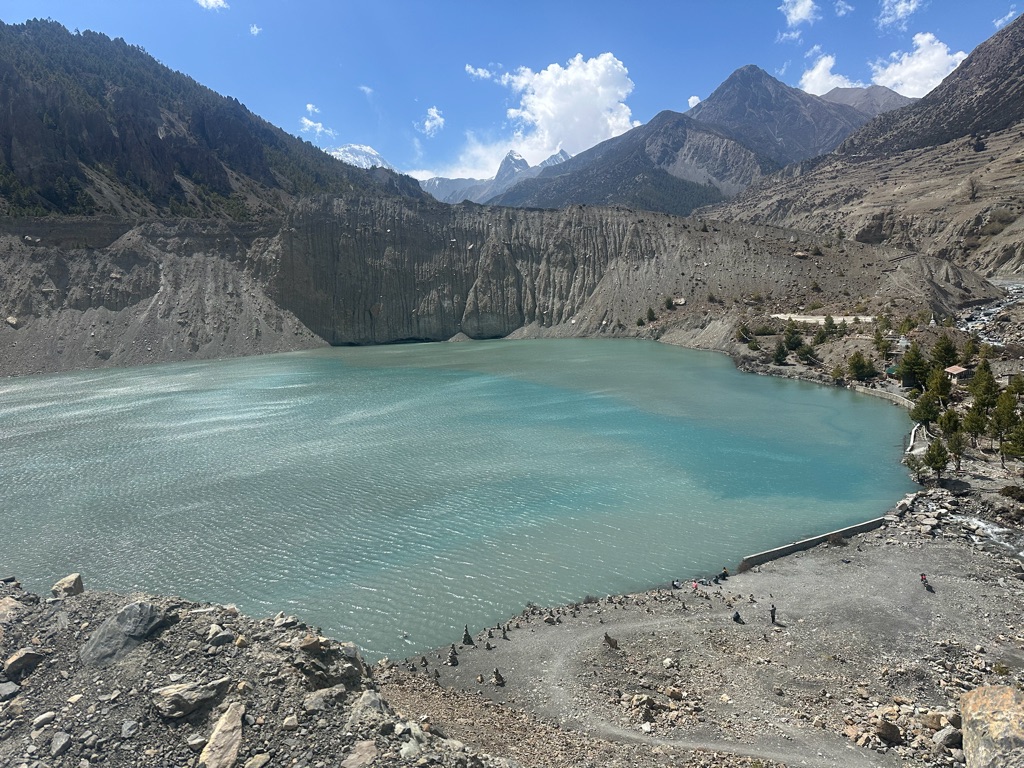 Once we arrived at the lake, which was somewhat populated by tourists, we found some likely rocks and started skimming them. Two local guys joined us, but after a little while an older Nepalese man shouted at us from a distance to stop - so we did and gestured an apology towards him with palms facing outwards.
The group split, with Geary, Jake and Brown taking the scenic route back and the rest of us travelling more directly. We stopped into a small store to purchase some stickers and magnets, then went back to the tea house. Geary had the room key, so I went for a wander whilst I waited for him to return. I went back into the art shop and spoke with the owner - we made a deal on a painting I liked which he agreed to ship to my Australian address. I was very happy with the purchase - it will look great on the wall.
 We finished up our day reading in the third floor lounge room of the tea house. The young daughter of the tea house owner was learning to paint and had an easel and canvas set up in the corner. The clear skies meant we could still see the mountains from the windows. It had been a nearly perfect day for sightseeing.
We had a much safer dinner of daal bhat and carrot cake before winding up the night early as we couldn’t find a good spot for cards. Whilst I have loved Manang, the accomodation was fairly crowded. A large group of bald middle aged Israeli men showed up in the early evening and were quite loud and rude to most others they encountered. I’ve not spent much time with Israelis before, but this trip has not made a good impression with me on their manners.
Tomorrow, we trek a gradual 500m incline to Yak Kharka. We will travel there directly without a lunch break - have lunch there and do a short acclimatisation hike again. I’m hoping I get a better sleep and feel more up for a long walk than I was today. Despite the fatigue, today was overall spectacular - we have been so lucky with the weather and conditions, it’s been a nearly perfect trip. I’ll always find something to whinge about if I try hard enough, so I’ll leave it there.
Day 9#
After a fairly good sleep on a rock hard mattress, we awoke to an overcast morning. The peak of Gangapurna, clear and shining in the dawn of yesterday, was now shrouded in ominous skies. The bleaker conditions were multilayered - the sky was obscured by a gunmetal grey, and smaller clouds scudded across the window at a height well below the peaks of the daunting mountain range.
As we had woken at 6am, there was plenty of time before breakfast at 7.30, which I spent reading and Geary, with whom I was rooming, meditated. We packed our bags and went up to the common room again, which was refreshingly sparsely populated. We shot the shit for a bit and then got our breakfast - toast, fried eggs and fried potatoes. The boys ate their fill and then after a bit of a fuck around out the front of the tea house we hit the road.
I broke out the poles today, as my legs and feet were starting to feel pretty cooked. We trekked out of Manang up the last road we would see, which curved sharply up an incline to an older portion of the town situated at a higher elevation. The buildings were old and made of rough stacked slate and stone. The customary prayer flags fluttered in the gloom that enveloped the peaks we knew surrounded us - yet were unable to see.
The trail slashed through juniper and thorn bush midway up the mountainside. Our guide would infrequently slap at large clusters of juniper, which emitted a puff of dust that drifted lazily in the slicing wind of the mid-morning. After the initial ascent, the trail wound around huddled ridges and stayed largely level. The ascents, whilst small, remained challenging given we were nudging 4,000m above sea level.
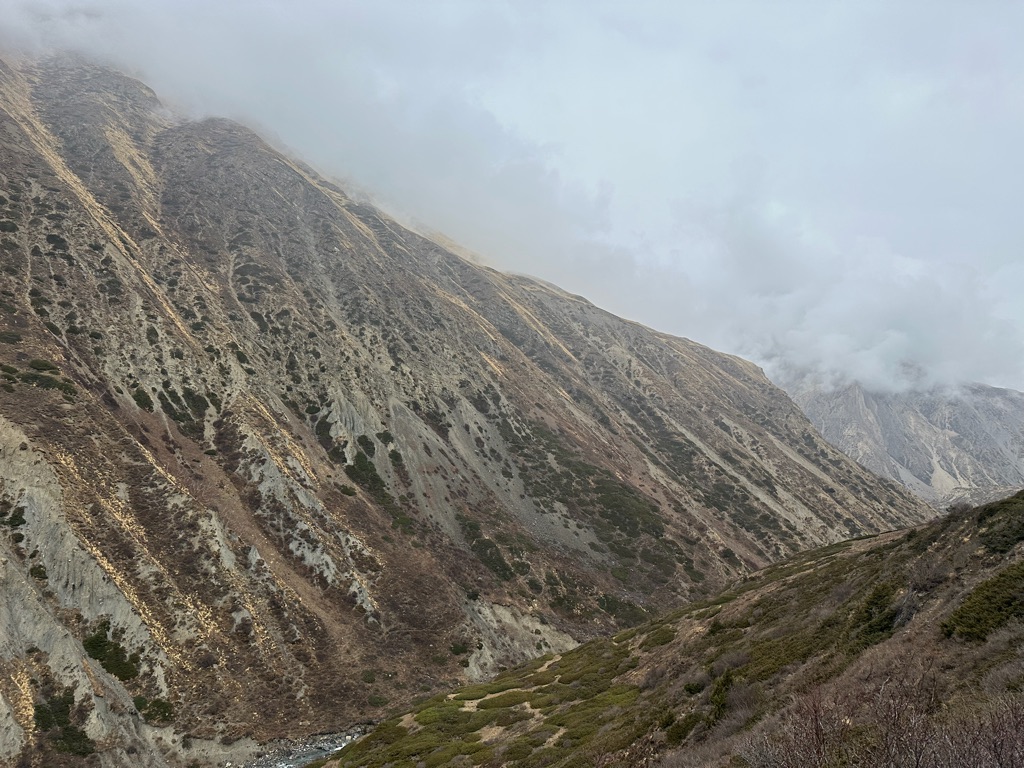
 We bumped into an old Australian bloke who we struck up an initial conversation with. Amusingly, he was a Melburnian and yet mentioned league first instead of footy. We resolved to try and catch him at our next stop - which would be a tea break and our only stop of the trip.
We walked on. The trail continued to navigate through the mountainside and the weather continued to turn darker. We saw our stop in the distance - a two storey stone structure that jutted out from the lip of a ridge line. We carried on up one last hill and set down our packs - albeit first slapping our rain covers on to them and putting on our wet weather gear.
We walked up to the top level of the building and bumped into the Australian bloke - Ray - who was with his daughter. He lived in Camberwell, though he grew up in Casterton near Hamilton on the SA border. We chopped it up with him for a while and he lent Jake his knife to slice the big slice of yak cheese he just bought. The rain then came down and we moved inside as our Masala tea was served.
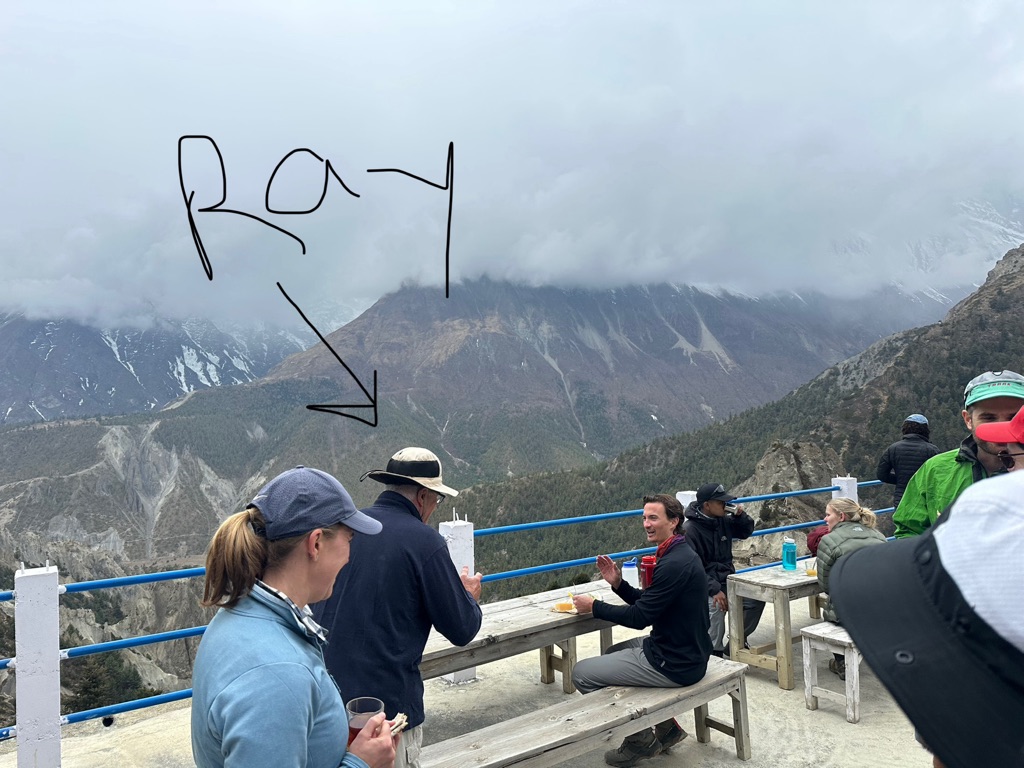 After sheltering inside for a short period and knocking off the rest of our tea, we ventured out into the wind and spitting rain. As the track continued to weave along ridge and defile, the rain became sleet and the conditions probably the worst we’d seen on the trek. My hands were freezing, so I put on my fleece gloves - which were fairly slow acting but warmed me up eventually.
From our stop location, we had about another two hours of trekking ahead of us before arriving in Yak Kharka. The trail was reasonably well populated without feeling crowded. We bumped into a crowd from Singapore who were pretty nice. Others trekked solo - braver than me for sure. If things go wrong out here, the Nepalese seem the helpful sort; but you’re a long way above sea level and an even longer way from home and first world medical care.
As we learned on day 7, overcast conditions make for comparatively uneventful trekking. We encountered a few yaks and blue sheep, the former quite close and often guarding young calves; the latter very much in the distance. The titanic peaks of the Annapurnas remained steeped in cloud and murk. We passed by a few more structures of rough stone without stopping and in short time arrived in Yak Kharka.
As far as mountain villages go, it seemed pleasant. Living up to its name, yaks and dogs roamed the streets in equal number. The village was segmented into four sections - each separated by a short walk along the main trail. Our tea house was in the third section - on one side a common and dining room, on the other a two storey horseshoe style accommodation building. Prayer flags tightly strung above the trail fluttered resolutely in the fierce breeze.
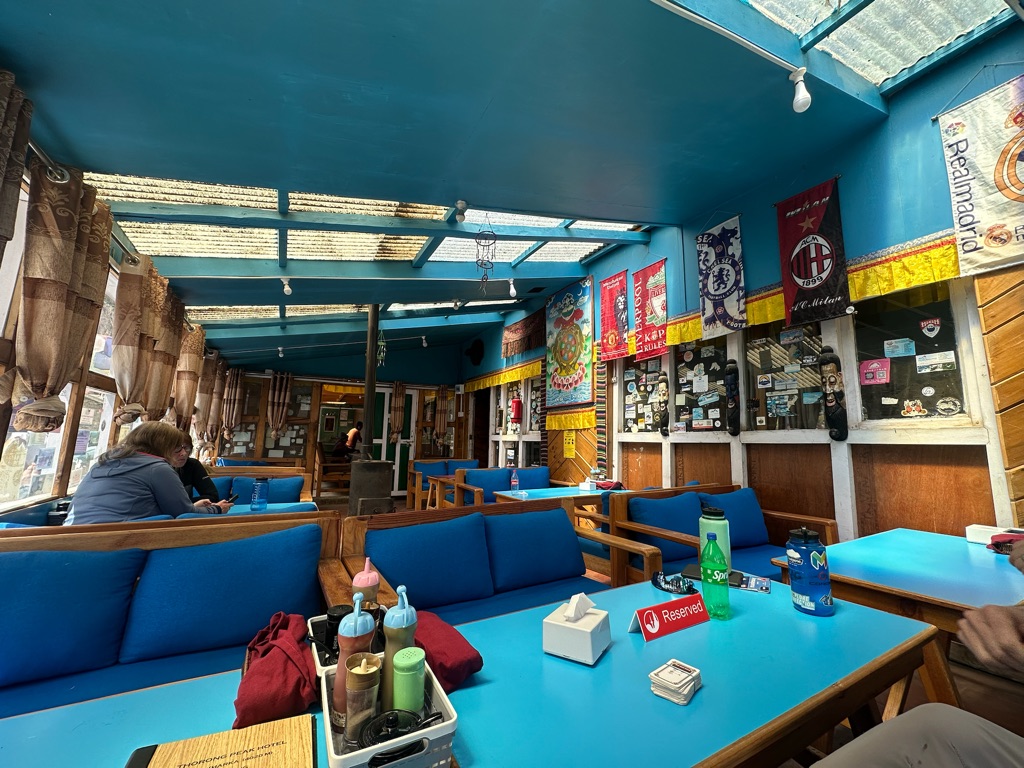 The rain had slackened off but it was still icy cold so we bundled inside the common room to warm up and have lunch, which was served shortly after arriving. I played it safe again with veggie and egg fried noodles. The daal bhat looked pretty good though, and I settled on that as my dinner option.
I was with Jakob, who had come down with a mild flu and went off to get some deserved rest. The others and I stayed at the table and relaxed for a bit, before realising that the sun had burst through the clouds in a big way and burned off much of the overcast conditions. This yielded a stunning view back the way we came of a new angle of the Annapurnas, just in time for our acclimatisation hike at 2.30pm.
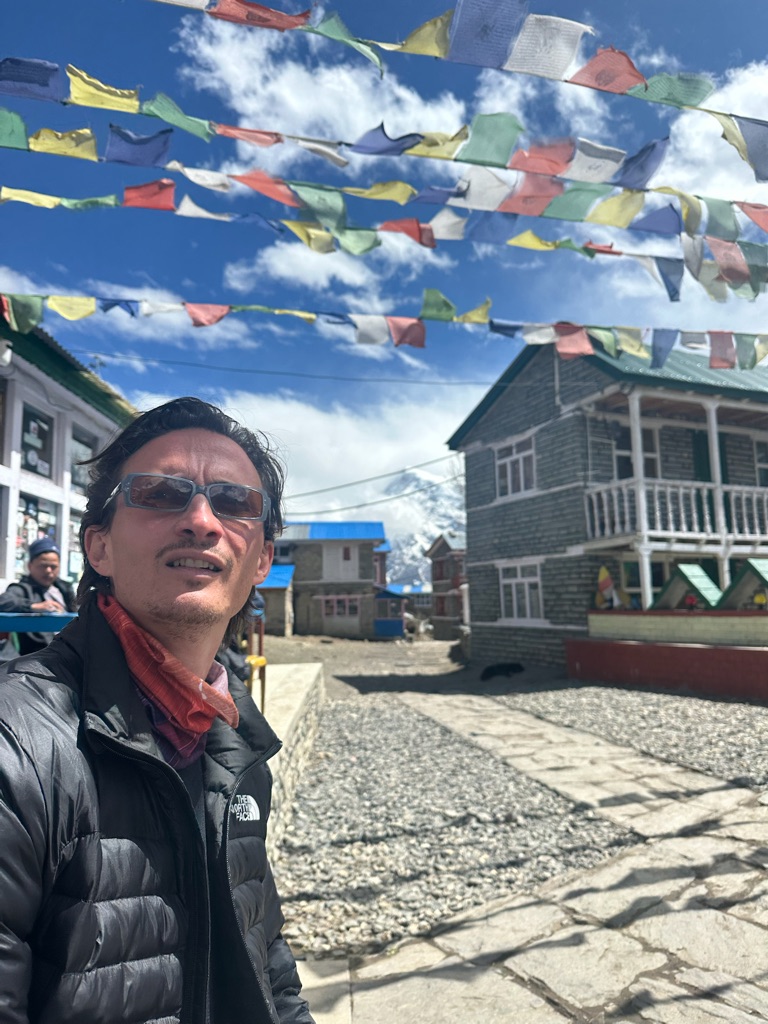 After enjoying the sun for a while, we set out for our afternoon trek - a few hundred metres further up the trail, clear of Yak Kharka and onwards along our route for tomorrow. We consistently found ourselves turning back towards the view of the Annapurnas, though some competitively terrific vistas opened up in front of us as well.
As we had ventured beyond the end of the road, the only way for supplies to move up to these places was via donkey. We saw a large train of them - some carrying two gas canisters strapped to their flanks as their bells jangled musically. The trail was ours at this point, and I once again felt the immensity of the land spearing up all around me towards the heavens.
Ratna went ahead and sat on the ground, inviting us to meditate with him for five minutes. I found it hard to close my eyes, such was our incredible surrounds. But I did eventually, and listened to the chilling wind, the distant rush of the river, the gentle tinkle of yak bells, and the sensation of my feet screaming at me for eight days of unrelenting abuse.
Continuing on with my clumsy theme of technology’s encroachment on these incredible, pristine spaces - it was hard not to notice the steel telegraph poles that stood stark and grey against the majesty of nature. These people have civilised this wild land and they are no less entitled to the benefits of modernity than we are in the western world, but it’s hard not to feel sad at how this process has changed the aspect of this place.
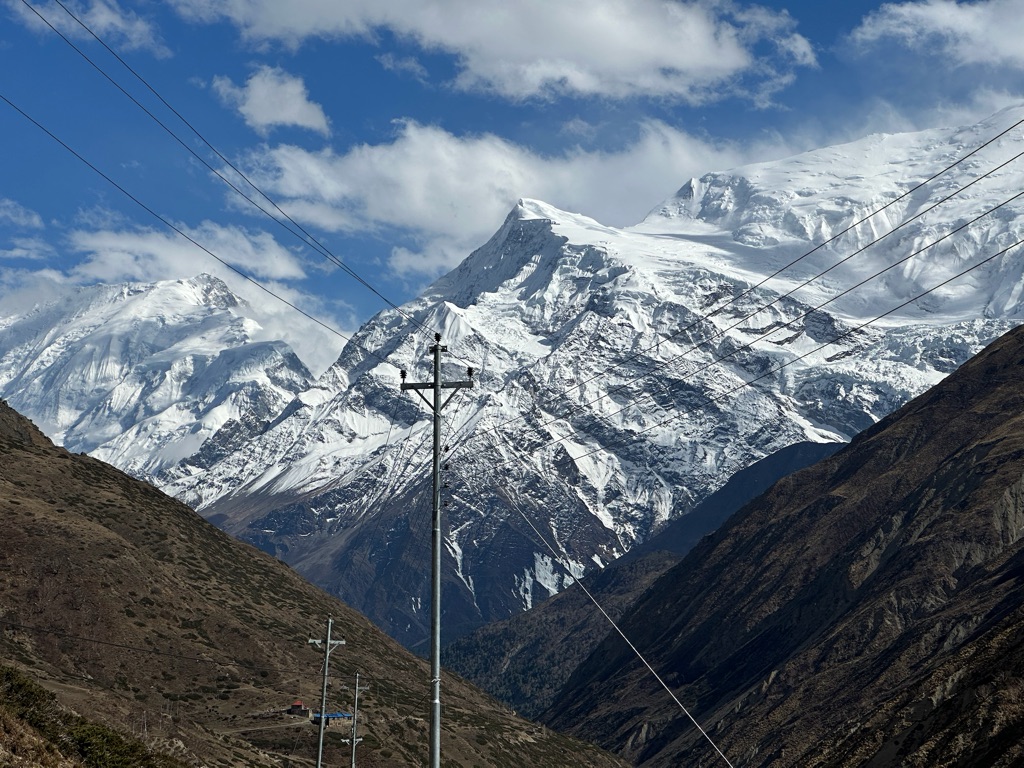
 Immensely satisfied, we traversed back down to the village and tea house - playing cards and killing time until dinner. The daal bhat was good, but I’m still chasing the magic of that Day 5 daal bhat we had for lunch. It’s yet to be beaten. It’s quite interesting how the quality varies despite much of the ingredients being the same.
I saw they had a guitar in the tea house and asked the owner if I could give it a spin. It was a $100 piece of shit with strings tuned to the wrong pegs and no upper E on it, but it was fun to give it a whirl. Less pleasant was continuing my awful streak at shithead, losing another two games much to the delight of my travelling companions. Sometimes, I feel like the universe is trying to teach me to stop being such a sore loser - but I’ll never learn. That’s five games out of the last 6 I’ve lost, which are pretty astonishing numbers for such a highly random game. Surely the worm will turn soon enough.
Day 10#
We rose at around 6am to a bright and cloudless day. From the window of our tea house room I could glimpse the Annapurnas once again. They were indomitable as always, though somewhat obscured by the smaller mountains that shielded the town from wind and sun. Jakob was feeling a little better today, though he still looked a long way from 100%. We packed our kit, did our ablutions and went downstairs and across the stone trail to the common room.
Breakfast was Tibetan bread, omelette and fried potatoes with onion and capsicum. With the addition of jam and PB it hit the spot. The fellas drank in the morning, though the task of crossing Thorong-La Pass at sparrow’s fart tomorrow morning loomed large. Today’s trek was a high mountain pass leading towards a 350m cable bridge that crossed to Thorong Phedi - which was effectively base camp for the pass. It would be a short trek - departing at 8am and arriving at camp at around midday.
 Given my woeful performance at the shithead table and refusal to perform the shithead dance after my second loss, I decided that appropriate penance would be to wear the red flap hat for the day’s trek. With its dual flap system at the back, elongated brim and bright red colour, I looked fucking ridiculous. Such is the price of honour.
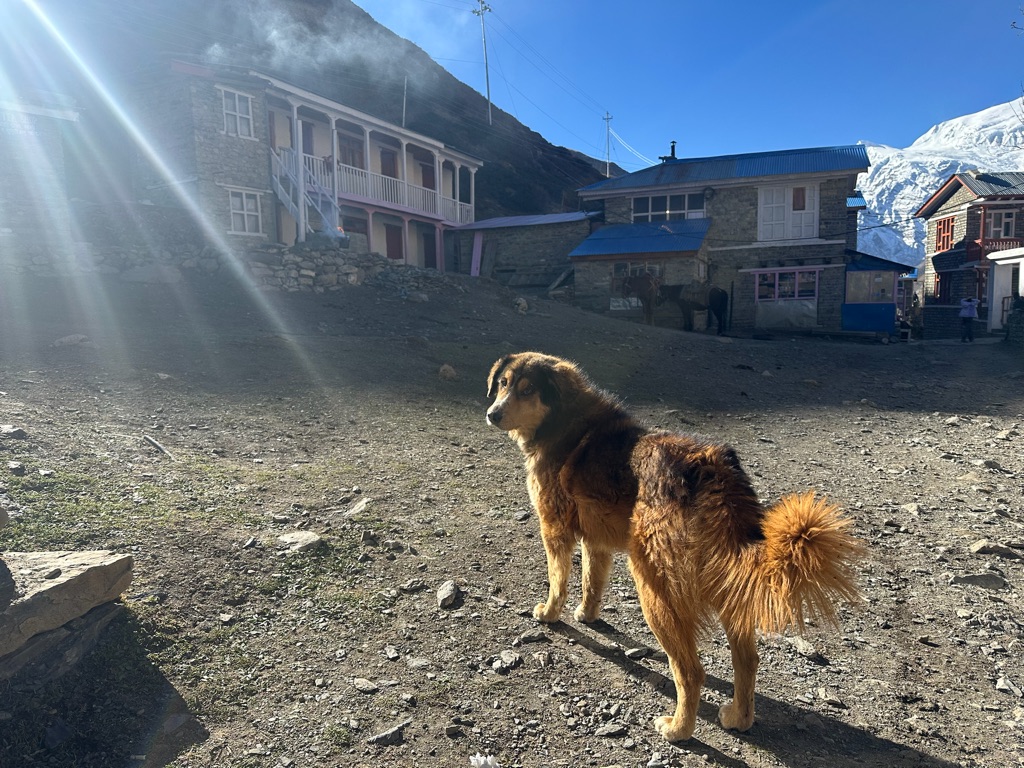
I spent some time after breakfast hanging out with some of the local dogs - there was one with a sunburst coat that I took a particular liking to which was, as dogs usually are, very fond of a chin scratch. There was a tiny puppy of a similar breed that was bouncing around like a pinball - chasing sticks, biting hiking boots and generally making a nuisance of itself. Very cute stuff.
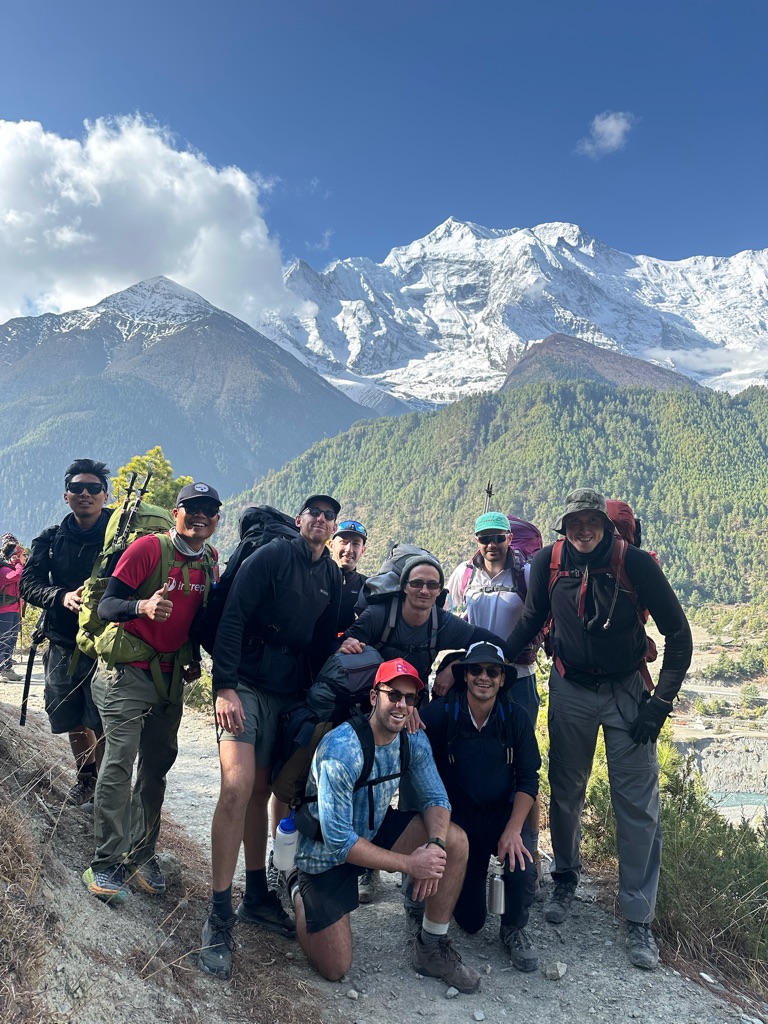
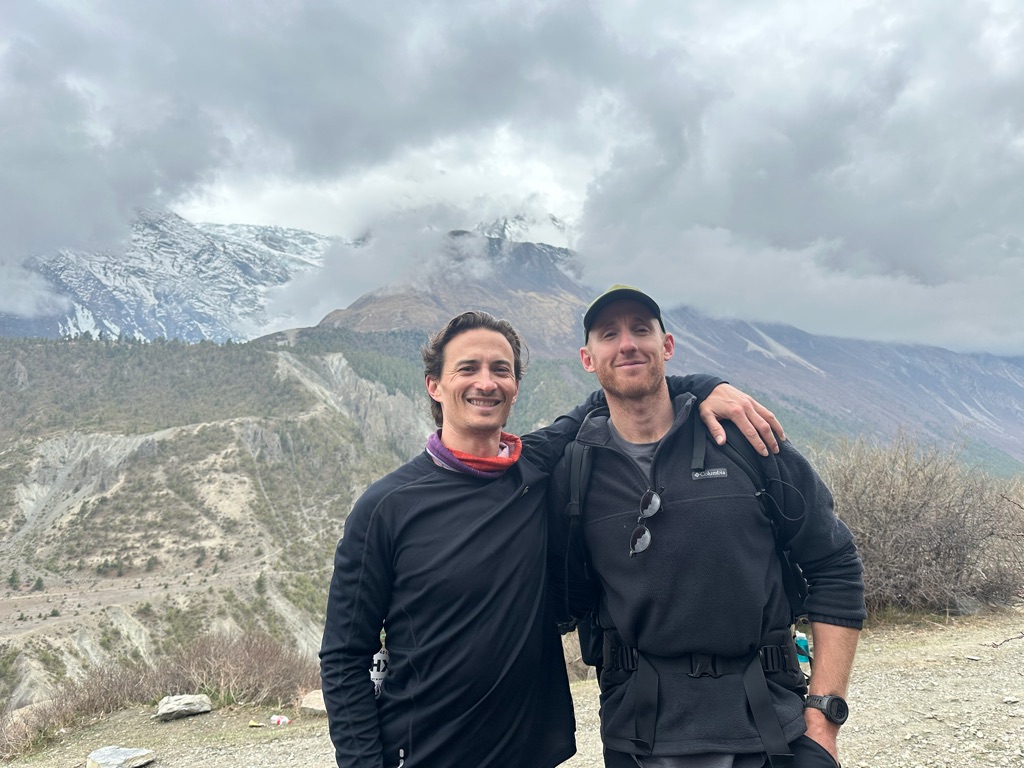
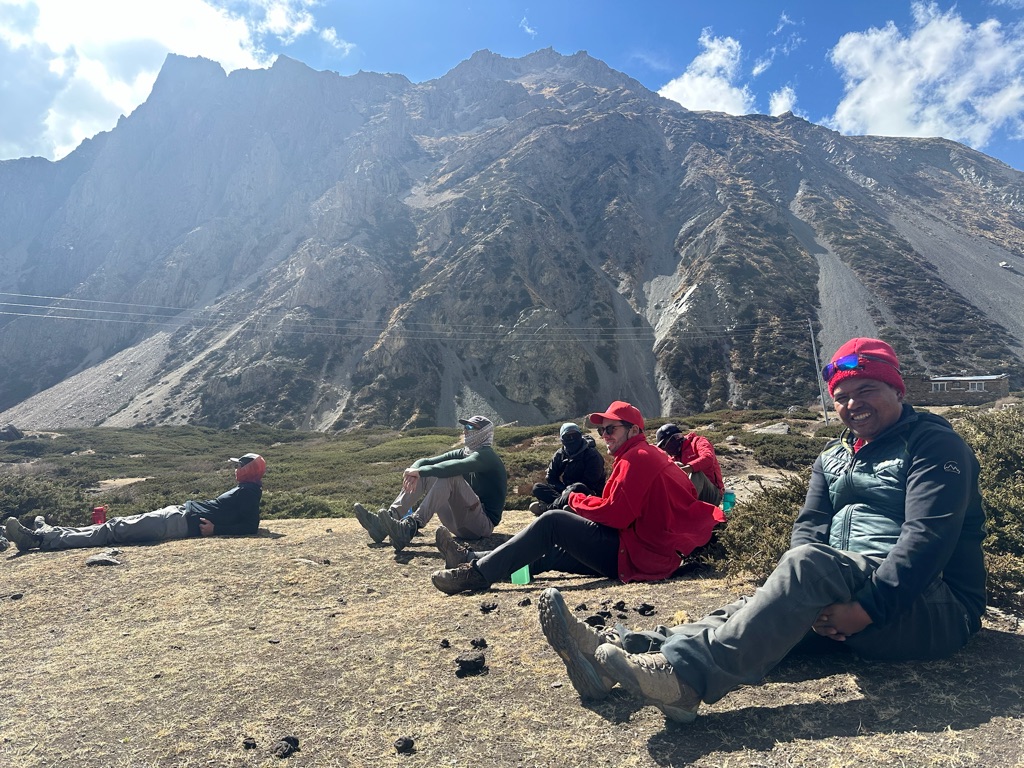
 We set out along the ascending trail we walked yesterday afternoon, stopping for a group photo with the Annapurnas as a backdrop. It’s hard to articulate how large these mountains are and how much they dominate the landscape. They were grand spires of black and white piercing the blazing bright blue of the morning sky.
The altitude of the trail was certainly playing an increasing role in our trekking. We adopted a steadier pace, as much of the morning would be ascending to an apex which we understood to be in the high 4000’s. The incline was gentle however and the trail well trodden, which made the task very manageable. Still, our pace was much less than what we had been operating at for much of the journey at lower altitude.
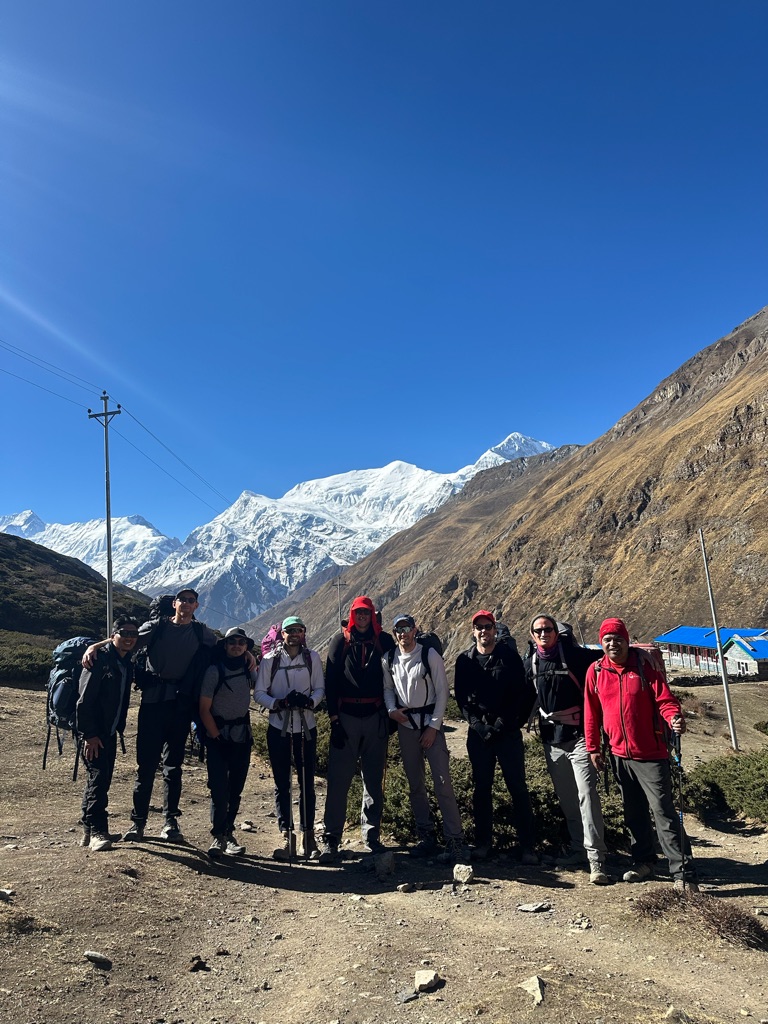 Fig 1: Pictured here with red shithead hat.
As the sun beat down on us, many of the morning’s layers were discarded. However, the wind remained bitingly cold and as we continued to ascend, those layers found their way back on. The protection offered by the flap hat was the complete inverse of its terrible appearance - I fastened it to my head with a chin strap like the goober I am and enjoyed 360 degree UV protection in these challenging conditions.
The trail wound its way up the mountainside, gradually ascending as it diverged from a lower road that some other trekkers elected to use. I suspect this was to provide us with a bit of additional acclimatisation before we made for the pass tomorrow morning. After trekking for a few hours, we arrived at a small hut serving tea. We stopped in for a cup and briefly chatted to some Israelis smoking cigarettes inside. I could hardly think of anything worse than punching a dart indoors at this altitude.
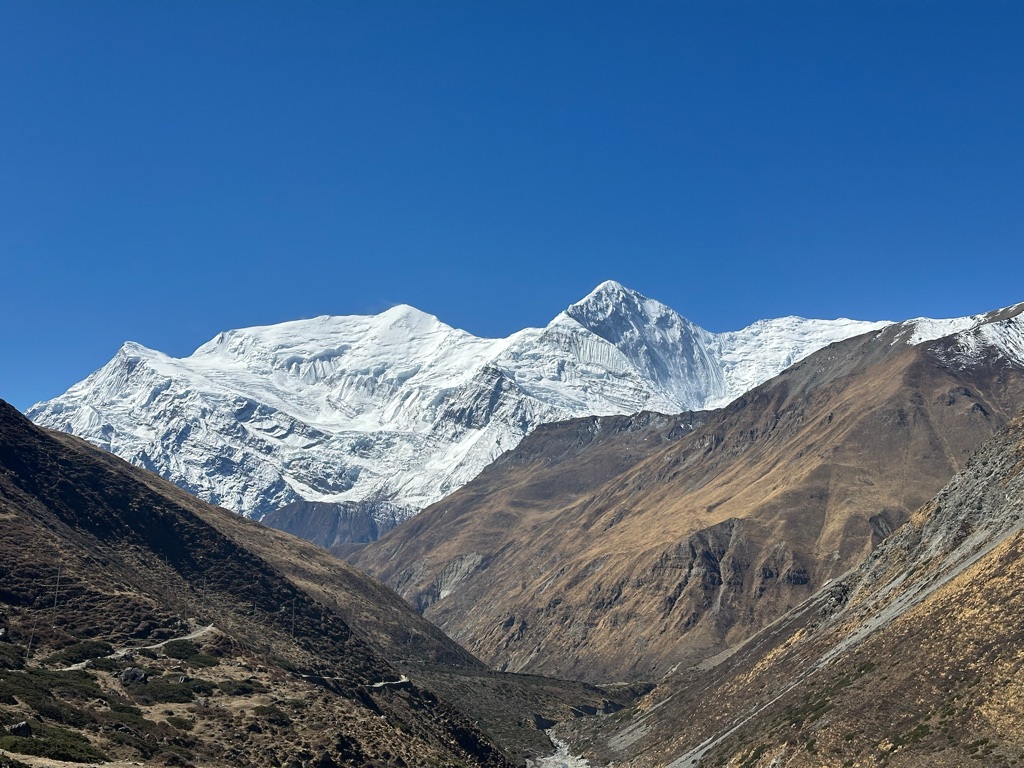
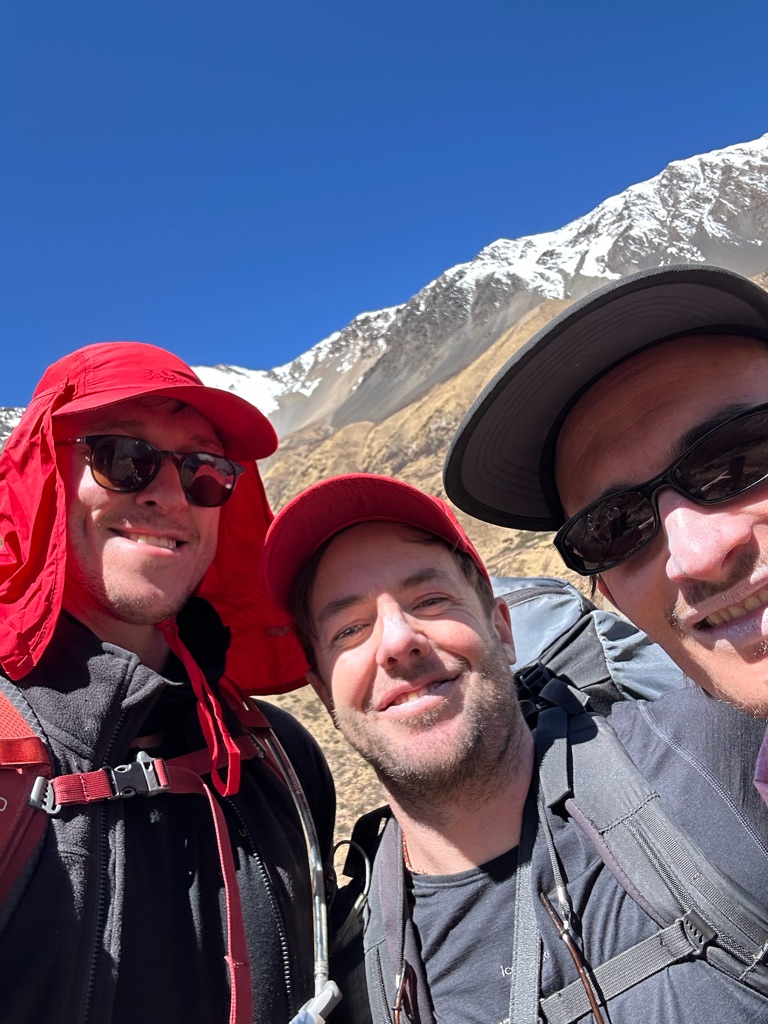 We navigated the narrow trail upwards still to our highest point of the day - 4,700m above sea level. The air becomes noticeably thin at this point, and it’s necessary to breathe deeply to avoid feeling out of breath. It doesn’t get any easier at higher altitudes, and Ned and I took a moment to reflect on the mindset, training and grit it would take for a person to summit peaks that are over 8km above sea level.
We started our descent. The trail remained of good quality, mostly packed dirt with some sections of jagged stone. The latter of these made using my trekking poles difficult, so I usually just slung them over my shoulder and walked unaided.
We crested a ridge and the land opened out before us. It was a moonscape: rock scree from landslides had removed much of the sparse plant life and replaced it with iron grey dirt. The lunar surface ranged upward and became imposing bluffs of stone; perched stoically above the land sliding westward below. The bluffs created a natural barrier, such that the only obvious passage was higher into the mountains - past the Thorong Phedi base camp and over the high pass above.
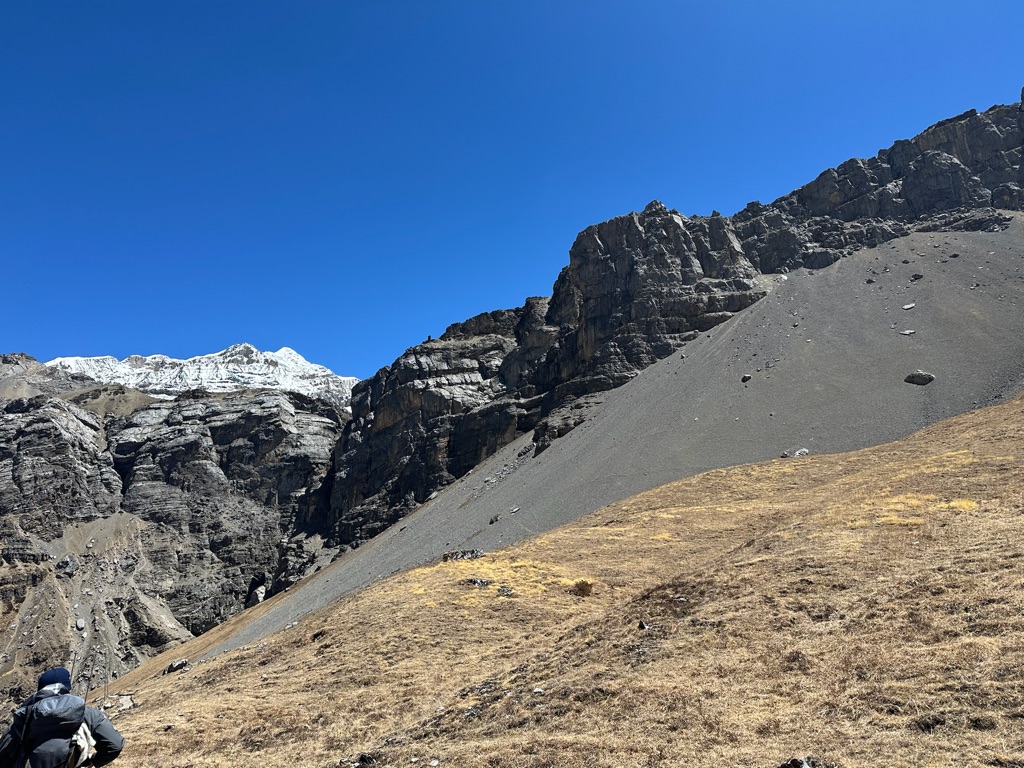 Looking down into the valley showed our day’s destination. A cluster of simple structures huddled in the lee of the plunging opposite side of the valley. Our trail zig zagged down our side of the valley, leading towards a colossal 350m cable bridge spanning the river bed below.
The river wasn’t much more than a spring at this stage, so this substantial work of engineering didn’t seem to serve a purpose that warranted its size and scope. Yet once again, the blanched rocks of the valley floor showed that when the river raged, it spanned a much greater width than the currently insubstantial spring that gushed from an invisible source high in the mountains.
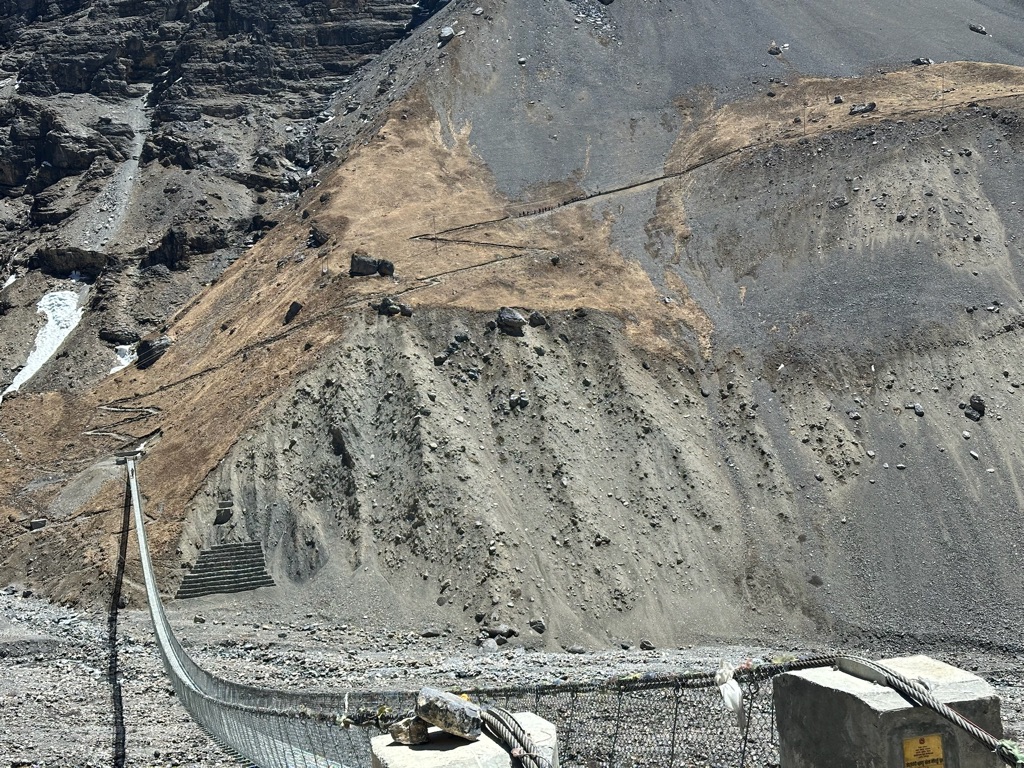
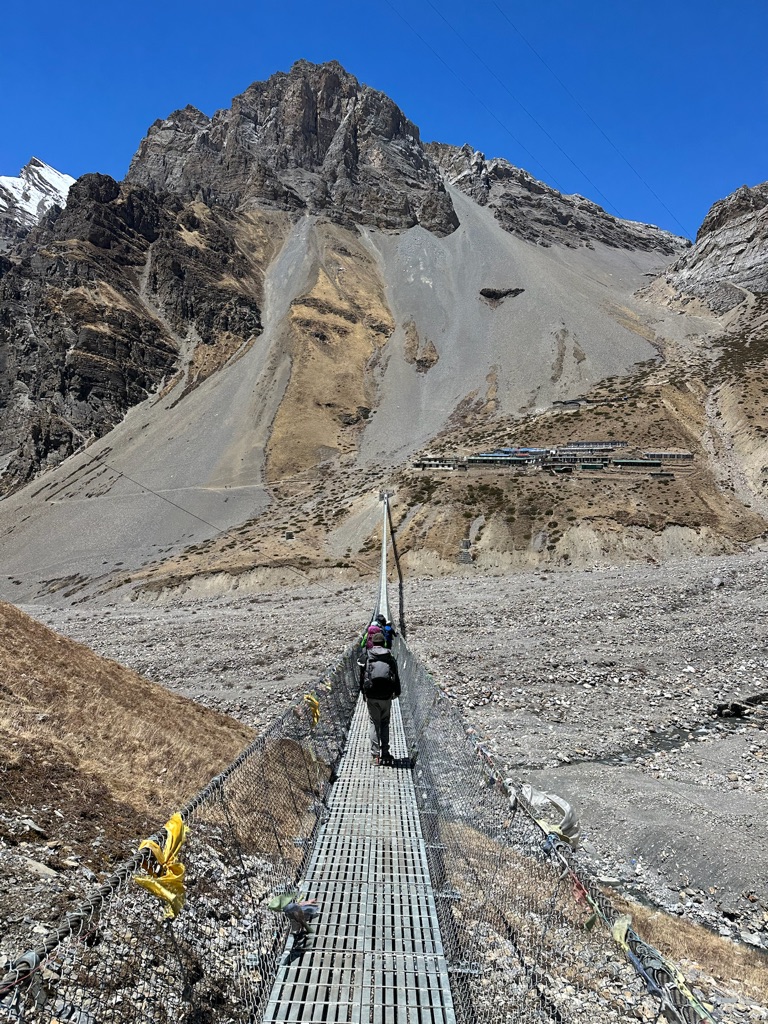
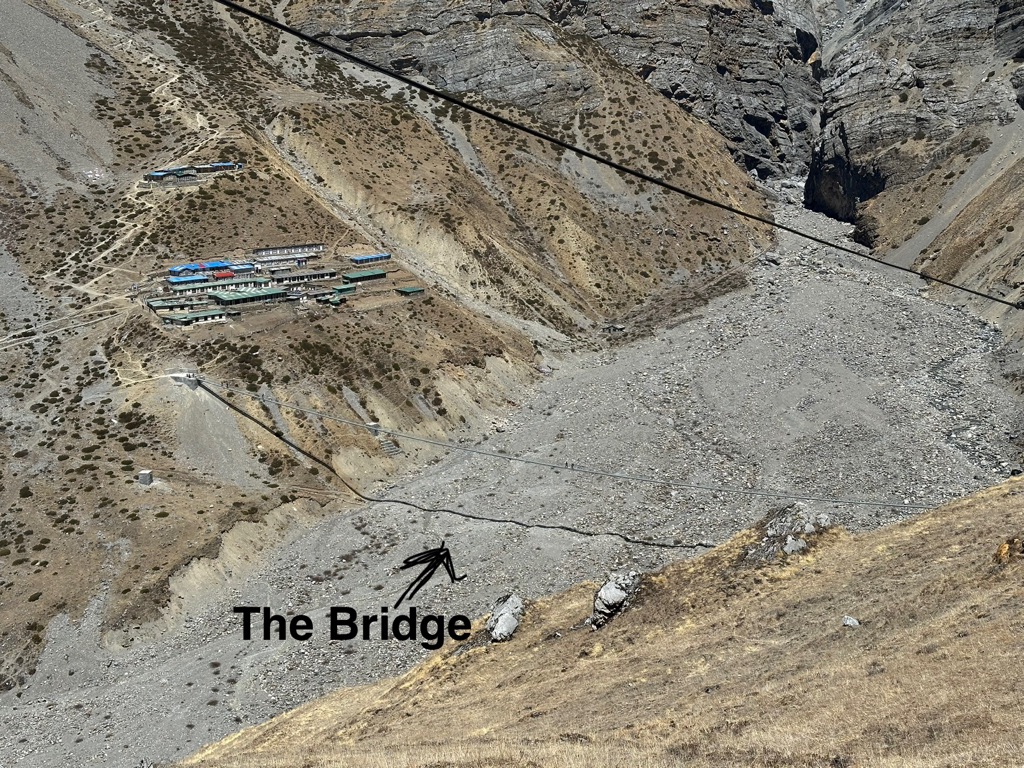 We made our way down the trail slowly - much of the footing was more of the loosely packed rocks that made for uncertain footing. After a short break to once again gaze up at the bluffs, we started crossing the bridge. Each side of the bridge was held by three thick cables, with two additional cables running parallel to the bridge. These parallel cables were latched to the bridge to increase the tension on the structure.
Walking across the bridge was an ordeal. The usual sways and jolts were limited, but at this substantial altitude we were out of breath making our way up the incline on the opposite side as gravity dragged the middle of the bridge well beneath its exits. When we finally crested the gate, we panted and took in the scenery. Thorong Phedi base camp - the last stop before our goal.
 We made our way into the tea house and had lunch - opting for the veggie spring rolls which were terrific. The altitude started to get to the boys. It was difficult to hold sustained conversations, read books, interact with people and to write this diary. I can’t imagine what it must be like at 8000m.
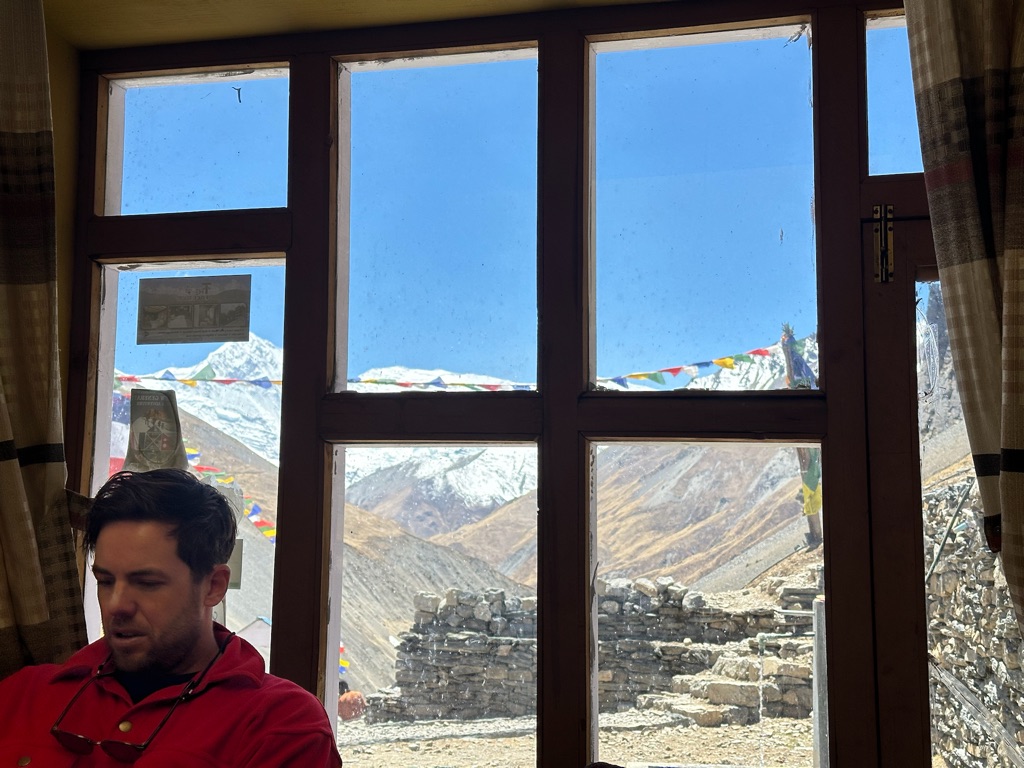
The view from Thorong Phedi is incredible. I’m running out of superlatives to describe this land and what it evokes to stand beneath these giants. It’s even more incredible to realise that the hardy and determined Nepalese have colonised these high places. The vistas back in the direction we came from were visible from our seat in the tea house, and despite the stilted conversation and spaced out faraway looks, it was a place that filled us with awe.
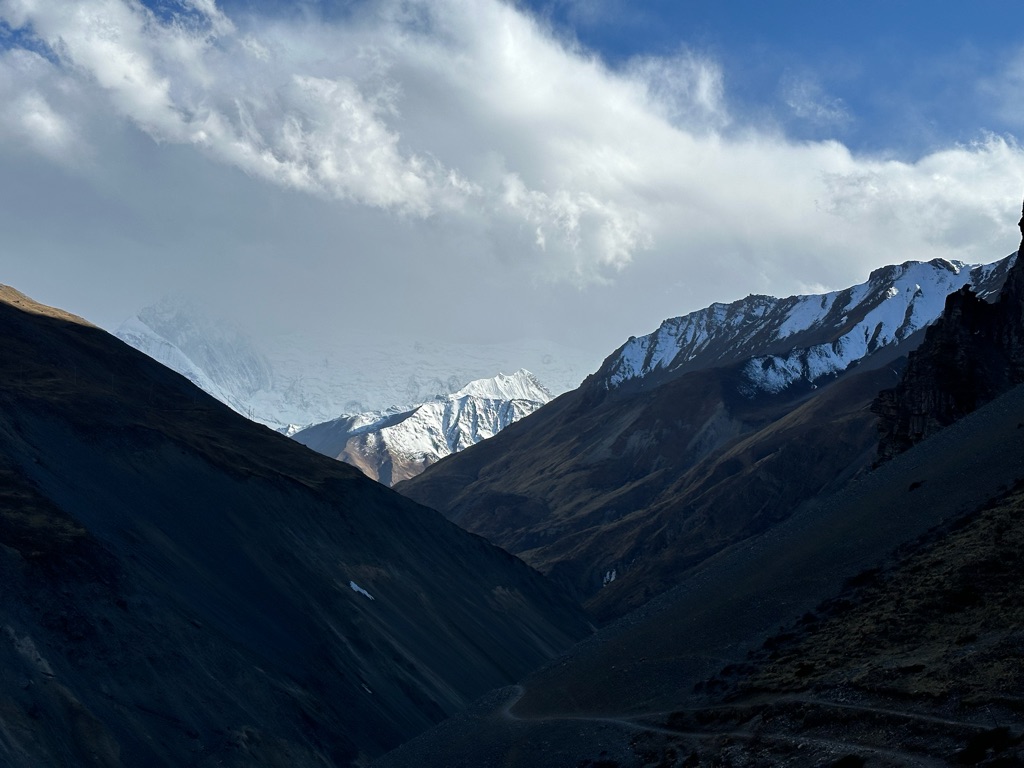 We played cards and I enjoyed substantially better luck than the previous night - the worm always turns eventually. Jakob was still quite unwell and spent the afternoon resting. We decided to help carry his things up through the pass tomorrow to assist him making it through. Our guides were very helpful in this regard.
We had an early dinner and did our oxygen testing - plain fare all around, but filling. Our blood oxygen levels were starting to deteriorate, with none of us in the 90% range. We are off to bed early at 7pm, with a 3am wake up in store to commence scaling the trail to Thorong-La Pass.
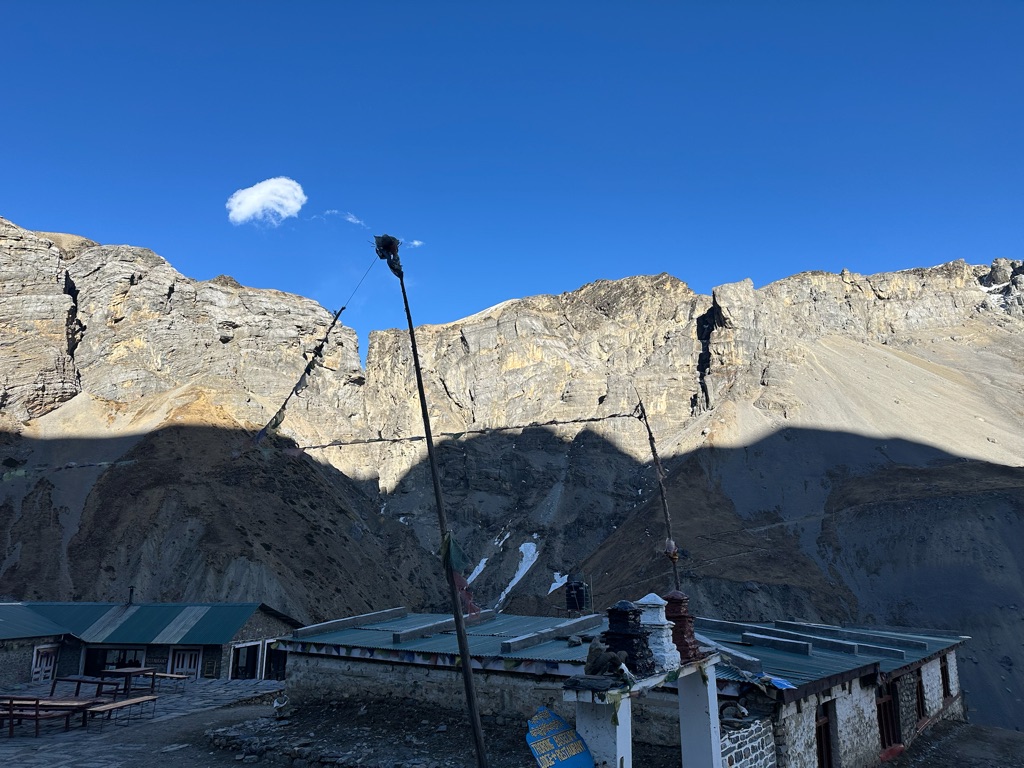
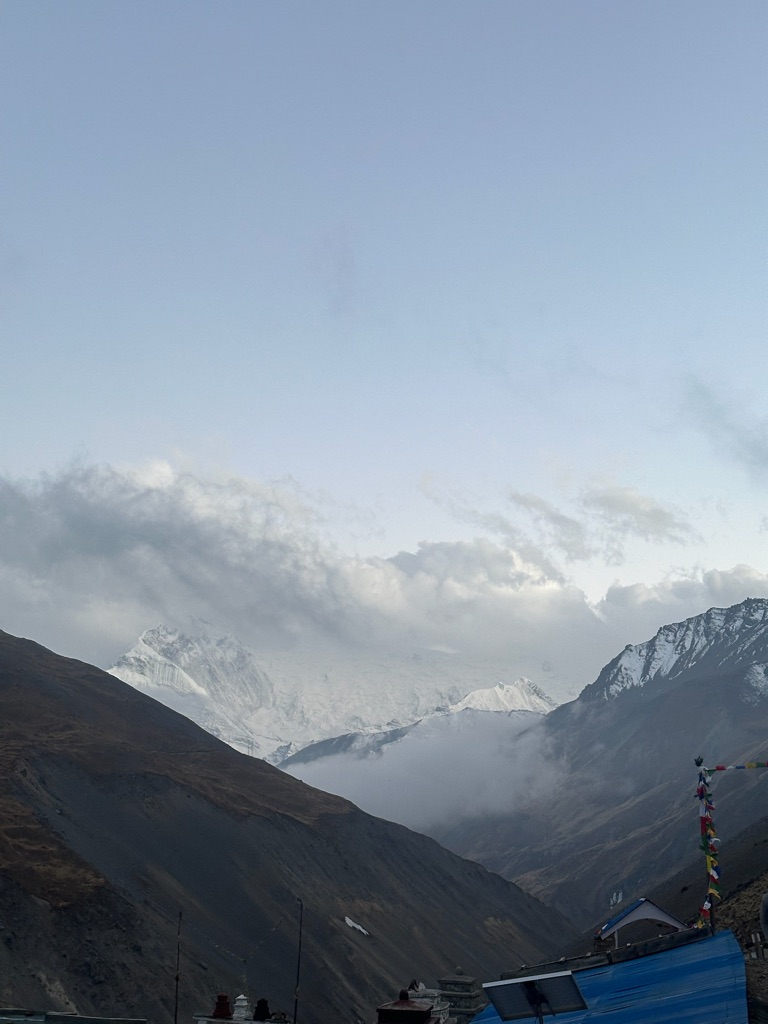 The boys are banged up - I’ve developed a cough, have a blocked nose and both feet have substantial blisters on callused skin. We have one last push - an 8 to 9 hour trek tomorrow, aiming to arrive at our destination after lunch where a cold beer will be waiting. I’m looking forward to it.
Day 11 - Thorong-La Pass#
We made it.
We woke at 3am. I slept poorly, only really drifting off properly close to midnight. The consensus amongst the fellas was that they were in the same boat. An inauspicious start to our biggest day of the trip. To make matters worse, Jakob was still properly unwell and Ned, Jake and myself were each struggling with sore throats, headaches and congestion. It was difficult to pick between what was altitude related and what was fatigue and general sickness.
We had a breakfast in the cold darkness, the bright but sparse lights of the tea house illuminating small groups swaddled in down jackets and huddled around bowls of porridge. The nervousness was palpable, a low hum in the air of humans on the precipice of finding and going beyond their limits.
We finished our food and stood outside in the cold with our head torches lit up. It was just before 4am when we did our final checks and trudged out of the stone gate to the tea house to begin our ascent. The start of the long trail switched back and forth across an incredibly steep hill. The altitude sucked the air from our lungs and left us out of breath. We stopped frequently and sipped frigid water from our canisters and packs.
When I looked up and down the slope of the hill, I could see the glinting torches of trekkers ahead of and behind us. The lights danced in the darkness and seemed like an extension of the inky sky above, points of bright light flaring in all directions. Our breath misted in front of our faces and shimmered in the beams of head lamps. My gloved hands became numb, so I secured my poles to my pack and stuffed them into the pockets of my jacket.
We made our way past the high camp, which was another few hundred metres of altitude from Thorong Phedi. The weight of the task sank in - we still had hundreds of metres in altitude to gain before reaching the pass. After what felt like hours, the light of the dawn began to materialise around us. Black gave way to grey, turning gradually to a thin and pale blue. The landscape was revealed with it, and we saw that at last we stood among the towering monoliths that crowded about the circuit.
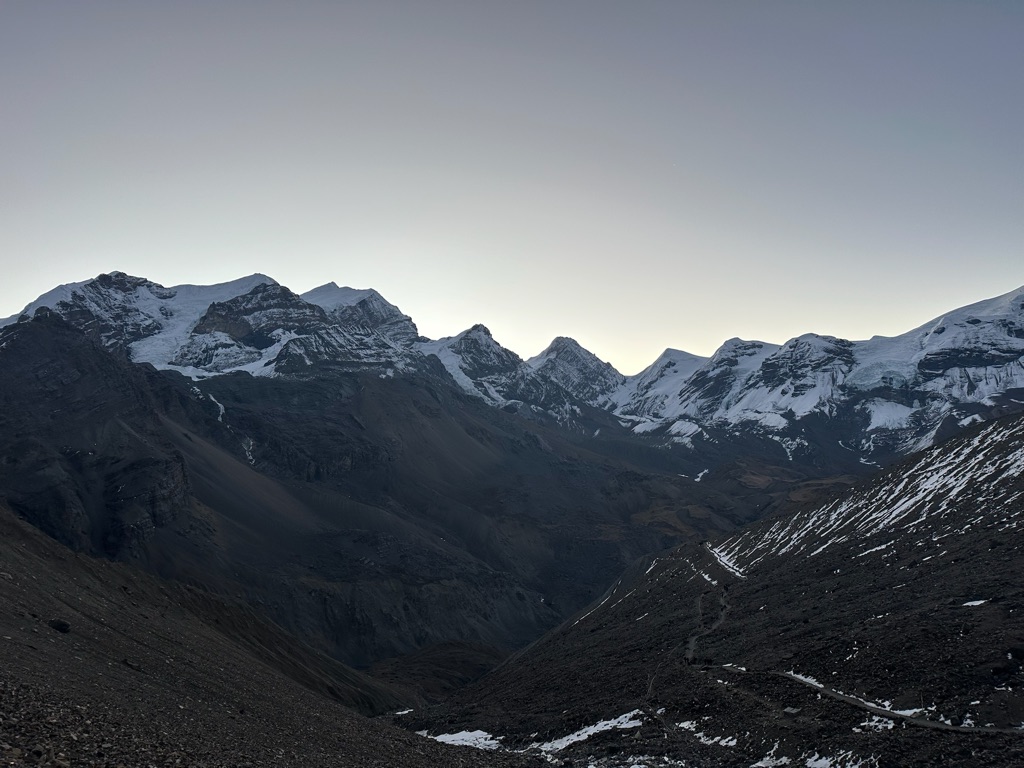
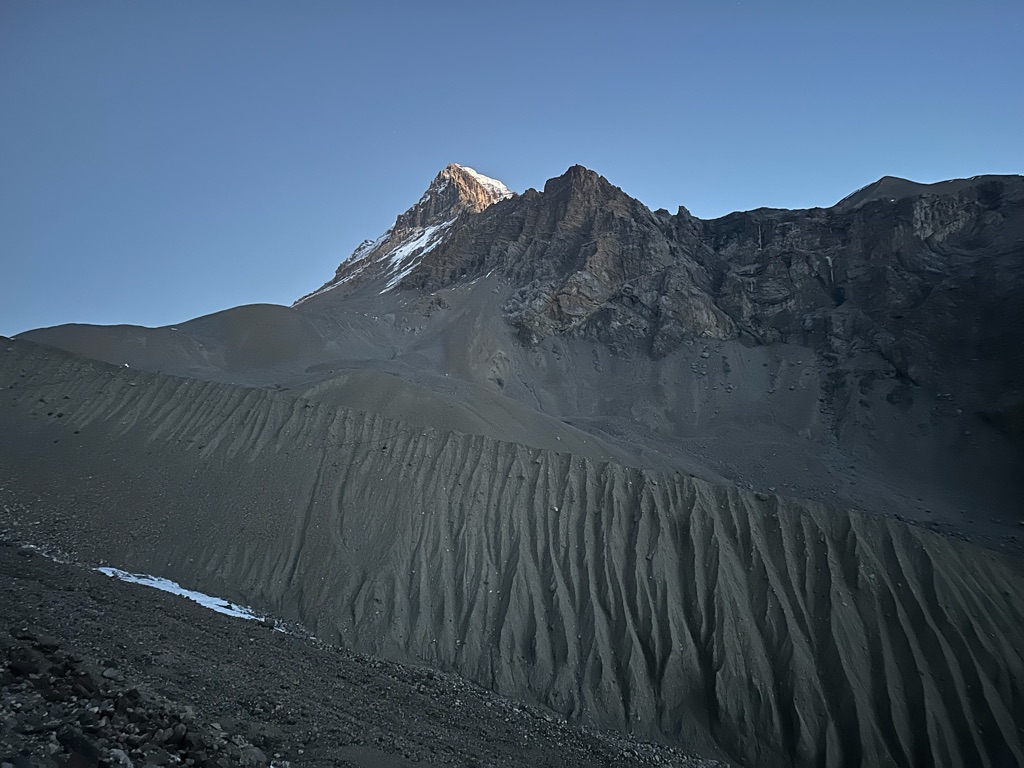 We walked on, ever ascending - the trail now curling through and around a lunar landscape that gradually turned to ice, snow and frozen rivers. Each hill became a challenge in itself. Our footsteps were plodding and ungainly, each of us finding a pace that kept us moving forward without redlining. This was one of the few occasions where the convivial banter between the group that had became such a consistent feature of our progress through the circuit slowed then ultimately ground to a halt.
Each ascent seemed to bring with it a false summit - the precipice unveiling a new trail snaking further into the sky. The passage was flanked by mountain peaks: gleaming white minarets reaching to a sky beginning to flush a bright blue with the heat of the morning. It was, for all that it tested us, a triumphant day - little wind, high visibility and morning warmth that would later turn to a heat that made our substantial clothing layers seem foolish.
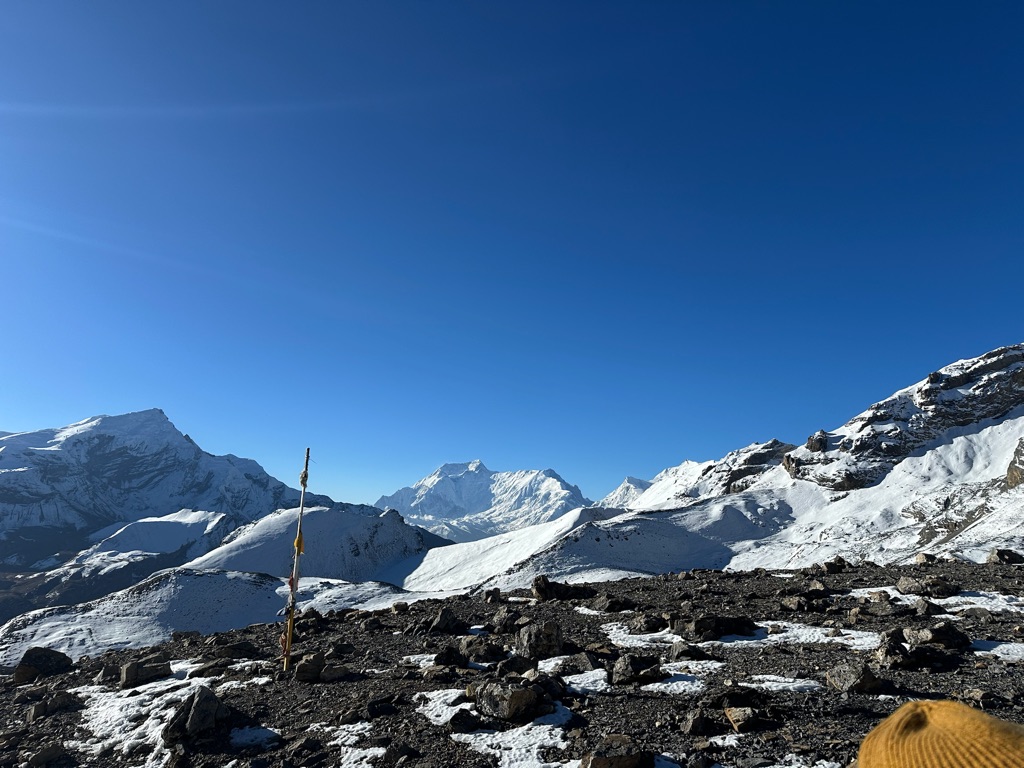
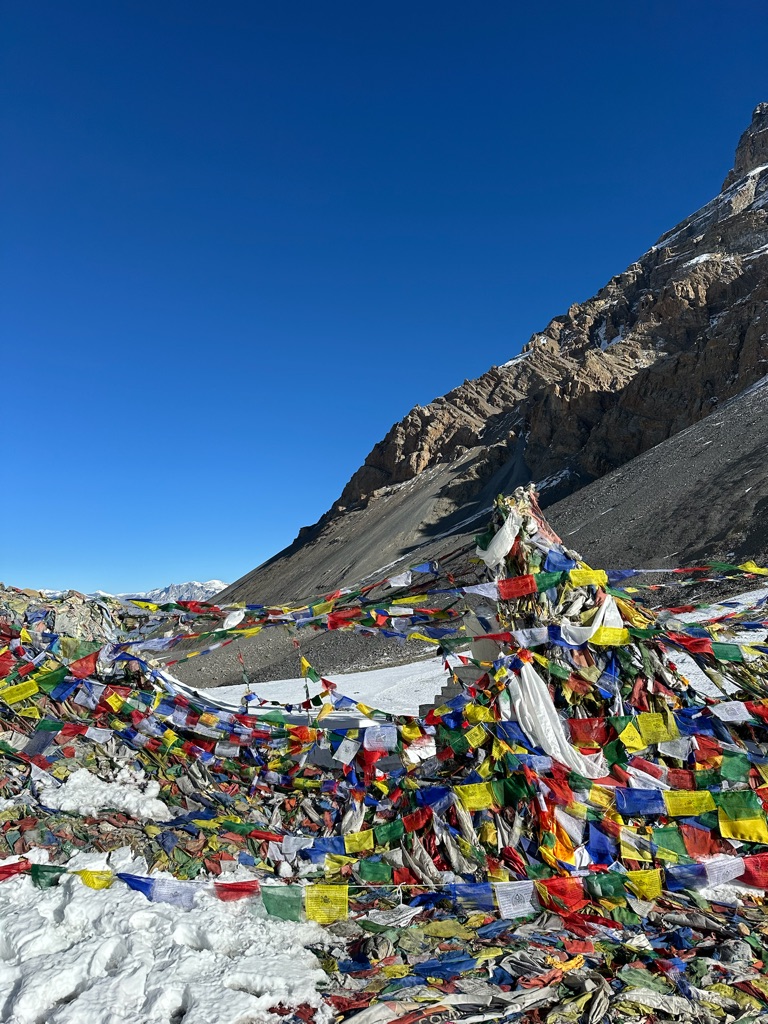
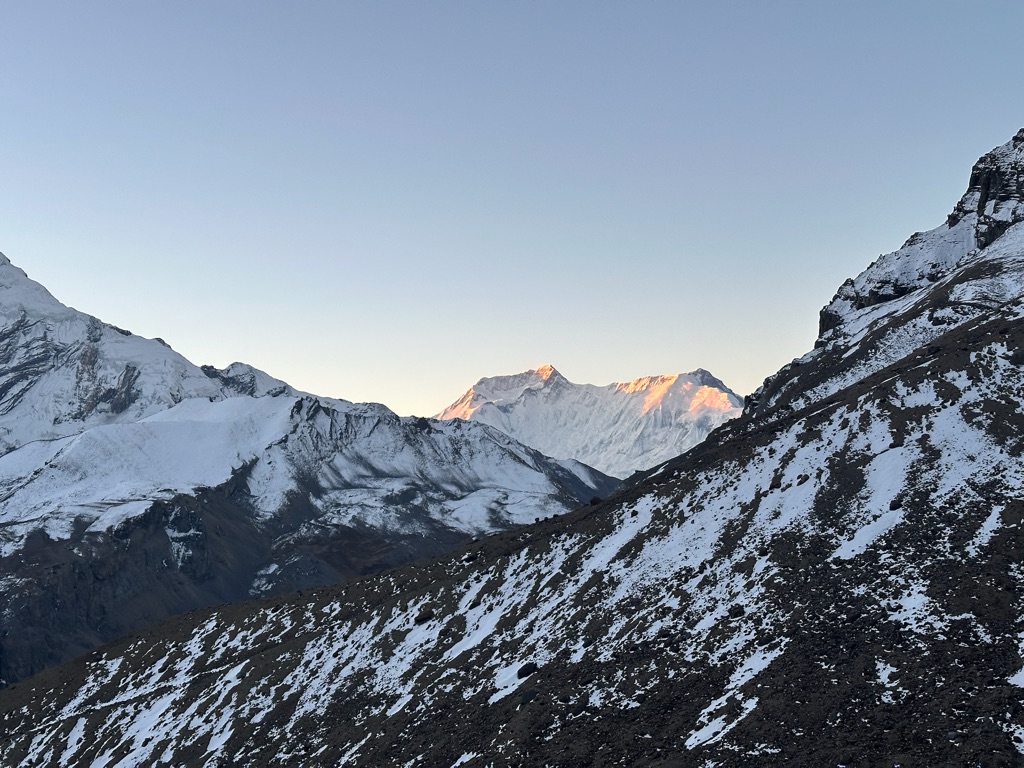 At last, as we gasped deep breaths of thin, cold air, it unveiled itself. A cascade of prayer flags, strung haphazardly and piled in chaotic whorls forming their own mimicry of the snow-capped titans that ruled these lands. At the centre of this unruly monument was a wooden sign - the words “Thorang-La Pass” etched into it. We clapped hands, hugged and drank in the moment of having made this significant crossing - conquering the highest alpine pass in the world, whilst carrying all our own gear on our backs.
As an incredible testament to the hardiness of the Nepalese people living in this region, there was a small stone hut serving hot tea next to it. It felt almost disorienting to think that the locals could be doing business here, given the substantial physical, mental and emotional exhaustion we all experienced at various stages of the summit.
Jake purchased a cup of tea and generously shared it around. We crowded around the sign for the customary photos. I saw Gothy had walked further up the snow to get a better view of the landscape - so I joined him up there and shared a moment. It was an incredibly special experience, to spend the best part of two weeks together, cover almost two hundred kilometres and culminate in this achievement.
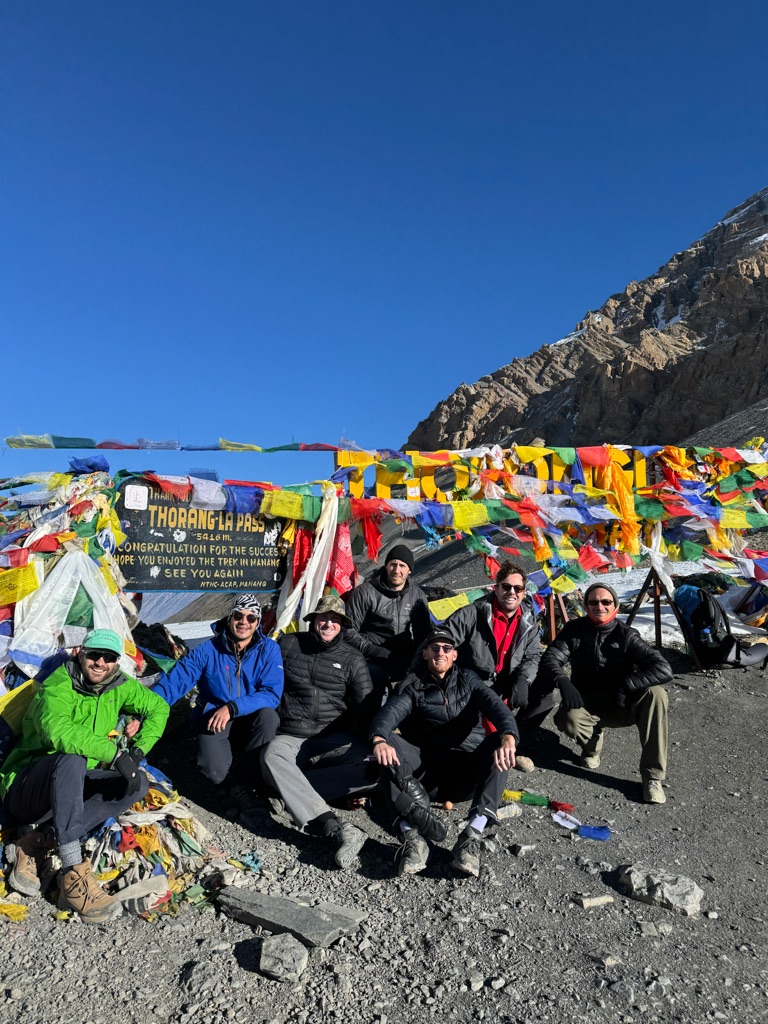
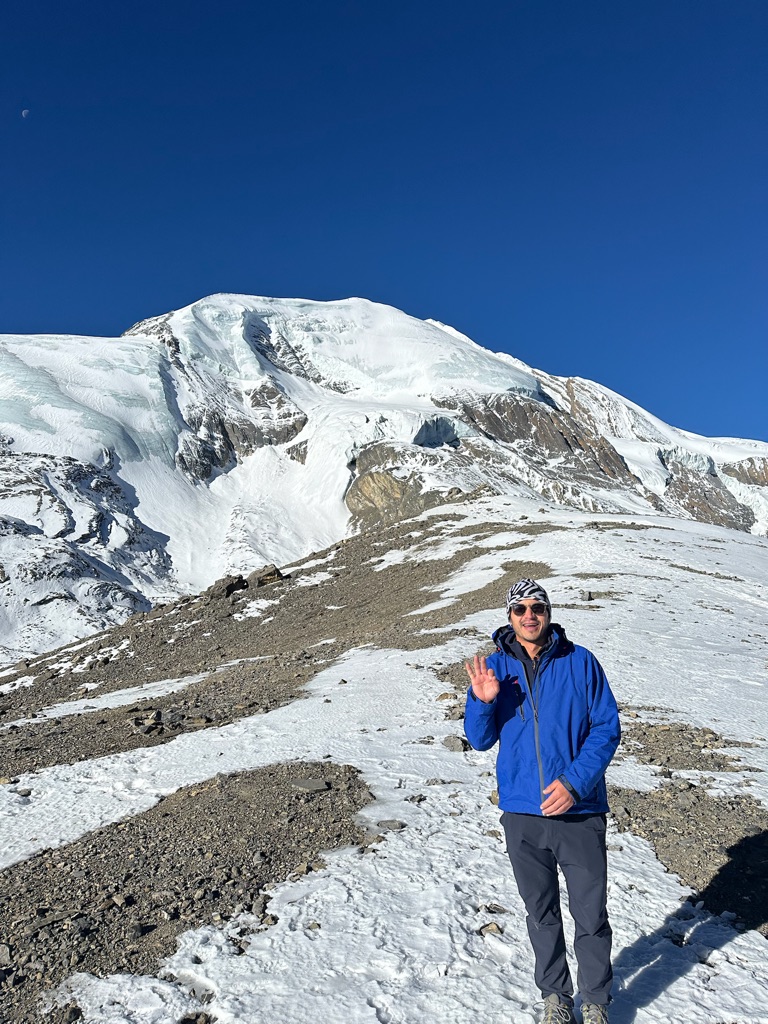 We reunited as a group and observed that other trekkers were reaching the summit, so we should move on and give them their moment. We almost wistfully departed from the pass, knowing it would leave behind the zenith of our trek as a fleeting 15 minute period of time. That’s not to say that it was anticlimactic, moreso that the feeling of achievement was tempered by gazing down the other side of the pass to the long descent that awaited us.
We started off buoyant - after so many steepling ridges trodden, we now found a more manageable pace. No longer plodding steadily up inclines, the descent allowed a quicker pace. However, the trail seemed to wind interminably down the hill with our day’s destination of Muktinath completely concealed from view.
So too did the landscape change. No longer were we crowded by peaks crowned with snow - rather, the landscape rolled out before us like an arid highland. We found it more akin to Arizona, or Mexico than we did with the climes we had seen mere hours ago. In the distance, another colossal mountain range reared over the distant valley plain far below us. These were the Giris, and no less imposing than the peaks we had spent the last two weeks craning our necks to look at in wonder.
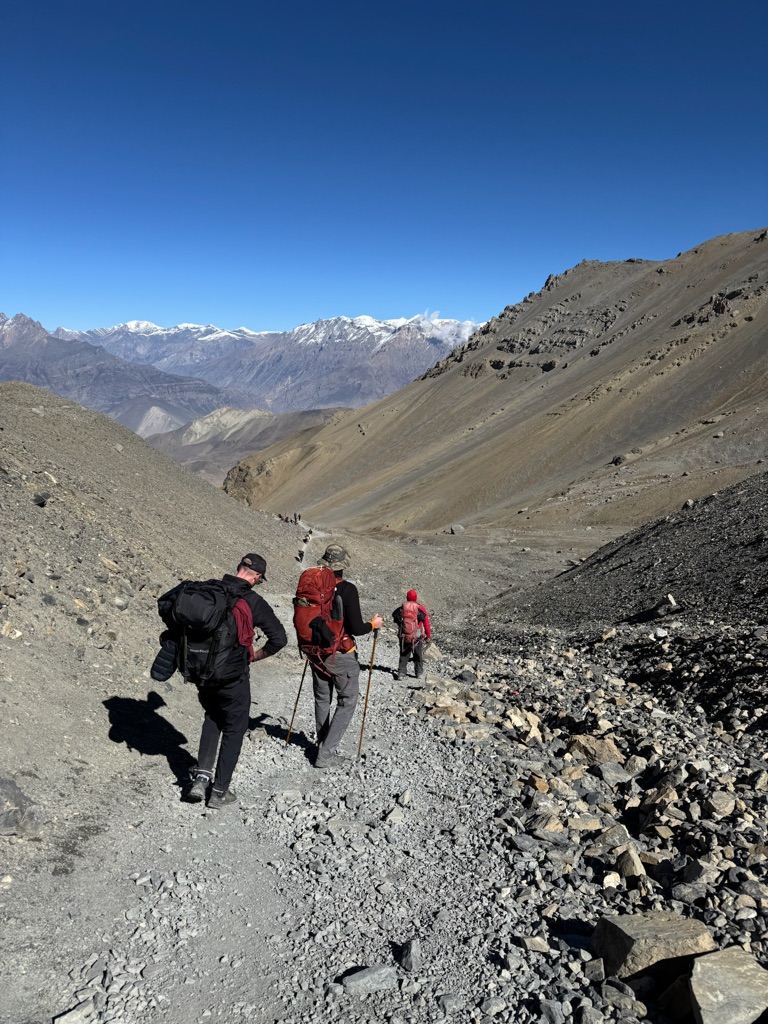
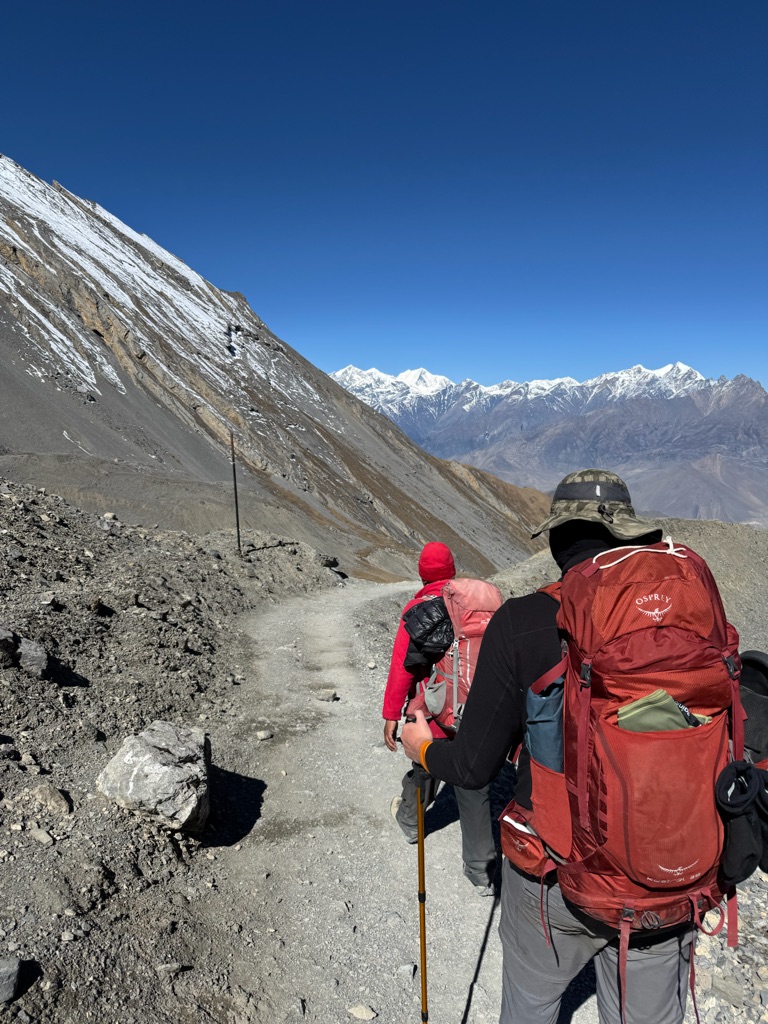 As we trudged on, we seemed to make little headway in the task - with our destination remaining out of sight. The trail jackknifed cruelly down steep declines, frequently cluttered with loose stones that were prone to making our boots slide out from under us. After an hour of labouring downhill following the immense early morning ascent, conversation ceased entirely. Knees burned as they strained to maintain our bodies weighed down with packs. Feet mashed into the front of boots with momentum.
What started as a purposeful downhill clomp slowed to a plod, with fatigue continuing to bite to the point where it felt as though we were a loose line of sleepwalkers, our somnambulism accompanied only by a hot sun, sore muscles and endless trail etched into the sloping, arid terrain. Our lead guide, Ratna, moved with an electricity that belied his bulky figure. We had no such fortune. A confluence of pervasive illness, lack of sleep and the day’s exertions strained us to our mental limits.
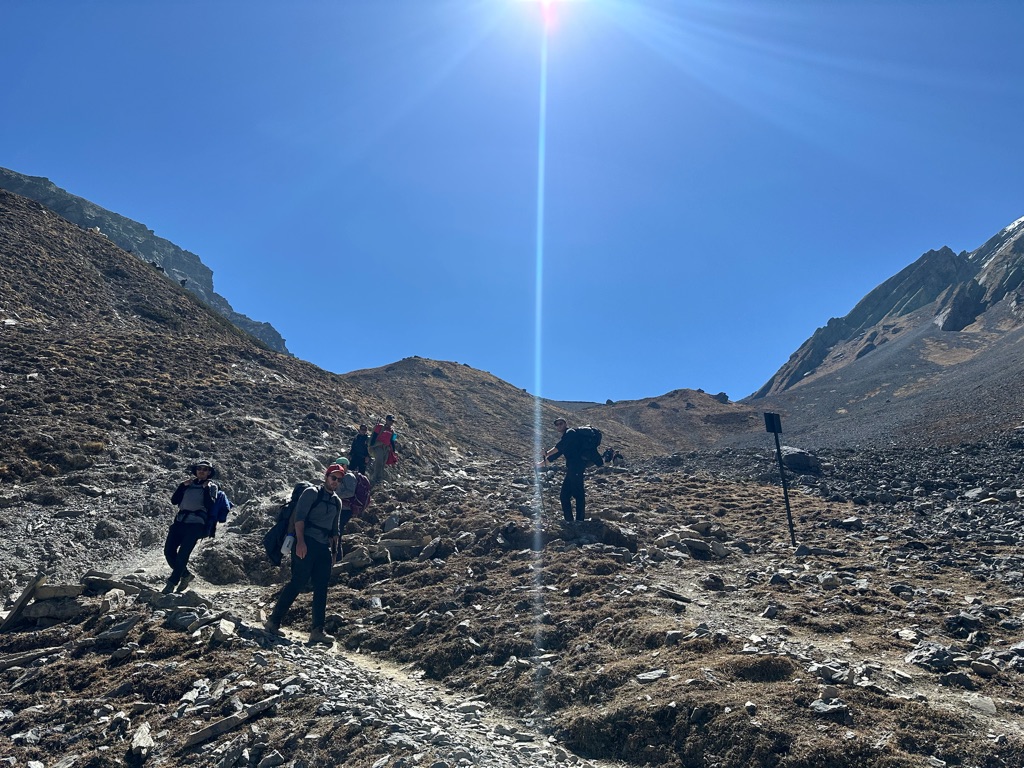
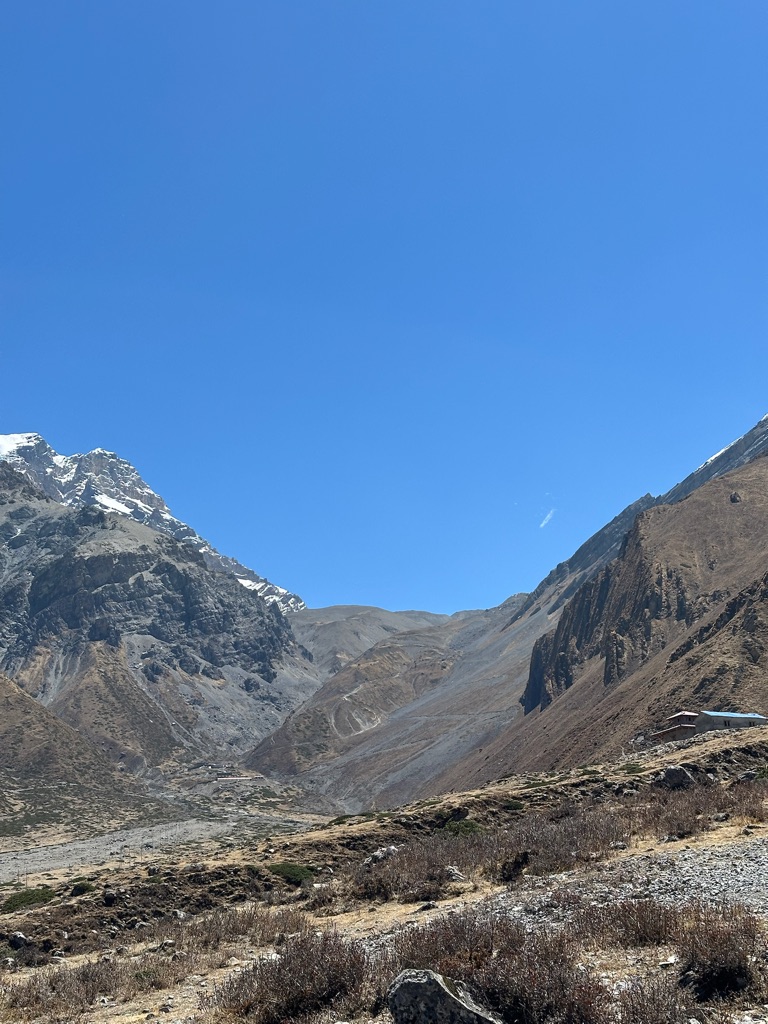 A reverse view looking back up at the descent trail.
At last, like a mirage floating up from the hot earth, we saw a congregation of long structures. It was not our destination, but it represented an opportunity to refill long-dry water bottles and rest our legs for a spell. We slumped in the shade, exhaustion rendering us sharp with each other and the guides until a few sips of full-sugar soft drink replenished us. A vulture with a 2m wingspan lazily circled the outdoor area where we sat, occasionally swooping within 10m for a closer look.
We walked on, the trail slope becoming more gentle. We crossed another cable bridge, rounded a ridge lip and saw Muktinath sprawling out below us. We plodded down a gravel road, and saw it ran adjacent to the town. On its left, thousands of prayer flags were strung without pattern or order - fluttering gently in the late morning wind. On its right, a long fence with a gate leading to a large temple complex. We heard the thrum and boil of people in conversation, and the distant but pronounced clinking of bells.
We went through the gate and down the steps and walked into a fever dream. Thousands of Hindu worshippers had gathered in their regalia at this place, variously in conversation, clanging bells hung from crude structures and, jarringly, pointing their phone cameras every which way. There appeared to be some sort of festival - women were stripping down to the under section of their saris and running some sort of gauntlet.
The gauntlet itself was a long, half metre wide drain that was the border of half a square - running to the pass side of the central plaza. The women ran through it one after the other, with iron bars along the side ensuring they ran through to the end. At intervals of less than a foot and approximately two metres above the drain were a series of brass fish heads, mouths agape and spewing water down into the drains. The women ran beneath these devices, becoming soaked in the process.
Such was our exhaustion that we trudged on past this apparently culturally significant event, our minds barely able to grasp what this could possibly represent. More women were being carried up to the temple complex on palanquins borne by four men. There were bells of all shapes and sizes clanging all about us. Many of the locals simply acknowledged our presence with a “namaste”, others ignored us entirely.
Leaving the temple complex, we set out down a long staircase, with a single step every two metres or so. Lining either side of this structure were many yogis, some lost in prayer, others begging for money, some catatonic, others missing limbs. We walked on with singular purpose, through a large gateway into Muktinath. We passed a litany of hotels, restaurants and more businesses than we had seen in weeks.
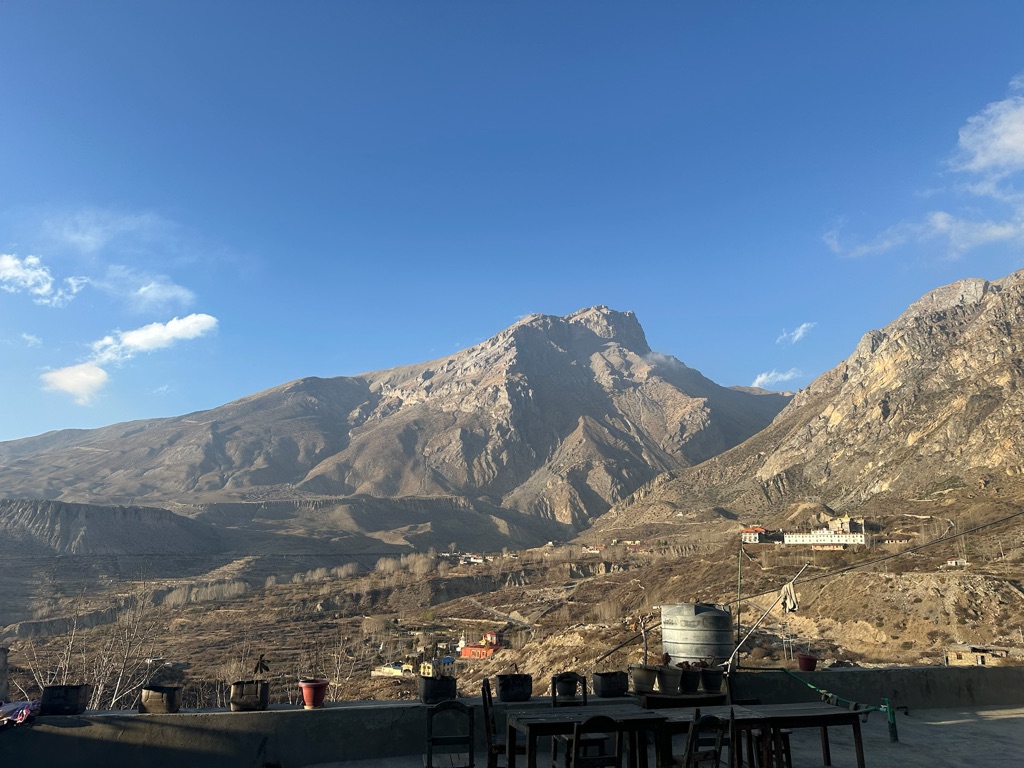
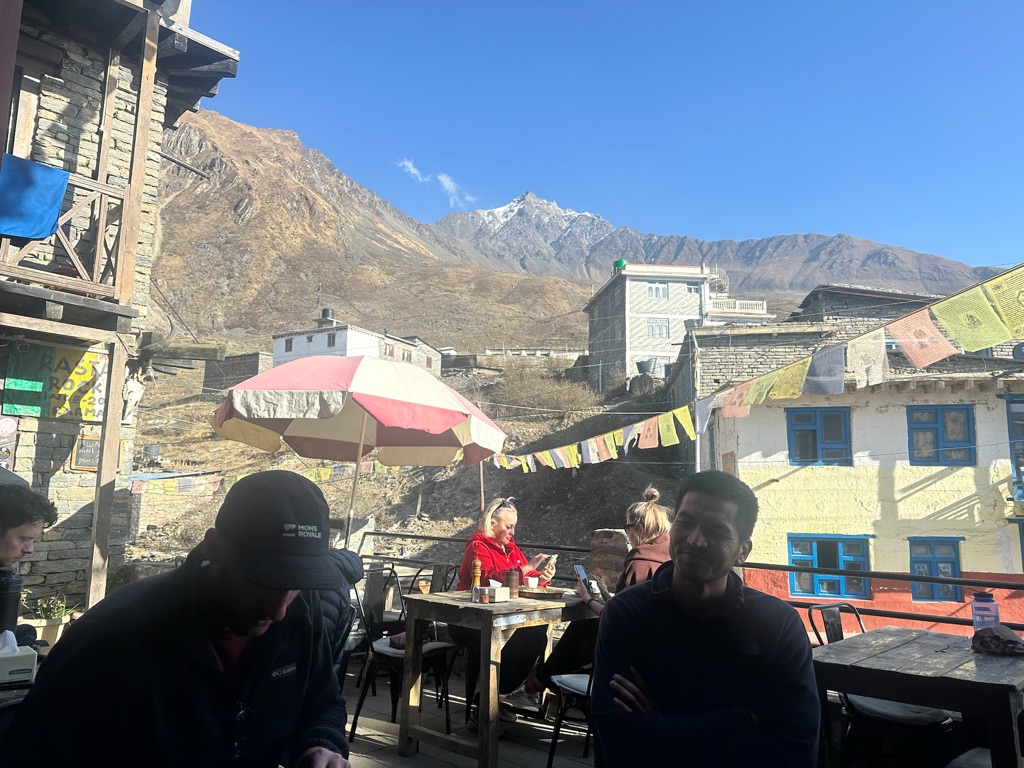 One final set of stairs awaited us to the hotel common room, which we leapt up gleefully to attack our well deserved butter chicken masala and cold beer. After a long shower and a nap for each of us followed by a few more beers at a local pub, we found ourselves feeling much more human.
With the exertions of easily our hardest day yet behind us, there was a feeling of euphoria washed through with relief amongst us. We had set out to conquer Thorong-La Pass with our kit on our backs, and we managed it. Many, if not all of us called it the hardest day of physical activity in our lives.
I suspect that each of our experiences were unique. Particularly during the last part of the trek, we reached deep within ourselves to find untapped reserves of physical and mental fortitude. None of us were found wanting in this regard. It is a difficult emotional experience to describe, but it is a fundamentally profound one.
We had a final day of trekking after this, however I feel that Thorong-La Pass is the place to leave this written record. The mountains render small those who scurry about their feet, and this new perspective on the glory and power of nature is not one I’ll soon forget.