Objective Data:#
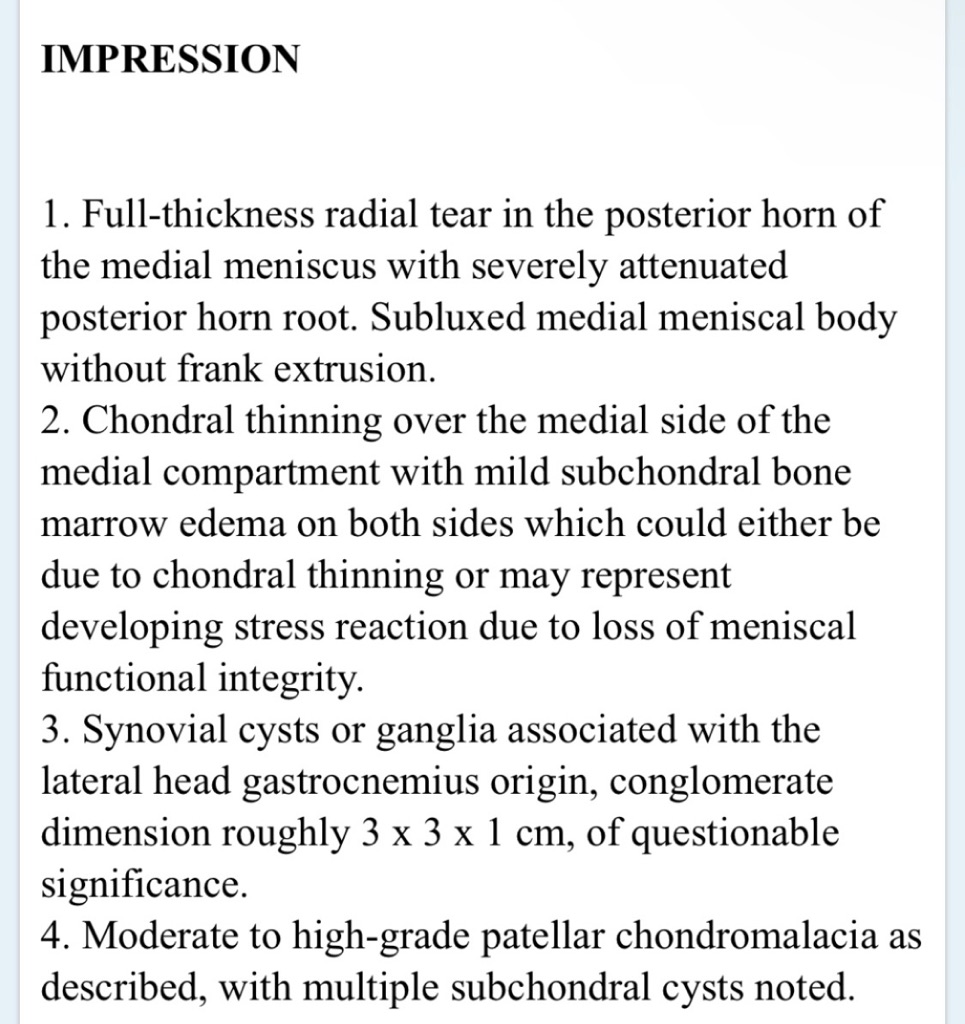
General info:#
- The outer one-third of the meniscus has a rich blood supply. A tear in this "red" zone may heal on its own, or can often be repaired with surgery. A longitudinal tear is an example of this kind of tear.
- In contrast, the inner two-thirds of the meniscus lacks a significant blood supply. Without nutrients from blood, tears in this "white" zone with limited blood flow cannot heal. Because the pieces cannot grow back together, symptomatic tears in this zone that do not respond to conservative treatment are usually trimmed surgically.
Torn Meniscushopkinsmedicine.orgTreatment options:#
Checking your browser - reCAPTCHAncbi.nlm.nih.gov
Anatomic repair of the meniscal root should be attempted whenever possible to prevent meniscus damage and OA, except in cases in which:
- the patient is a poor surgical candidate (significant comorbidities or advanced age),
- diffuse Outerbridge grade 3 or 4 OA of the ipsilateral compartment,
- non-symptomatic chronic meniscal root tears,
- and/or significant limb malalignment unless concurrently corrected (32, 55).
The two most commonly used repair techniques are suture anchor repair and transtibial meniscal root repair
The Facts about Meniscal Root Tears and How They Should be Treated - Dr. Ronak M. Pateldrronakpatel.com
Ideal candidates for meniscal root repair would be non-obese individuals with either acute or chronic meniscal tears without any signs of arthritic changes or joint space narrowing.